Clear Sky Science · en
Association between LDL-R (exon 8 C.1171 G > A) polymorphisms and response to antiviral therapy in hepatitis C virus infection
Why Your Genes Matter in Hepatitis C Treatment
Modern drugs can cure most people with hepatitis C, a virus that attacks the liver, but a small group of patients still does not respond to treatment. This study, carried out in Egypt where hepatitis C has been especially widespread, asks a simple but important question: can tiny inherited differences in one of our own genes help explain who gets cured and who does not? Understanding this link could make treatment more personal, guiding doctors toward the best care for each patient.
A Common Virus and a Country Hit Hard
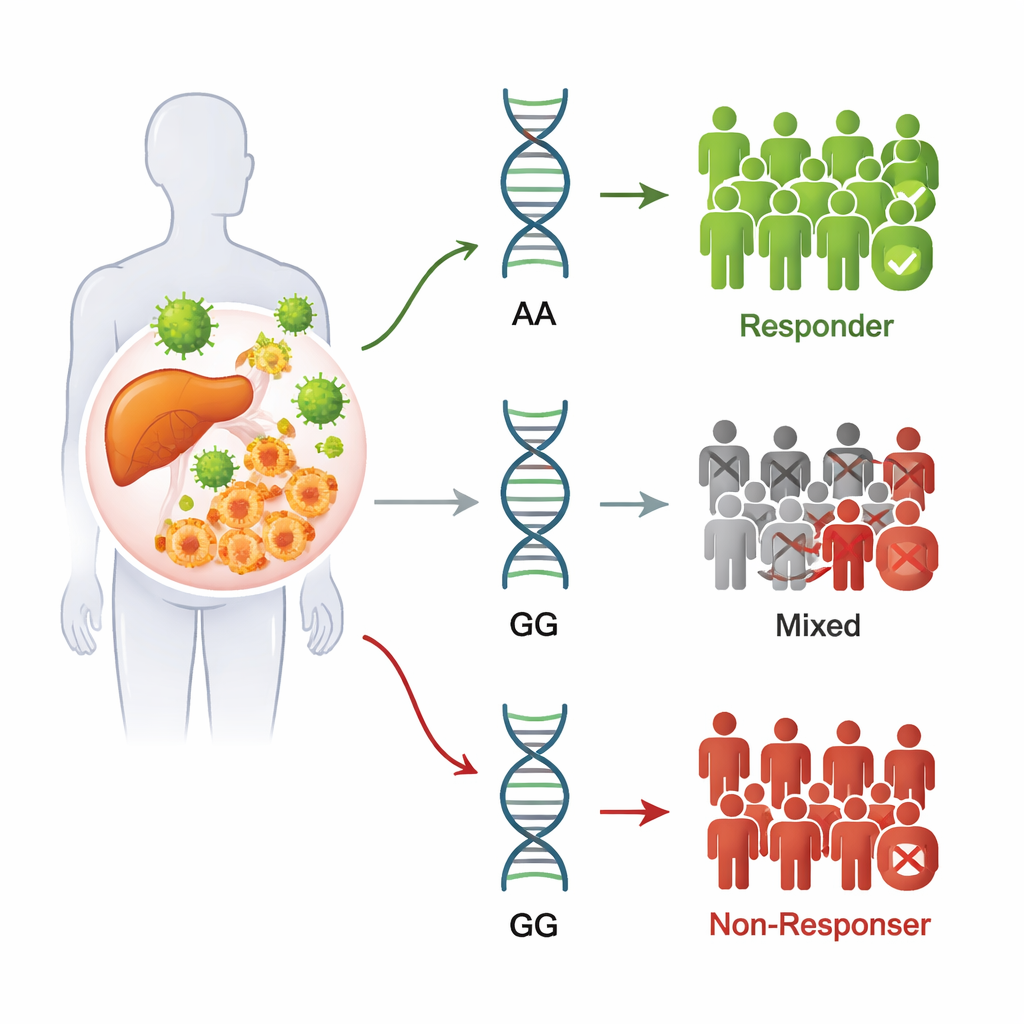
Hepatitis C infects an estimated 185 million people worldwide and can quietly damage the liver for years, leading to cirrhosis and liver cancer. The virus travels in the blood and has a special ability to exploit the body’s fat and cholesterol systems to enter liver cells. Egypt has long had one of the highest infection rates on the planet, due in part to past medical campaigns that unintentionally spread the virus. Today, highly effective direct-acting antiviral pills, such as sofosbuvir-based combinations, cure the vast majority of patients, yet a small fraction still shows ongoing infection after treatment.
A Closer Look at One Key Gateway
The research team focused on a human gene that makes the low-density lipoprotein receptor, or LDL receptor, a protein normally responsible for bringing “bad” cholesterol into cells. Hepatitis C particles often cling to cholesterol-rich packages in the blood and can use this receptor as one of their gateways into liver cells. A small change, or polymorphism, in exon 8 of the LDL receptor gene—written as C.1171 G/A—creates three possible genetic patterns: AA, GA, or GG. The scientists wanted to know whether people with different patterns had different chances of being cured by antiviral therapy.
Screening Thousands to Study Ninety
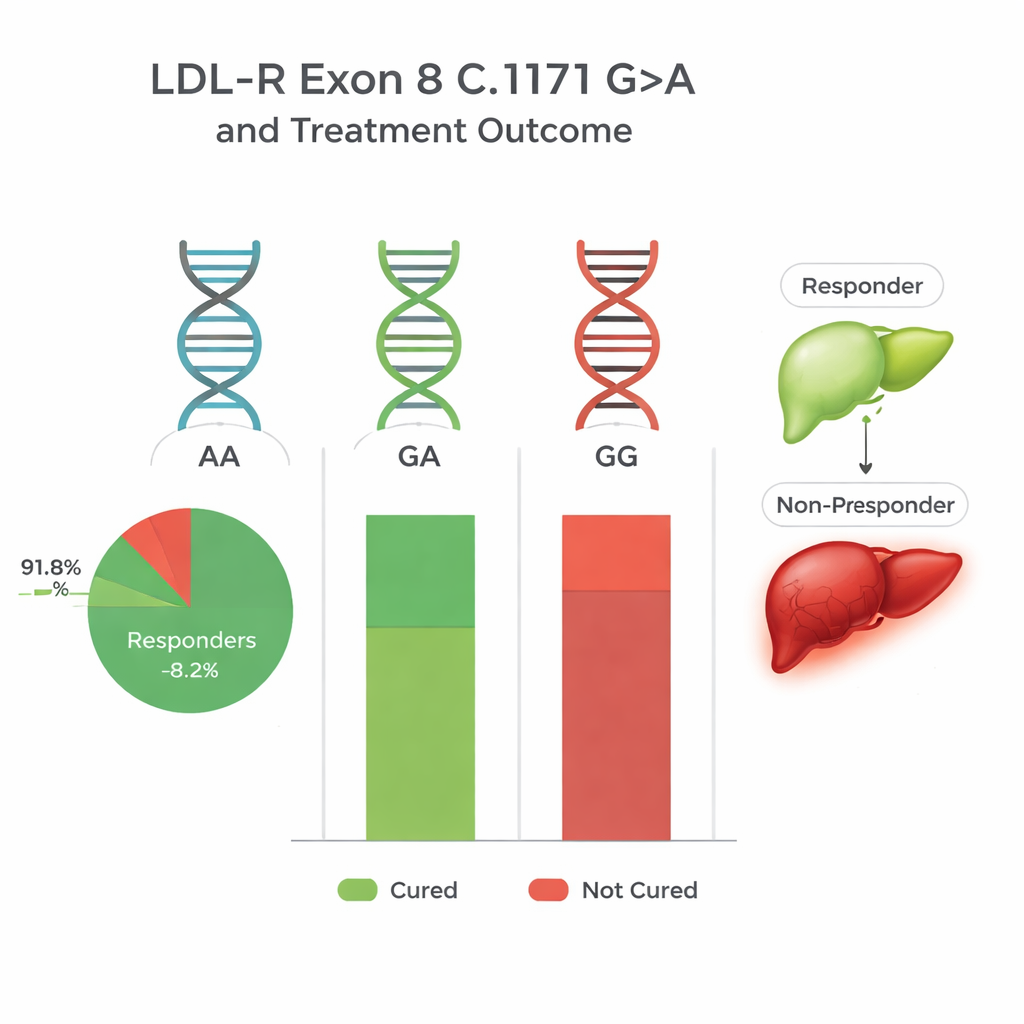
First, more than 3,400 Egyptians were screened for hepatitis C antibodies, revealing that about one in ten had signs of past or current infection. Of 376 infected people who went on to receive sofosbuvir-based treatment, an impressive 91.8 percent were cured, while 8.2 percent still had detectable virus afterward. From these, the researchers selected 60 cured patients, 30 uncured patients, and 50 healthy volunteers as a comparison group. They measured liver function and cancer-related blood markers, and they analyzed each participant’s LDL receptor gene pattern using precise DNA tests.
Gene Patterns Linked to Cure and Non-Cure
The results showed a striking link between gene pattern and treatment outcome. Among cured patients, the AA pattern of the LDL receptor gene was by far the most common, found in about 62 percent, while the GG pattern was rare. In contrast, among those whose treatment failed, more than three out of four carried the GG pattern, and the AA pattern was almost absent. Healthy volunteers had a more even mix of AA, GA, and GG, sitting between these two extremes. Blood tests also revealed that uncured patients had much higher levels of liver enzymes and alpha-fetoprotein, a marker of liver stress and possible cancer risk, indicating ongoing liver injury despite therapy.
What This Could Mean for Future Care
For non-specialists, the key message is that tiny inherited differences in a single gene tied to cholesterol handling appear to influence who is most likely to clear hepatitis C with modern drugs. People with the AA pattern of the LDL receptor gene were much more likely to be cured, while those with the GG pattern were more likely to remain infected, at least in this Egyptian group. The study does not prove that this gene change causes success or failure on its own, but it suggests that simple genetic testing could one day help doctors identify patients at higher risk of poor response, monitor them more closely, or tailor their treatment plans. As larger studies confirm these findings, hepatitis C care may become even more personalized, using a patient’s own DNA as a guide.
Citation: Shikhoun, M.E.H., Ibrahim, H.A.M. & Abeed, A.A.O. Association between LDL-R (exon 8 C.1171 G > A) polymorphisms and response to antiviral therapy in hepatitis C virus infection. Sci Rep 16, 7473 (2026). https://doi.org/10.1038/s41598-026-38468-w
Keywords: hepatitis C, LDL receptor, genetic polymorphism, antiviral therapy, personalized medicine