Clear Sky Science · en
Starter feed enhances growth, antioxidant capacity, and gut microbiota in Chawula yak calves
Why baby yaks and their food matter
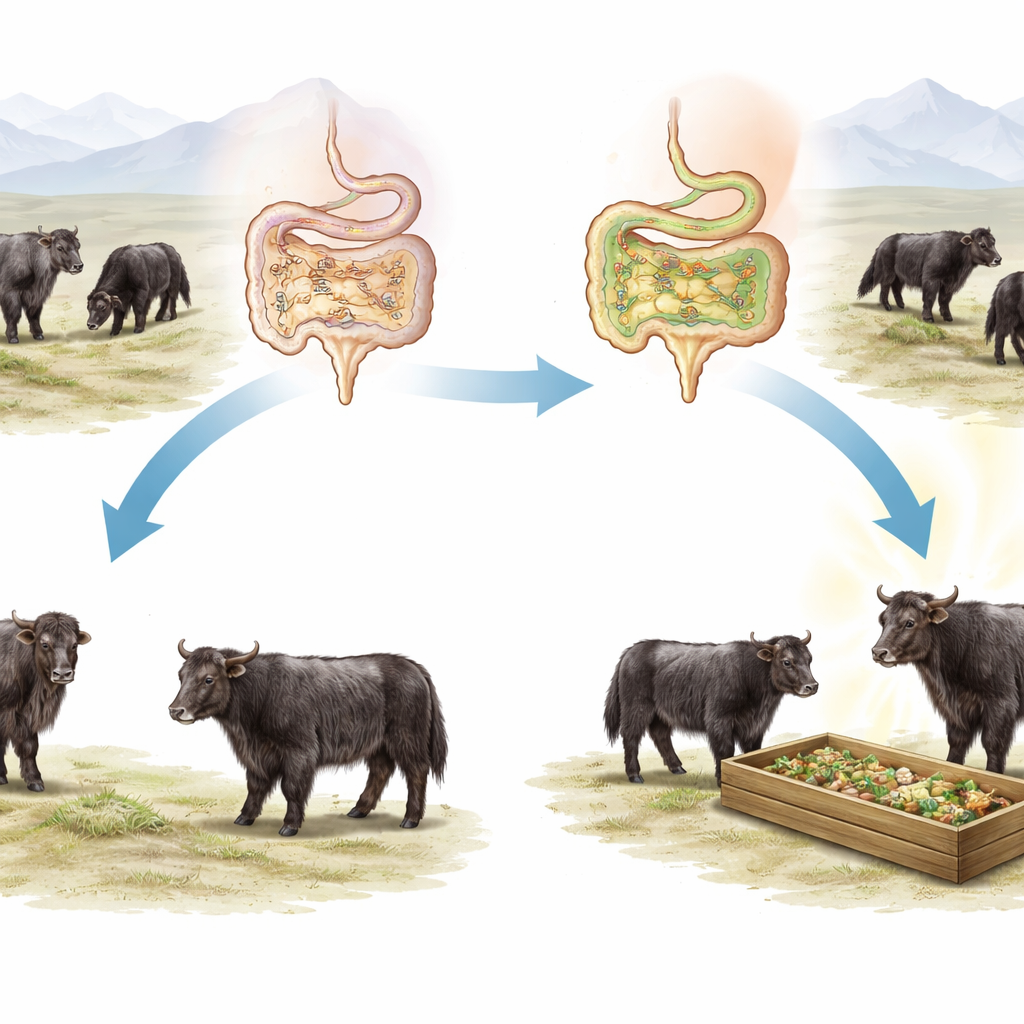
High on the Tibetan Plateau, yak calves are a lifeline for herding families, providing future meat, milk, and even fuel. But raising healthy young yaks in such thin air and harsh cold is a challenge, especially when grass is scarce and mothers produce limited milk. This study asks a deceptively simple question with big practical stakes: can specially designed starter feeds for early-weaned yak calves boost their growth and inner resilience by improving their digestion, body defenses, and gut microbes?
Growing up strong on a cold, high plain
The researchers worked with 21 three‑month‑old Chawula yak calves from a plateau farm in China, all similar in size at the start. They divided them into three groups. One group stayed on the traditional system, roaming freely and grazing pasture. The other two groups were housed and received a fixed daily amount of alfalfa hay plus one of two versions of a starter feed formulated specifically for young yaks. These feeds combined energy‑rich grains, protein sources like soybean and fish meal, minerals, vitamins, and different proportions of alfalfa. Over six weeks, the team tracked body weight, body measurements such as chest girth, and collected blood and fecal samples to peer inside the calves’ physiology and gut ecosystems.
More feed, more weight, bigger chests
By the end of the trial, calves that received starter feeds clearly outpaced their free‑grazing companions. Both supplemented groups gained weight faster, and those on the second starter formula ended up about four kilograms heavier than the control calves in just a month and a half. Their chest girth also increased more, suggesting better overall body development rather than just extra fat. Other body measurements, like leg bone circumference and overall height, did not change much between groups during the short study period, but the stronger weight and chest growth indicate that a controlled, nutrient‑dense diet can help young yaks make the most of their critical early months.
Inner shields against stress and damage
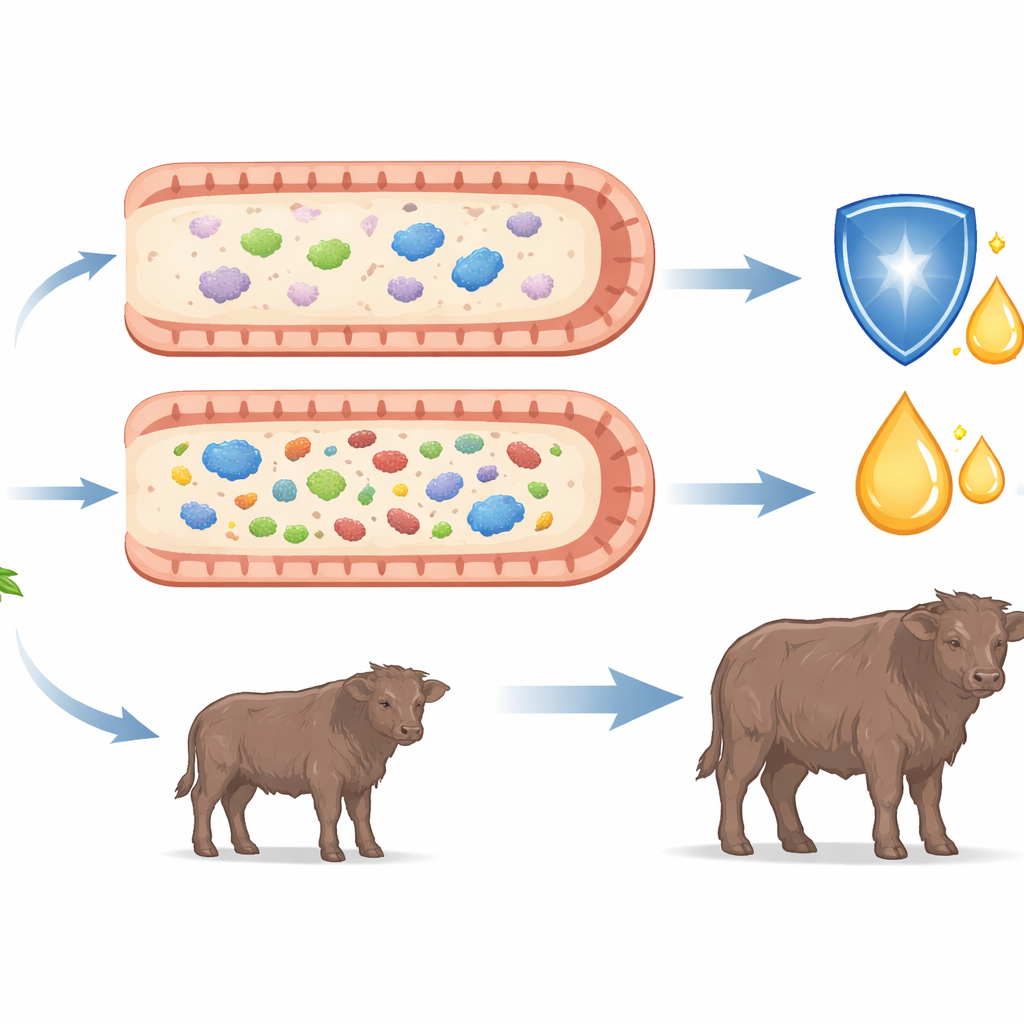
Life at 4,700 meters means constant cold, low oxygen, and intense sunlight—all sources of stress that can generate harmful molecules known as oxidants in animal tissues. The scientists therefore measured several blood markers that reflect the body’s antioxidant defenses. Calves on starter feeds had higher total antioxidant capacity and higher levels of a key protective enzyme, glutathione peroxidase, compared with the pasture‑only group. These changes were most pronounced in animals on the second starter formula. This pattern suggests that better early nutrition does more than add body mass: it bolsters the calves’ built‑in chemical shields against damage, helping them cope with the extreme plateau environment and possibly warding off illness.
Re‑shaping the invisible life in the gut
Hidden inside each calf’s intestines lives a vast community of bacteria that help break down tough plant material, produce useful nutrients, and interact with the immune system. Using DNA sequencing on fecal samples, the team cataloged these microbes in detail. While the overall diversity—the number of different microbes present—stayed similar among groups, the specific balance of species shifted with diet. All calves shared two dominant broad groups of bacteria, but the supplemented calves showed distinct patterns in finer‑scale groups. The scientists identified one bacterial branch and 37 genera whose abundance differed between diets. Several of the microbes enriched in starter‑fed calves have previously been linked to healthy body weight, better gut function, or production of helpful short‑chain fatty acids that fuel intestinal cells and support antioxidant defenses. At the same time, some bacteria associated elsewhere with inflammation or undesirable compounds were less common in supplemented calves.
What this means for herders and their herds
Taken together, the findings paint a connected picture: tailored starter feeds for early‑weaned Chawula yak calves improve growth and chest development, strengthen the blood’s antioxidant shield, and nudge gut microbes toward a composition associated with better health and energy harvest. Rather than relying solely on traditional grazing, herders who adopt such feeds may raise sturdier young yaks that are better prepared for the rigors of plateau life. In the long run, these nutritional strategies could enhance herd productivity and economic security for families living in some of the world’s toughest farming conditions.
Citation: Qingni, D., Xu, P., Wang, H. et al. Starter feed enhances growth, antioxidant capacity, and gut microbiota in Chawula yak calves. Sci Rep 16, 8231 (2026). https://doi.org/10.1038/s41598-026-38454-2
Keywords: yak calves, starter feed, gut microbiota, antioxidant capacity, plateau livestock