Clear Sky Science · en
Akkermansia muciniphila affects colitis by inhibiting ferroptosis signaling pathway
Why A Tiny Gut Resident Matters
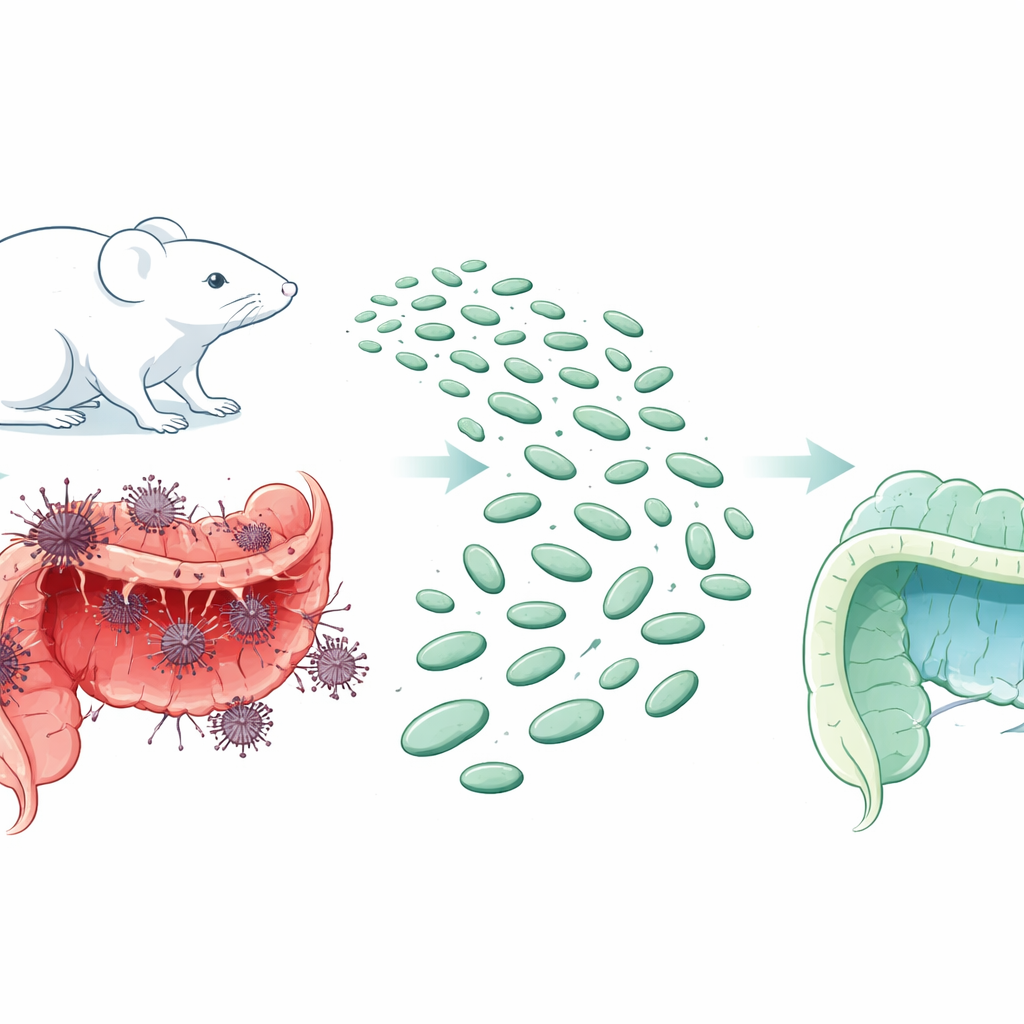
Chronic gut troubles like ulcerative colitis can turn everyday acts—eating, going to the bathroom—into painful ordeals. Doctors know that both our immune system and our gut microbes are involved, but the details are still emerging. This study focuses on one particular bacterium, Akkermansia muciniphila, and asks a simple but important question: can this microbe protect the intestine by stopping a form of cell damage driven by iron? The answer could open the door to new, bacteria-based treatments for inflammatory bowel disease.
A Delicate Lining Under Attack
Colitis is marked by swelling and injury in the large intestine. The inner wall, normally lined by tightly packed cells and mucus-producing goblet cells, becomes eroded and leaky. In this mouse study, researchers triggered colitis with a chemical that mimics many features of human disease: weight loss, diarrhea, bleeding, and widespread injury to the colon lining. Under the microscope, the team saw thinning tissue layers, loss of finger-like villi, fewer goblet cells, and an influx of inflammatory cells—all signs that the gut barrier was breaking down.
Iron-Driven Cell Damage as a Hidden Culprit
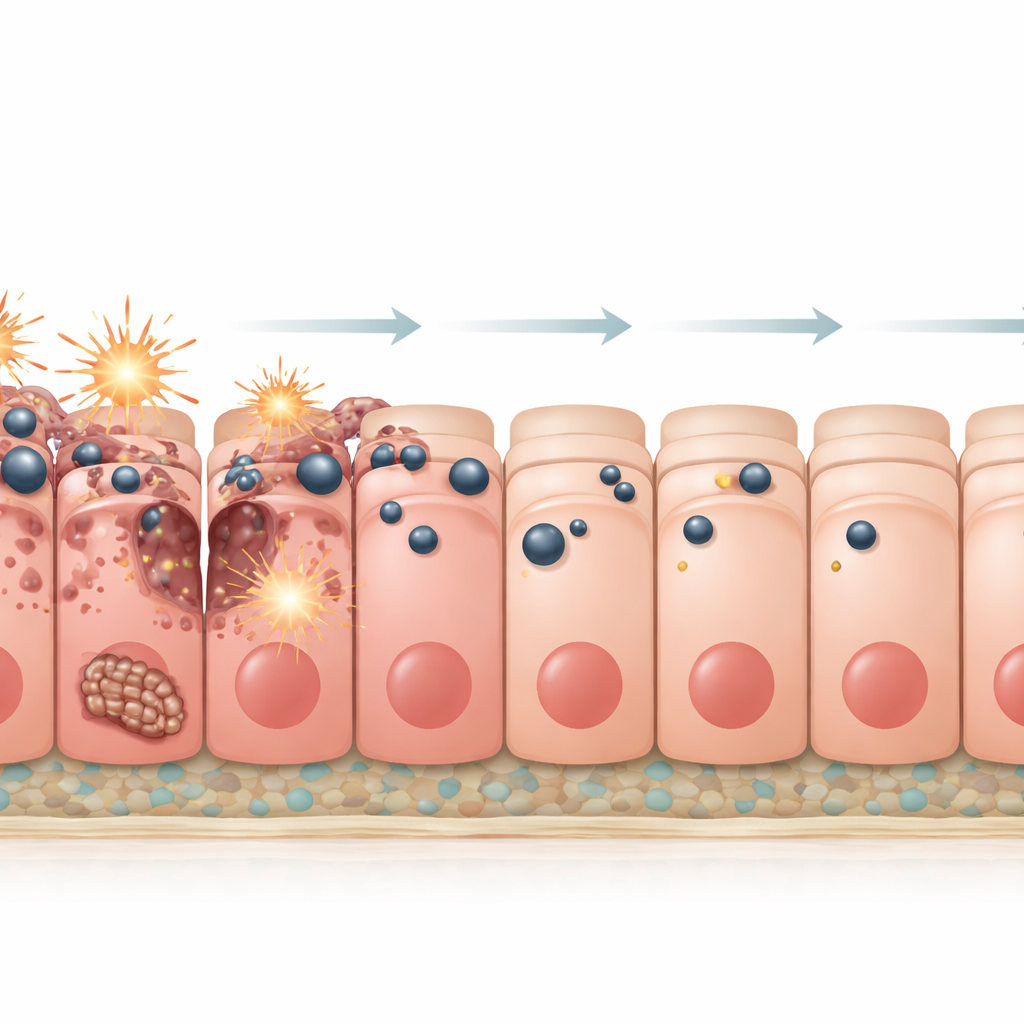
The researchers focused on “ferroptosis,” a recently recognized kind of cell death in which iron fuels a buildup of toxic, oxidized fats in cell membranes. In the colitis model, they found high levels of markers of oxidative stress, such as reactive oxygen species and breakdown products of damaged fats, along with excess iron in colon tissue. At the same time, protective proteins that normally guard cells against this damage were reduced, while a protein that promotes lipid damage was increased. When the team gave mice a drug that specifically boosts ferroptosis, the colon injuries became even worse, suggesting that iron-driven membrane damage is not just present but actively intensifies colitis.
A Helpful Bacterium Steps In
Using genetic surveys of the gut microbiota, the scientists observed that the abundance of Akkermansia muciniphila dropped sharply in colitis. They then gave some colitis-afflicted mice oral doses of this bacterium over several weeks. These animals lost less weight, had firmer stools with less bleeding, and showed much healthier colon tissue on staining. The intestinal surface looked more intact, with better-preserved crypt structures and more orderly muscle layers. Electron microscopy revealed that treated mice had more normal-looking cell powerhouses (mitochondria) and fewer signs of structural collapse. Chemical tests showed that iron, reactive oxygen species, and markers of fat damage fell after Akkermansia treatment, while key protective proteins that counter ferroptosis rose again. Even when the ferroptosis-boosting drug was given, Akkermansia partly reversed its harmful effects on the gut lining.
Shifts in Gut Chemistry and Genes
To understand how this bacterium exerts its protective effects, the team examined both gene activity in colon tissue and the small molecules produced in the gut. Colitis dramatically altered the activity of hundreds of genes linked to inflammation, metabolism, and cell survival. Akkermansia treatment nudged many of these changes back toward normal, especially genes involved in cell adhesion and responses to stress. On the metabolic side, the bacterium increased beneficial short-chain fatty acids and several amino acid–related compounds, while reducing certain alcohols and phenols that can irritate the gut. When the researchers overlaid the gene and metabolite data, they found 19 biological pathways jointly affected, many tied to lipid handling and peroxidation—the very processes that feed ferroptosis. This pattern suggests that Akkermansia helps calm colitis in part by reshaping both the gut’s chemistry and the colon’s genetic response to stress.
What This Could Mean for Patients
Overall, the study shows that restoring a single friendly bacterium can ease colitis in mice by strengthening the gut barrier and dialing down iron-driven membrane damage inside intestinal cells. While this work is still at the animal and lab stage, it points to a future where targeted microbes or their metabolites might complement existing drugs for inflammatory bowel disease. By curbing ferroptosis and restoring healthier gut chemistry, such approaches could help protect the fragile lining of the intestine and reduce painful flares in people living with chronic colitis.
Citation: Zhang, L., Liu, Y., Wei, K. et al. Akkermansia muciniphila affects colitis by inhibiting ferroptosis signaling pathway. Sci Rep 16, 9250 (2026). https://doi.org/10.1038/s41598-026-38452-4
Keywords: ulcerative colitis, gut microbiome, Akkermansia muciniphila, ferroptosis, intestinal inflammation