Clear Sky Science · en
Exploring the underlying gene expression profiles of differences of sex development phenotypes through transcriptome analysis
Why this research matters to all of us
Most of us learn in school that biological sex is determined in a simple, either-or way: XX chromosomes make ovaries, XY chromosomes make testes. This study challenges that tidy picture. By reading out which genes are turned on or off in the gonads of people with differences of sex development (DSD), the researchers uncover a richer story in which human sex development looks less like a switch and more like a spectrum. Their work offers a window into how bodies form, why some people do not fit typical male or female categories, and how medicine might better understand and care for them.
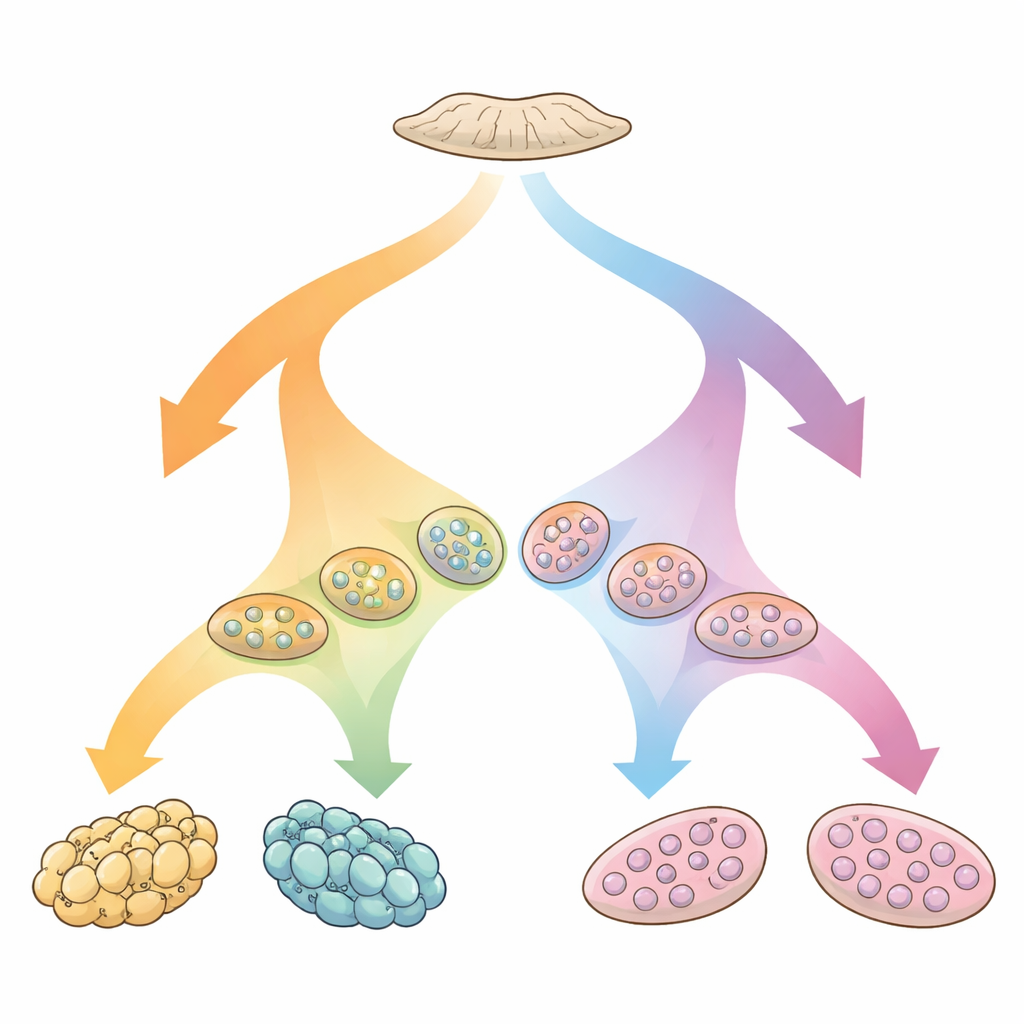
A flexible starting point in early life
The gonads begin life as a flexible “bipotent” structure that can become either testes or ovaries. A network of genes and signals gently pushes this early tissue in one direction or the other, eventually shaping hormone production and the visible anatomy. When any part of this network is disturbed, the outcome can be a DSD, in which chromosomes, gonads, and anatomy do not line up in the usual ways. Many such conditions are still unexplained at the DNA level. The team behind this study reasoned that looking directly at gene activity inside gonadal tissue might reveal patterns that classic genetic tests miss, shedding light on how these organs actually choose, or fail to choose, a path.
Listening in on gonadal genes
The researchers analyzed gonadal tissue from 11 individuals with different DSD conditions: partial gonadal dysgenesis, complete androgen insensitivity, and a form called ovotesticular DSD, where a person carries both testis-like and ovary-like tissue. Using RNA sequencing, they measured activity levels for tens of thousands of genes and compared these patterns to reference data from healthy testes and ovaries across fetal, childhood, and adult stages. A visualization method that groups samples by similarity in key sex-development genes showed that the DSD samples did not fall neatly into male or female clusters. Instead, they occupied an intermediate zone, forming their own cluster between typical testes and ovaries. Some samples sat closer to the testis group, others nearer to the ovary group, suggesting a graded range of gonadal identities.
Mixed signals inside the gonads
When the team zoomed in on well-known genes that steer gonads toward testis or ovary, they found that these “signposts” were often out of their usual ranges. In 46,XY individuals with partial gonadal dysgenesis or androgen insensitivity, genes required for healthy testis development and sperm production were dialed down, and broader developmental genes were dialed up, consistent with stalled or incomplete testis formation. In 46,XX people with ovotesticular DSD, the picture was even more mixed: genes that usually drive testis development were partly activated, while several ovary-associated genes were reduced. Large-scale pathway analysis echoed this pattern. Testis-specific processes such as sperm formation, cell division, and energy metabolism were weakened in many 46,XY cases, whereas 46,XX ovotesticular cases showed simultaneous activation of both testis- and ovary-related pathways, mirroring the mixed structures seen under the microscope.
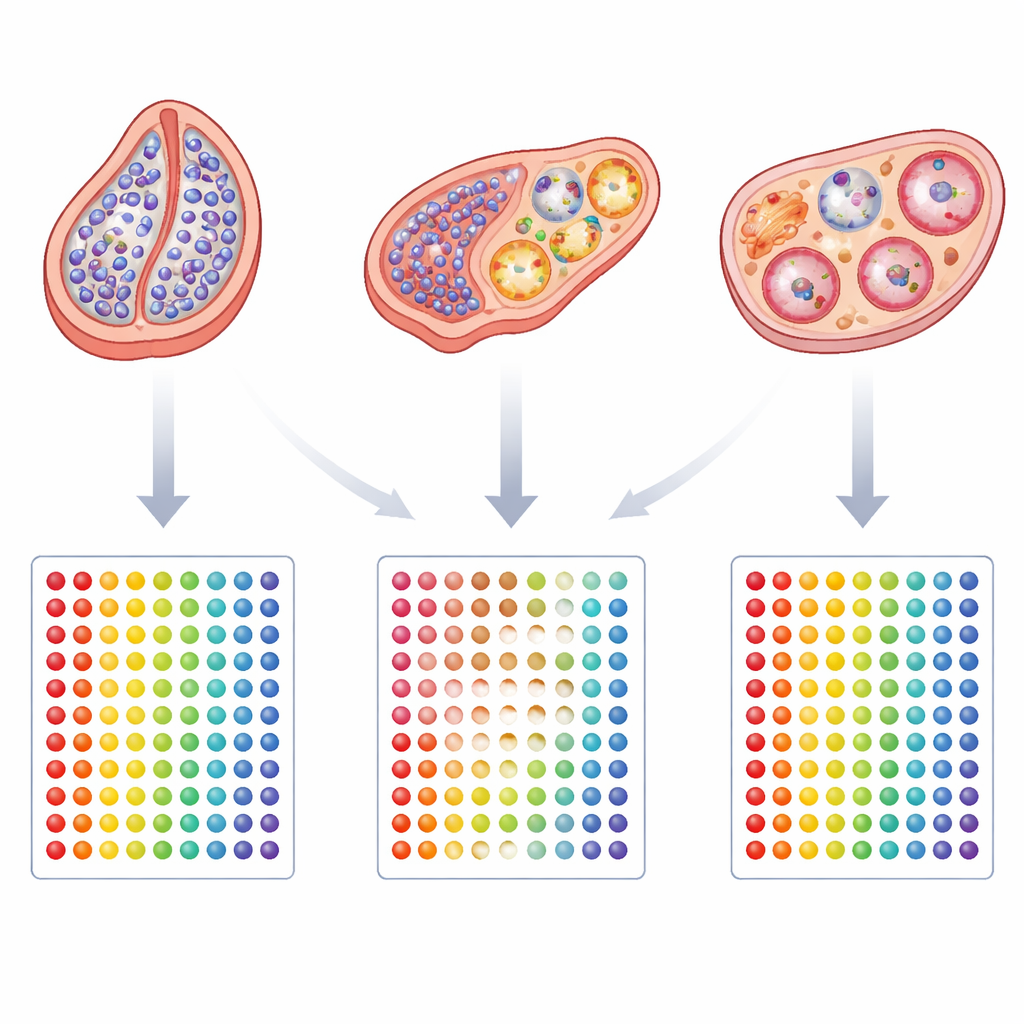
A shared theme across different conditions
Despite the diversity of clinical presentations, a recurring feature emerged: reduced activity of a gene called CBX2, which helps organize the way DNA is packaged and controls large sets of sex-determining genes. Experiments in animals had already shown that disrupting this regulator can blur the border between testis and ovary development. Its consistent downregulation in all DSD groups suggests that instability at this regulatory level may encourage gonads to drift away from a clear testis or ovary identity and settle somewhere in between. The study also highlights that some younger patients still show signs of developmental flexibility, with stronger signals in growth and early germ cell pathways than adults, hinting that timing may influence how firmly gonadal fate gets locked in.
Rethinking the simple switch
To a lay observer, this research says that human gonads do not simply flip between two fixed settings. Instead, they follow a spectrum of gene activity patterns that can land in strongly testicular, strongly ovarian, or intermediate states. For people with DSD, this means that what matters biologically is not only the chromosomes they carry or the way their bodies look from the outside, but also how their gonadal tissue has developed at the molecular level. By mapping these internal landscapes, the study argues for moving beyond a strictly binary view of sex development and for adding RNA-based tests alongside DNA sequencing in future clinical work. In doing so, it offers a more nuanced, biology-grounded understanding of sex that better fits the real diversity seen in patients.
Citation: Fabbri-Scallet, H., Calonga-Solís, V., Guerra-Júnior, G. et al. Exploring the underlying gene expression profiles of differences of sex development phenotypes through transcriptome analysis. Sci Rep 16, 8801 (2026). https://doi.org/10.1038/s41598-026-38435-5
Keywords: sex development spectrum, gonadal transcriptome, differences of sex development, gene expression profiling, ovotesticular DSD