Clear Sky Science · en
Cardiovascular risk assessed using the SCORE system and blood renalase concentration in the Polish subpopulation of the PURE study
Why a Kidney Enzyme Matters for Your Heart
Heart disease and stroke remain the world’s top killers, but most people never have a heart attack out of the blue. Doctors use risk calculators, based on age, blood pressure, cholesterol and smoking, to estimate a person’s chances of dying from cardiovascular disease over the next decade. This study looked at whether a little-known blood enzyme called renalase could provide an extra clue about who is at higher or lower risk—offering a potential new way to fine‑tune prevention long before symptoms appear.

A Closer Look at Heart Risk in Everyday People
The research focused on 269 middle‑aged women and men from Poland taking part in a large international health project known as the PURE study. None of the participants had already suffered a heart attack, stroke, kidney failure or diabetes, which can strongly distort risk estimates. For each person, the team collected standard health measures—such as blood pressure, body weight, cholesterol and blood sugar levels—as well as information on smoking. Using these data, they calculated each participant’s SCORE, a widely used European tool that estimates the 10‑year risk of dying from cardiovascular disease.
What Is Renalase and Why Study It?
Renalase is a protein made mainly by the kidneys and released into the bloodstream. Scientists first thought it broke down stress hormones like adrenaline, but later work showed its main role is linked to the body’s energy and repair systems, especially molecules involved in cell metabolism and protection under stress. Because it appears to influence blood vessel health, inflammation and how tissues cope with low oxygen, researchers have suspected that renalase might be connected to blood pressure and heart damage—but past studies have been small and sometimes contradictory.
Measuring a Hidden Signal in the Blood
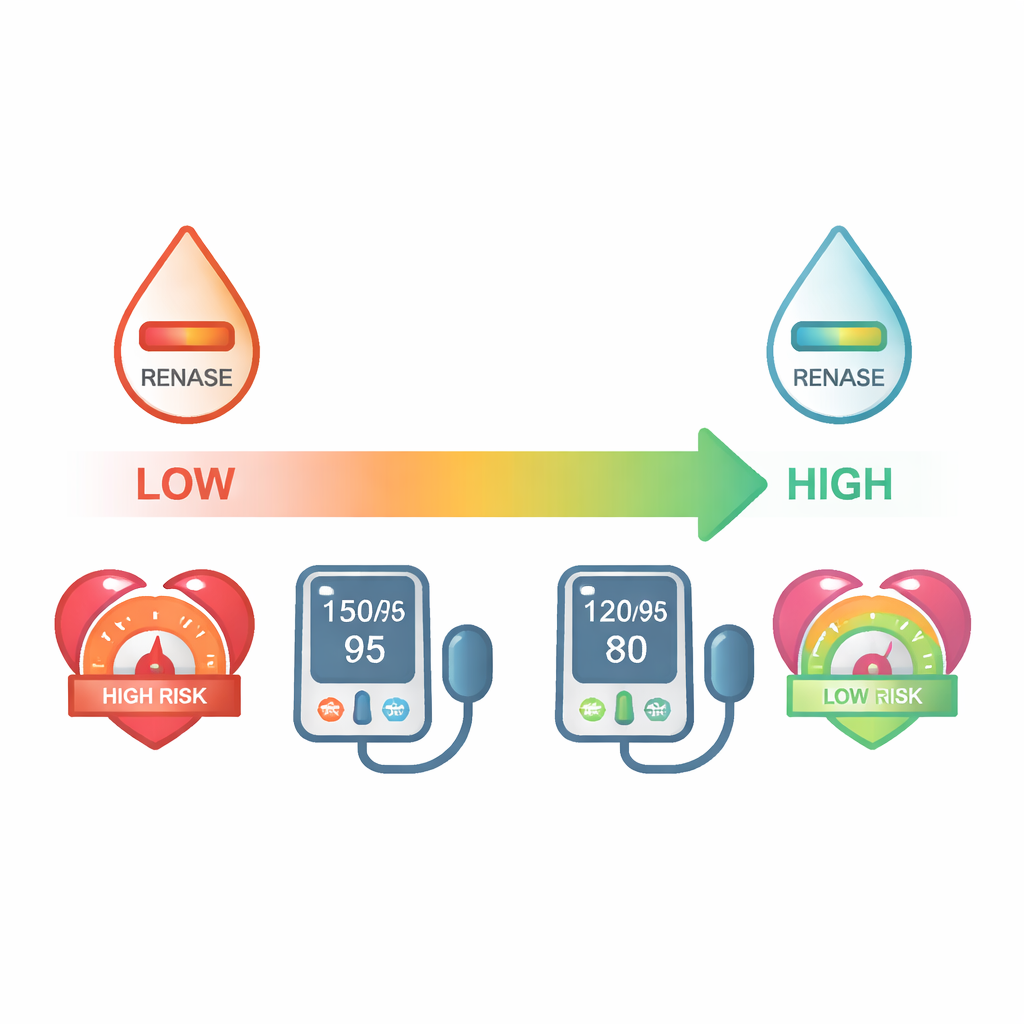
In this study, the researchers measured renalase levels in blood samples using a standard laboratory test. They then compared renalase with each person’s SCORE value and with individual risk factors. On average, renalase levels were about 68 nanograms per milliliter of blood, but there was wide variation between people. When the group was divided according to SCORE, those with lower predicted risk of dying from cardiovascular disease tended to have higher renalase levels, while those with higher predicted risk tended to have lower levels. Women also showed somewhat higher renalase levels than men.
Linking Enzyme Levels to Future Risk
When the team examined the data more closely, they found two clear patterns. First, higher renalase was modestly linked to lower systolic blood pressure—the top number in a blood pressure reading. Second, higher renalase was linked to a lower SCORE result, meaning a lower estimated chance of fatal cardiovascular events over 10 years. People in the lowest quarter of renalase values had, on average, higher predicted risk than those in the highest quarter. Using a type of analysis that tests how well a measurement can sort people into higher‑ and lower‑risk groups, the researchers identified a renalase level of about 84 nanograms per milliliter as a threshold that best signaled very low risk (a SCORE under 1%). Above this level, most people fell into the safest risk category.
What This Could Mean for Patients
For a layperson, the key takeaway is that, in this sample of adults without major existing disease, higher levels of the kidney‑derived enzyme renalase were associated with a healthier blood pressure profile and a lower calculated chance of dying from cardiovascular disease in the next decade. While the study does not prove that renalase itself protects the heart, it suggests that a simple blood test might one day help doctors sharpen risk predictions beyond traditional measures. Larger and longer studies will be needed, but renalase may become part of a more personalized approach to spotting who needs aggressive prevention and who is safely at low risk.
Citation: Żórawik, A., Hajdusianek, W., Połtyn-Zaradna, K. et al. Cardiovascular risk assessed using the SCORE system and blood renalase concentration in the Polish subpopulation of the PURE study. Sci Rep 16, 6939 (2026). https://doi.org/10.1038/s41598-026-38425-7
Keywords: cardiovascular risk, renalase, blood pressure, heart disease prevention, risk scoring