Clear Sky Science · en
Sprayable gelatin microparticles prevent delayed gastric bleeding in an anticoagulated swine model
Why protecting the stomach after surgery matters
Many people with heart disease, stroke risk, or blood clots rely on blood-thinning drugs to stay alive. But these same medicines can turn routine stomach procedures into risky operations, because small internal wounds may start bleeding hours after the doctor has finished. This study explores a new sprayable “bandage” made from fish-derived gelatin microparticles that can be delivered through a standard endoscope to coat fresh stomach wounds and help prevent these dangerous delayed bleeds.
A hidden risk after modern stomach surgery
Doctors increasingly treat early stomach tumors without open surgery by using endoscopic techniques that remove only the inner lining of the stomach. These methods, known as mucosal and submucosal resections, leave behind shallow but wide ulcers on the stomach wall. In most patients these ulcers heal without trouble. However, in people taking anticoagulant or antiplatelet drugs, serious bleeding can occur after the procedure, sometimes many hours later when the patient has already returned to the ward. As aging populations drive up the use of blood thinners, delayed bleeding after such endoscopic treatments has become a growing concern, yet there is no widely accepted way to prevent it.
A spray-on protective layer made from gelatin
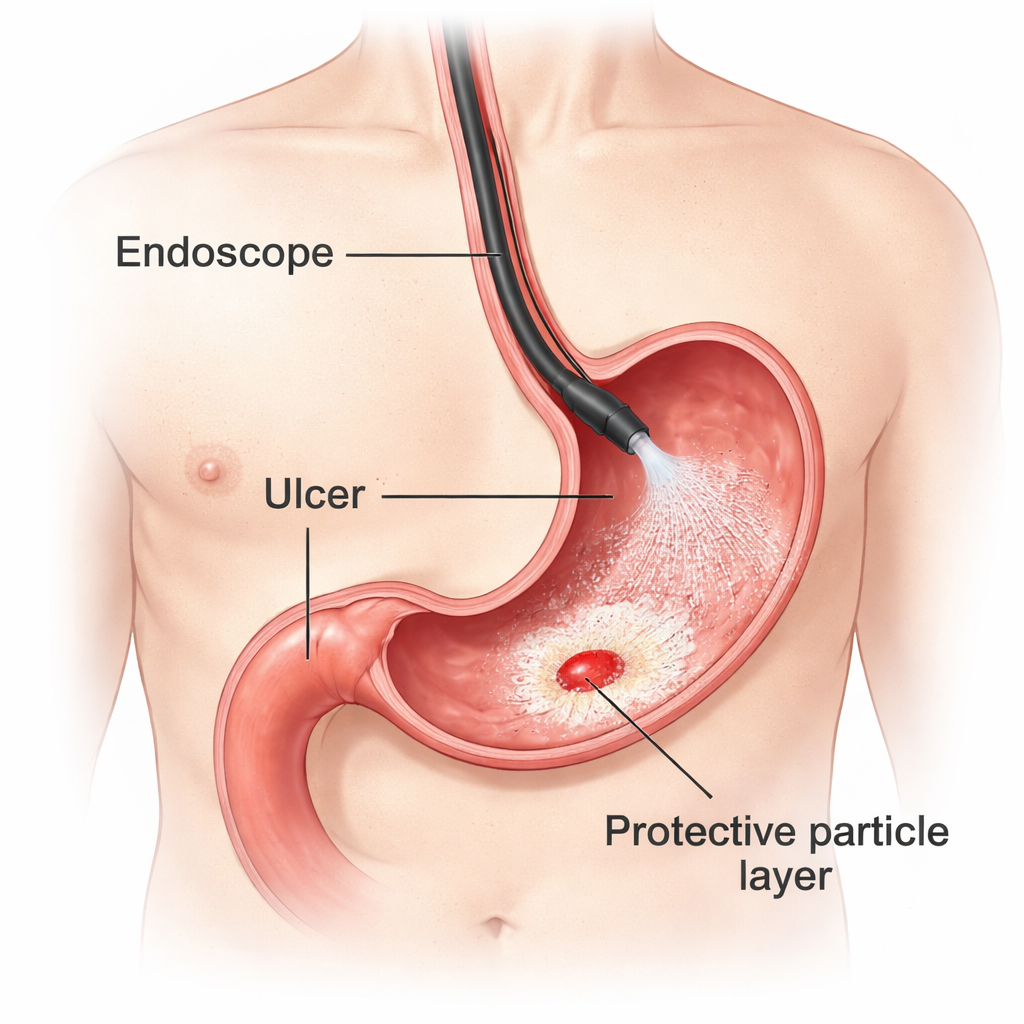
The research team has been developing tiny hydrophobic gelatin particles, called hydrophobized microparticles (hMPs), originally derived from swine gelatin and now from Alaska pollock gelatin. When these dry particles touch moisture, they quickly absorb water and fuse into a soft gel that strongly adheres to wet tissue, even inside the digestive tract. In earlier animal work, similar materials helped close perforations, reduce inflammation in ulcers, and prevent scarring in the esophagus. In this study, the scientists asked whether a simple spray of these fish-gelatin particles onto fresh stomach ulcers could prevent delayed bleeding in a highly challenging setting that mimics patients on strong blood thinners.
Testing the spray in a high-risk animal model
To create a realistic test bed, the researchers used three miniature swine and fashioned twelve small artificial ulcers in each animal’s stomach using a standard endoscopic technique. After the ulcers were created, they sprayed a fixed dose of hMP powder onto every ulcer base through the endoscope, forming a visible coating. They then pushed the animals into a strong anticoagulated state by repeatedly giving heparin, a powerful blood thinner, until blood-clotting times became much longer than normal, and kept them at this high-risk level for 24 hours. During this period, the team monitored the pigs, checked blood counts, and re-examined the stomachs by endoscopy and later by detailed tissue analysis under the microscope.
What the scientists saw inside the stomach
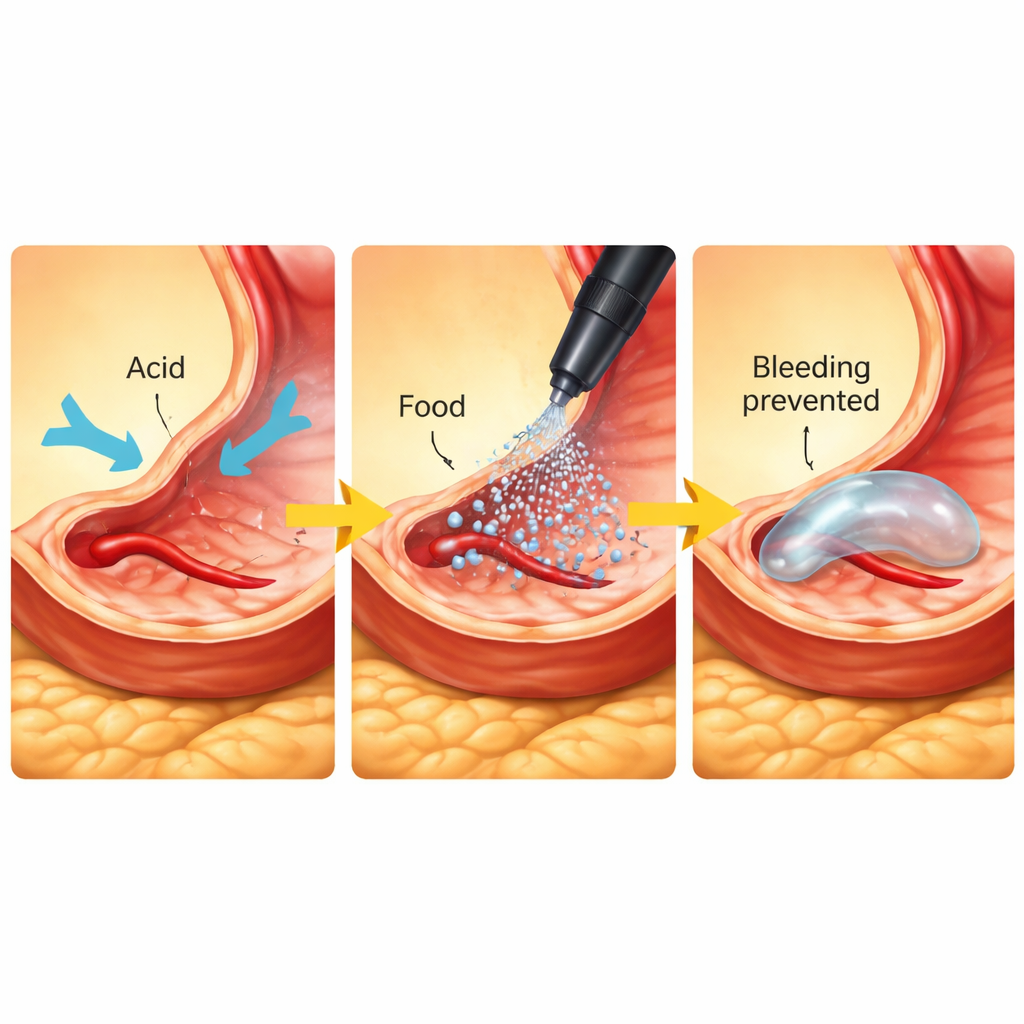
Despite the intense blood thinning and the large number of ulcers, none of the three animals showed signs of delayed bleeding. Hemoglobin levels stayed stable, and endoscopic and anatomical inspection found no pooled blood, fresh clots, or active bleeding sites. In all 36 examined ulcer sections, the gelatin particles were still present, giving a 100% retention rate. More than half of the cross-sections showed complete coverage of the ulcer base, and every ulcer had at least half of its surface covered. Importantly, when small blood vessels were exposed at the bottom of the ulcer—a common source of dangerous bleeding—the hMP gel layer consistently covered them. Microscopic images confirmed that the material formed a firm, continuous shield over these vessels, matching the idea that the spray functions as a physical barrier against stomach acid, food rubbing, and mechanical irritation.
Promise and remaining questions
These results suggest that a simple spray of fish-gelatin microparticles can act like an internal, water-resistant bandage that clings to stomach wounds, protects fragile vessels, and prevents delayed bleeding in a demanding animal model. The study is an early proof of concept: only three animals were used, there was no direct control group in this experiment, and observations were limited to the first 24 hours. Still, previous work with the same bleeding model shows that heavy bleeding is common under these heparin conditions, lending weight to the protective effect seen here. If future studies in larger animal groups and, eventually, in human patients confirm these findings, gastroenterologists may gain a quick, endoscope-delivered tool to make stomach surgery safer for people who cannot safely stop their blood thinners.
Citation: Uehara, S., Sasaki, F., Maeda, H. et al. Sprayable gelatin microparticles prevent delayed gastric bleeding in an anticoagulated swine model. Sci Rep 16, 7075 (2026). https://doi.org/10.1038/s41598-026-38423-9
Keywords: stomach bleeding, endoscopic surgery, blood thinners, gelatin microparticles, gastric ulcers