Clear Sky Science · en
LC-MS/MS characterization, biological activity, and carbonic anhydrase inhibitory potential of five medicinal plant extracts from Romania and Türkiye
Herbal Helpers for Heart and Kidney Health
Many people reach for herbal teas or plant-based remedies to ease swelling, high blood pressure, or stress, but it is often unclear which plants truly help and why. This study looks closely at five familiar medicinal plants from Romania and Türkiye and asks a simple question with big consequences: which ones contain natural substances that could safely support diuretic drugs—medicines that help the body shed excess fluid—while also protecting our cells from damage?
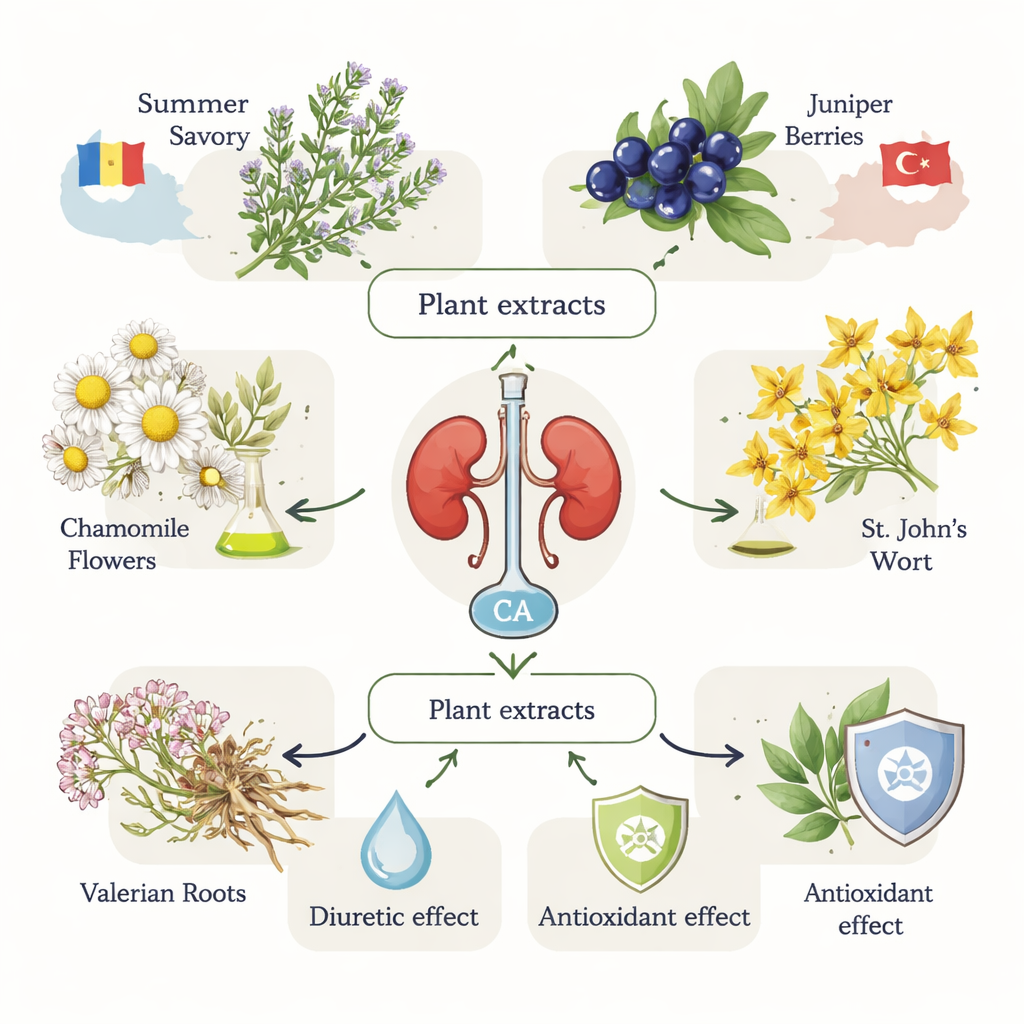
Five Old Remedies Put to a Modern Test
The researchers focused on plants long used in traditional medicine: summer savory (Satureja hortensis), common juniper, chamomile, St. John’s wort, and valerian. All are mentioned as “water-driving” remedies in medical writings going back to Avicenna more than a thousand years ago. To compare them fairly, the team bought certified plant material from shops in both Romania and Türkiye, prepared identical alcohol–water extracts, and then tested how well these extracts blocked a key enzyme linked to diuretic action and measured their antioxidant strength.
Why One Enzyme Matters for Fluid Balance
The enzyme under the microscope is carbonic anhydrase, which helps turn carbon dioxide into bicarbonate and back again, a process that quietly controls acidity, salt handling, and fluid movement in the kidneys and other organs. Many prescription diuretics work by slowing this enzyme, so a plant extract that inhibits carbonic anhydrase can be a clue to natural diuretic potential. In test-tube experiments, the scientists mixed the plant extracts with purified human carbonic anhydrase and tracked how strongly each extract slowed the reaction, comparing the results to acetazolamide, a standard synthetic drug.
What the Chemical Fingerprints Revealed
Using a sensitive technique called LC–MS/MS, the team created detailed “chemical fingerprints” for 35 plant compounds, mainly phenolic acids and flavonoids—molecules already known for antioxidant and sometimes diuretic effects. They found that the same species grown in different countries shared many of the same chemicals, but the amounts often differed. Turkish summer savory was especially rich in rosmarinic acid, while Romanian juniper was richer in certain flavonoids, and Turkish St. John’s wort had high levels of quercetin and chlorogenic acid. A statistical method called principal component analysis showed that these differences in chemical makeup lined up closely with differences in biological activity.
Summer Savory Stands Out
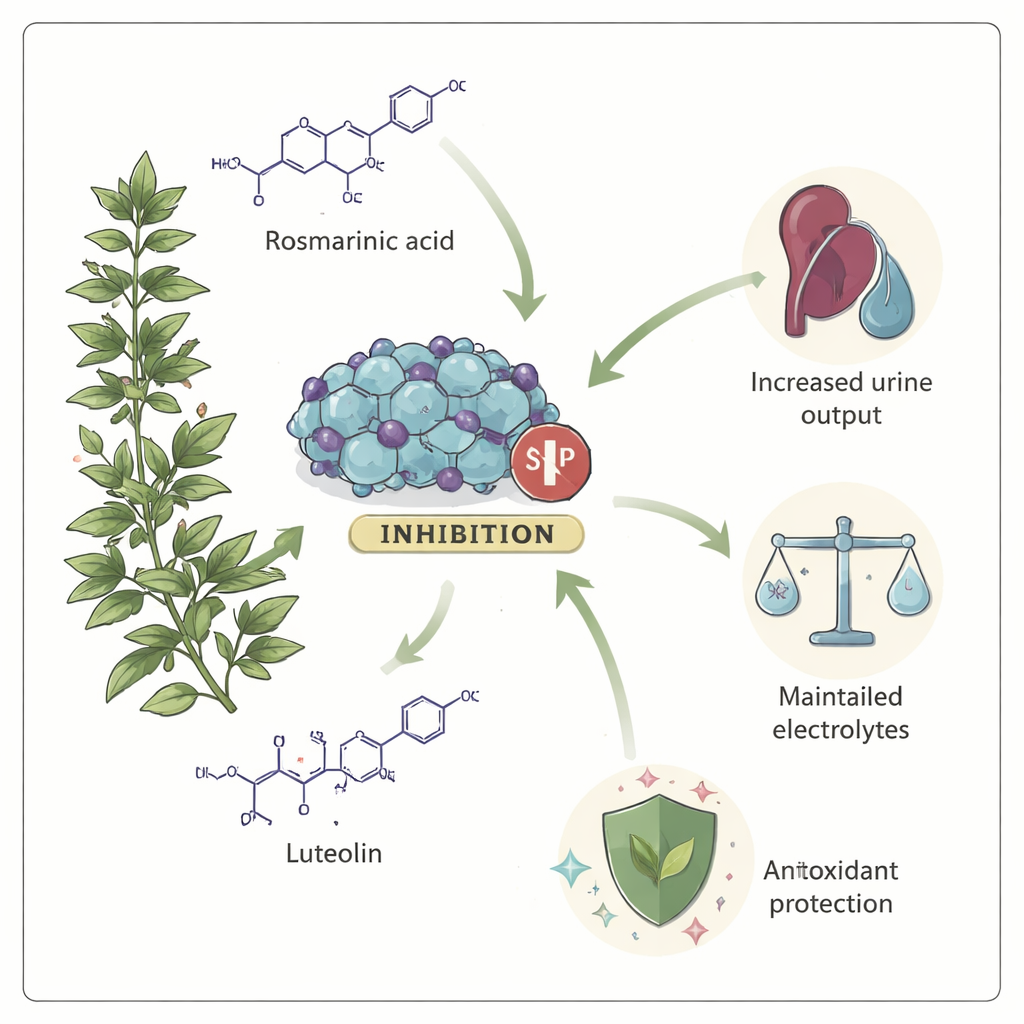
When it came to blocking carbonic anhydrase, summer savory clearly led the pack. Extracts from both countries showed the strongest enzyme inhibition and needed the smallest amounts to cut enzyme activity in half, suggesting the greatest diuretic potential. Turkish summer savory, with the highest rosmarinic acid content, performed best of all. St. John’s wort extracts, especially from Türkiye, excelled as antioxidants and contained the most total phenolic and flavonoid material, yet were somewhat less powerful as enzyme blockers. By correlating numbers, the researchers showed that rosmarinic acid and the flavonoid luteolin were closely tied to carbonic anhydrase inhibition, while other compounds such as quercetin and catechin were more strongly linked to antioxidant strength.
Why Where a Plant Grows Changes Its Power
The study also highlights how climate and growing conditions shape the pharmacy inside each plant. Even though the species were the same, plants from Romania and Türkiye did not always store the same balance of key compounds. Factors such as sunlight, temperature, soil, and harvest conditions appear to push plants toward different mixes of phenolic acids and flavonoids. This means that the country of origin can quietly change how effective a herbal product is, especially when it is used for precise tasks like supporting diuretic therapy or providing antioxidant protection.
What This Means for Everyday Use
For lay readers, the main message is that some traditional herbs really do contain molecules that act on the same targets as modern diuretics, at least in the lab. Summer savory, in particular, emerges as a promising natural source of carbonic anhydrase blockers, largely thanks to rosmarinic acid and luteolin, which may promote urine production while helping maintain electrolyte balance. St. John’s wort and the other plants contribute more strongly on the antioxidant side, potentially guarding tissues from the oxidative stress that accompanies heart and kidney problems. The authors stress that these results come from controlled experiments, not clinical trials, but they argue that carefully profiled, geographically standardized plant extracts could one day complement conventional treatments for fluid overload, high blood pressure, and related disorders.
Citation: Büker, E., Casoni, D., Cobzac, S.C.A. et al. LC-MS/MS characterization, biological activity, and carbonic anhydrase inhibitory potential of five medicinal plant extracts from Romania and Türkiye. Sci Rep 16, 7023 (2026). https://doi.org/10.1038/s41598-026-38419-5
Keywords: medicinal plants, natural diuretics, carbonic anhydrase, rosmarinic acid, antioxidant activity