Clear Sky Science · en
Maternal Bacillus probiotic regulates offspring growth and immunity via spleen IGF-1/mTOR and FOXO1/IL-10 pathways
Why a Mother’s Microbes Matter for Her Young
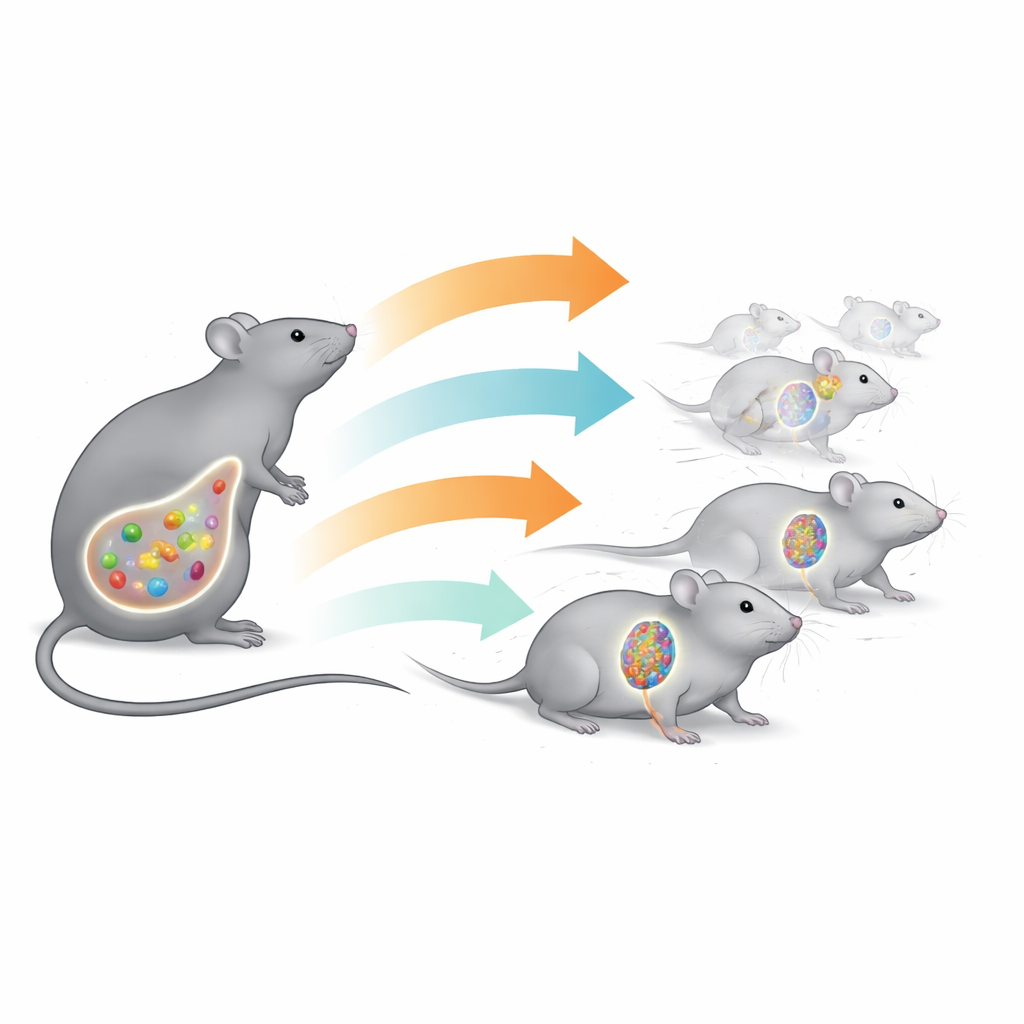
Expectant parents often wonder how their own health shapes that of their children. This study asks a very specific version of that question: if a mother takes a particular probiotic during pregnancy, can it quietly reprogram her offspring’s growth and immune system? Using mice as a model, the researchers show that a common Bacillus probiotic given to pregnant females can make their young grow better and develop a calmer, more efficient immune defense centered in the spleen.
A Friendly Bacterium Given at the Right Time
The team focused on Bacillus clausii, a spore-forming bacterium already used in people to support gut health. They mated female mice and divided the pregnant animals into four groups. One group ate a standard diet with plain water. The other three received daily doses of the probiotic mixed into their food, but starting at different moments in pregnancy: from day 0 (very early), day 8 (middle), or day 16 (late). This design let the scientists test whether timing matters for shaping the next generation’s development.
Stronger Growth and a Busier Spleen
When the male offspring reached 28 days of age—roughly the early juvenile stage in mice—the researchers weighed them and examined their blood and spleens. The pups whose mothers had received probiotics from the very start of pregnancy were heaviest, with the largest spleens relative to body size. Their blood carried higher levels of growth hormone and its partner signal, insulin-like growth factor 1, which together drive body growth. At the same time, standard blood-cell counts stayed normal, indicating that the probiotic did not stress the animals or disrupt basic blood formation.
A Calmer, More Balanced Immune Response
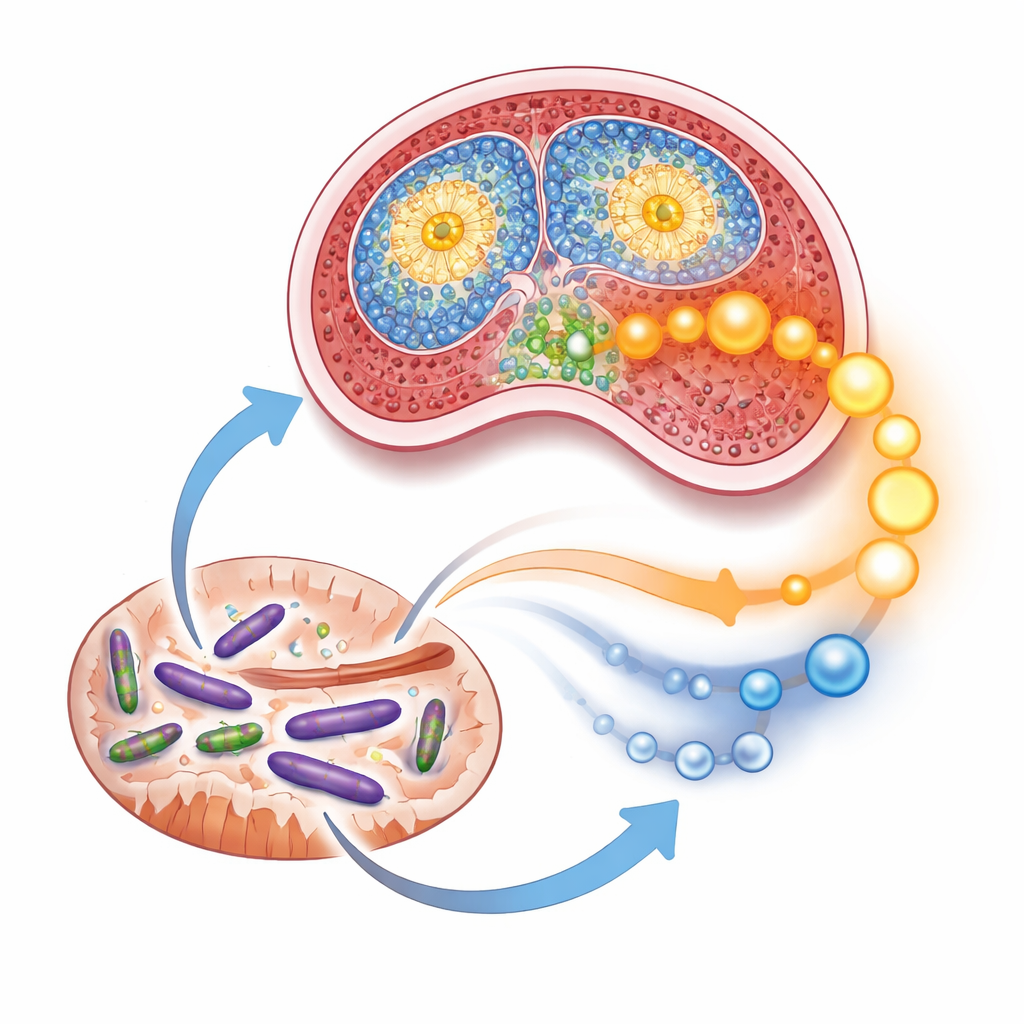
The spleen acts as a central meeting point for immune cells that patrol the blood. In probiotic-exposed offspring, especially those from the early-start group, the spleen’s internal structure looked more mature under the microscope. Areas rich in B and T cells—the white pulp—were larger and better organized, with clear germinal centers where antibody-producing cells expand. Blood tests echoed this pattern: levels of protective antibodies IgA and IgG were higher, while classic pro-inflammatory signaling proteins such as TNF-alpha and interferon-gamma were lower. In contrast, the anti-inflammatory messenger IL-10 rose sharply. Taken together, these changes suggest an immune system that is more ready to respond to threats but less prone to harmful overreaction.
Inside the Spleen’s Control Circuits
To move beyond simple measurements, the scientists zoomed in on molecular control switches inside spleen cells. They found that a growth-related pathway centered on a protein complex called mTOR was more active, and that the hormone signal IGF‑1 was more abundant in spleen tissue. At the same time, a transcription factor called FOXO1—which in resting immune cells helps keep them in a quiet state—was less active in its usual nuclear location. The pattern was most pronounced when mothers received the probiotic from the start of pregnancy and weaker when supplementation began later. This points to a window during early development when signals from the maternal gut can tune the offspring’s immune wiring.
What This Could Mean for Early-Life Health
In everyday terms, this mouse study suggests that a well-chosen probiotic taken by the mother during early pregnancy can nudge her offspring toward better growth and a more finely tuned immune system. By reshaping the spleen’s architecture and tipping chemical signals toward anti-inflammatory responses, maternal Bacillus supplementation seemed to produce young mice that were both sturdier and less prone to excessive immune flare-ups. While more work is needed—especially in humans—to define safety, timing, and exact mechanisms, the findings highlight a tantalizing idea: simple changes in a mother’s gut microbes may offer a low-cost way to boost children’s long-term immune resilience.
Citation: Aldayel, T.S., Abdelrazek, H.M.A., El-Fahla, N.A. et al. Maternal Bacillus probiotic regulates offspring growth and immunity via spleen IGF-1/mTOR and FOXO1/IL-10 pathways. Sci Rep 16, 8500 (2026). https://doi.org/10.1038/s41598-026-38412-y
Keywords: maternal probiotics, infant immunity, Bacillus clausii, spleen development, early-life microbiota