Clear Sky Science · en
Detection of Wencheng shrew virus and cardiovirus from small mammals in Myanmar
Why tiny animals matter for human health
Most of us rarely think about the mice, rats, and shrews that share our cities, farms, and even homes. Yet these small mammals can quietly host viruses that sometimes jump into people, as the world was reminded during the COVID-19 pandemic. This study explores what viruses are circulating in common small mammals in Myanmar, a country rich in wildlife but with limited disease surveillance, and reveals two noteworthy viruses hiding in plain sight.
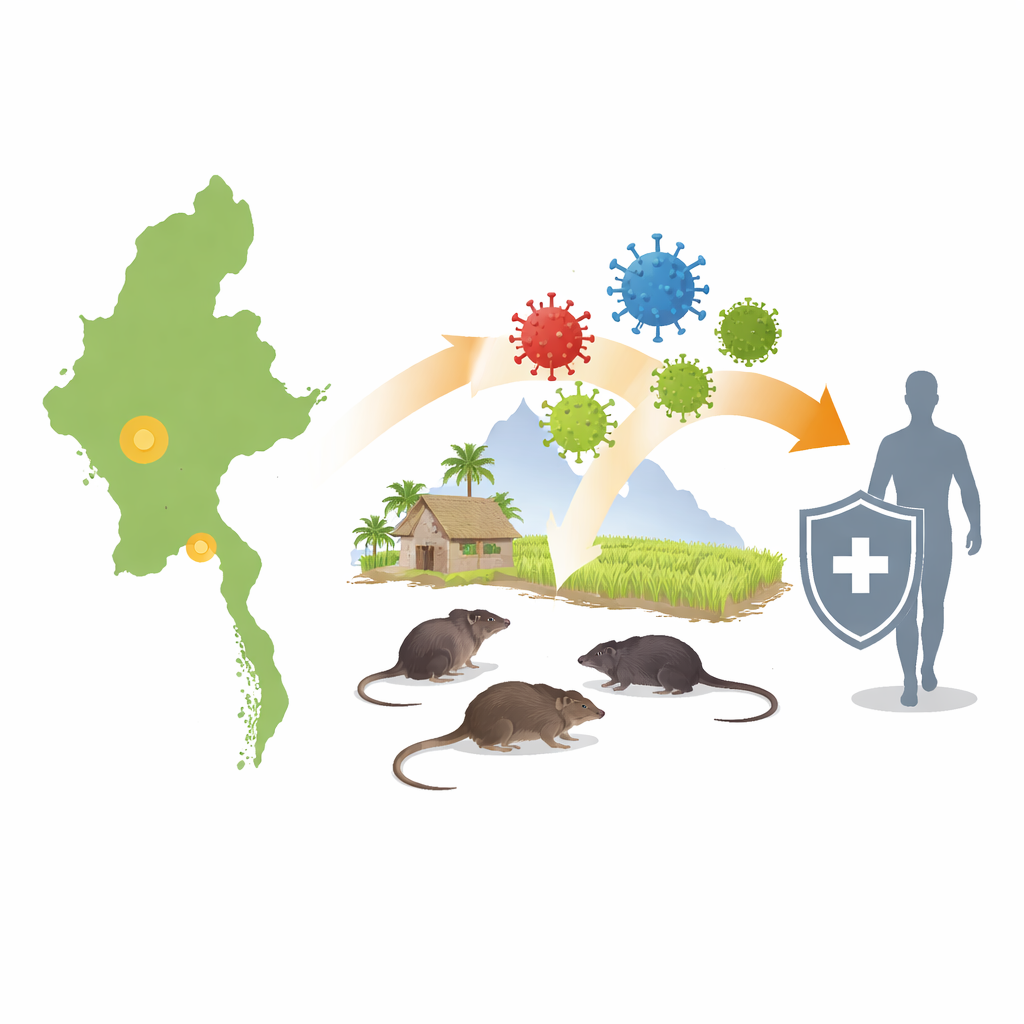
Watching wildlife where people and animals meet
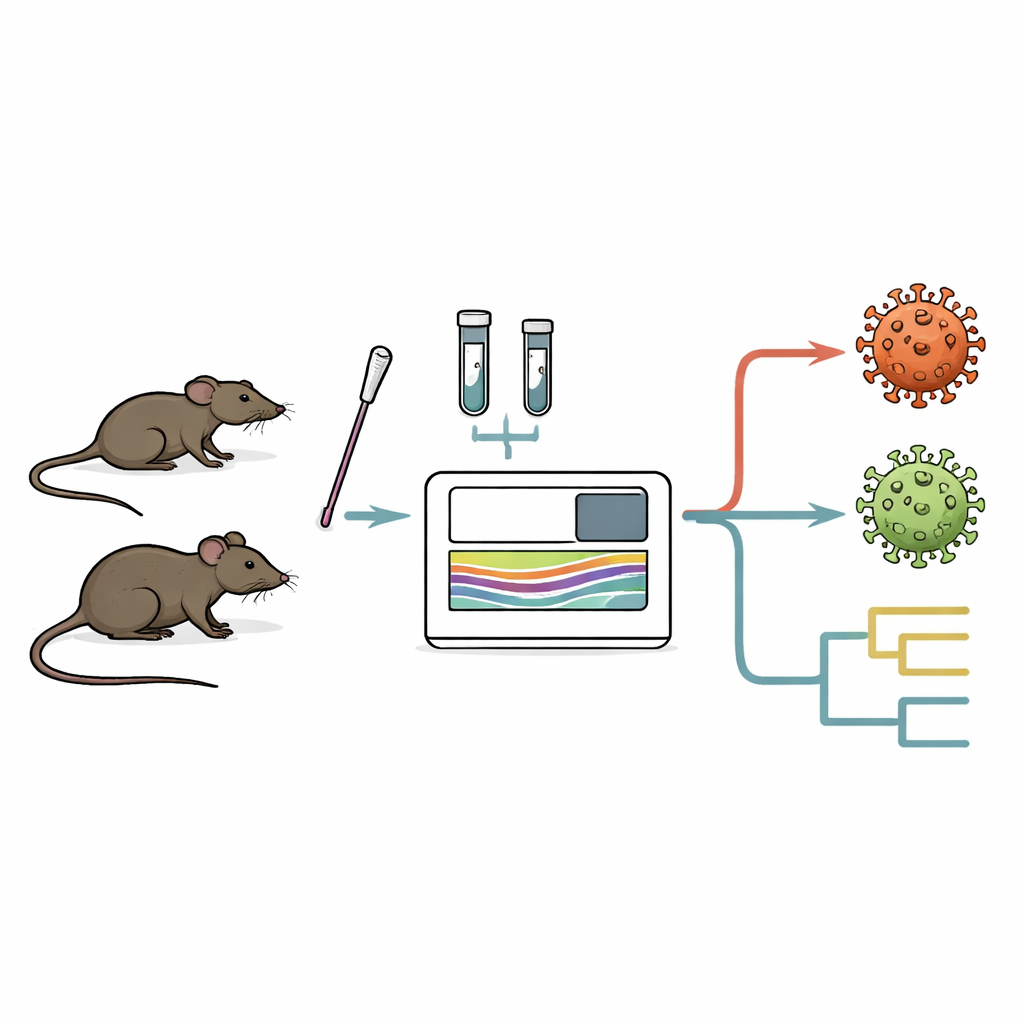
Researchers worked at several sites in Myanmar’s Yangon Region and Kayin State between 2017 and 2018. These locations were chosen because they are places where people, domestic animals, and wildlife frequently mix, such as villages near protected areas and a cave site. Field teams humanely trapped free-ranging rats, mice, and shrews, identified the species, and collected rectal swabs before releasing the animals. The goal was simple but ambitious: to take an unbiased look at the full spectrum of RNA viruses present in these small mammals at the human–animal boundary.
Using genetic tools to see the unseen
Instead of testing for one virus at a time, the team used metagenomic next-generation sequencing, a powerful method that reads millions of bits of genetic material from each sample. By comparing these genetic fragments to large public databases, they could detect known viruses and close relatives of unknown ones. Sophisticated computer analyses then pieced together partial genomes and placed the detected viruses onto evolutionary “family trees,” allowing the scientists to see how the Myanmar findings related to viruses previously reported elsewhere.
A shrew coronavirus shows a wider reach
In one Southeast Asian shrew (Crocidura fuliginosa) from Hlawga National Park, the team found a coronavirus closely related to the Wencheng shrew virus, originally discovered in Asian house shrews in China. This is the first time this virus has been reported in Myanmar and in this shrew species. Although only part of the viral genome was recovered, it included several key genes and showed around 90 percent similarity to known Wencheng shrew virus sequences. On evolutionary trees, the Myanmar virus sat on its own long branch within the same subgroup, hinting at a distinct local lineage and suggesting that shrew viruses in the region are more diverse than previously recognized.
A rat virus linked to relatives from abroad
In brown rats (Rattus norvegicus) from the same park, the researchers identified a partial genome of a cardiovirus, a group of viruses that can infect rodents and sometimes humans. This virus, named Hlawga-18, most closely resembled rodent cardioviruses previously found in wild rats in China, again sharing high but not identical genetic similarity. When placed on an evolutionary tree, Hlawga-18 clustered tightly with these Chinese strains and fell near a group of human-infecting cardioviruses known as Saffold viruses. Although the study could not determine whether this rat virus can infect people, its close relationship to human-associated viruses makes it a candidate for closer watch.
What these findings mean for people and nature
For everyday readers, the key message is that changes in land use, farming, and urban growth in Myanmar are reshaping wildlife communities in ways that may favor small mammals that carry a variety of viruses. By showing that both a shrew coronavirus and a rat cardiovirus are already circulating in places where people live and work, this study underscores the importance of ongoing, proactive surveillance. Understanding which viruses are present, how they are related to known human pathogens, and where they occur can help public health officials anticipate future spillover risks, rather than reacting only after outbreaks begin.
Citation: Paoli, J.E., Aung, O., Lilak, A.A. et al. Detection of Wencheng shrew virus and cardiovirus from small mammals in Myanmar. Sci Rep 16, 8885 (2026). https://doi.org/10.1038/s41598-026-38406-w
Keywords: zoonotic viruses, small mammals, Myanmar, viral surveillance, rodents and shrews