Clear Sky Science · en
Evaluating the 2024 dog oral rabies vaccination campaign in the Zambezi region, Namibia using GIS and household surveys
Why this dog story matters for people
Rabies is almost always fatal once symptoms appear, but it is also almost completely preventable. In many parts of Africa, the virus is spread mainly by domestic dogs that live close to people. This study reports on an ambitious 2024 campaign in Namibia’s Zambezi region that tried a new way to reach large numbers of dogs quickly: offering them vaccine hidden in tasty baits. By combining this approach with digital mapping and household interviews, the team shows how communities with few resources can still push back a deadly disease that threatens both pets and people.
A region on the front line
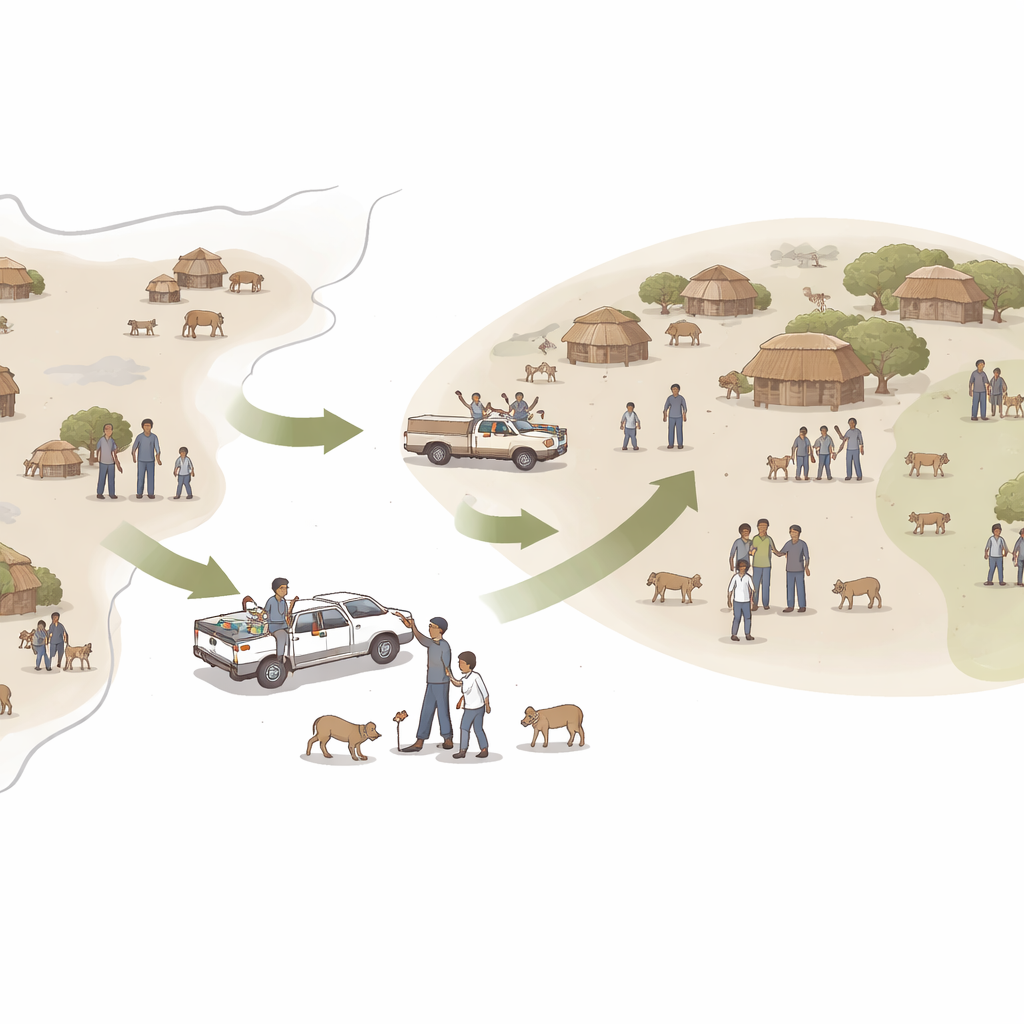
The Zambezi region in northern Namibia is a rural area crisscrossed by rivers, floodplains and rough tracks. Many families keep dogs for protection and herding, but getting these animals to a clinic for injections is difficult. Roads can be cut off by water, some dogs roam freely, and veterinary services are stretched thin. Rabies has been a stubborn problem here, causing illness in animals and tragic deaths in people. Namibia already had a national plan to fight dog rabies, but officials wanted to know whether adding oral vaccination—where dogs eat a bait that contains a vaccine—could boost protection in such a challenging landscape.
How the bait-based campaign worked
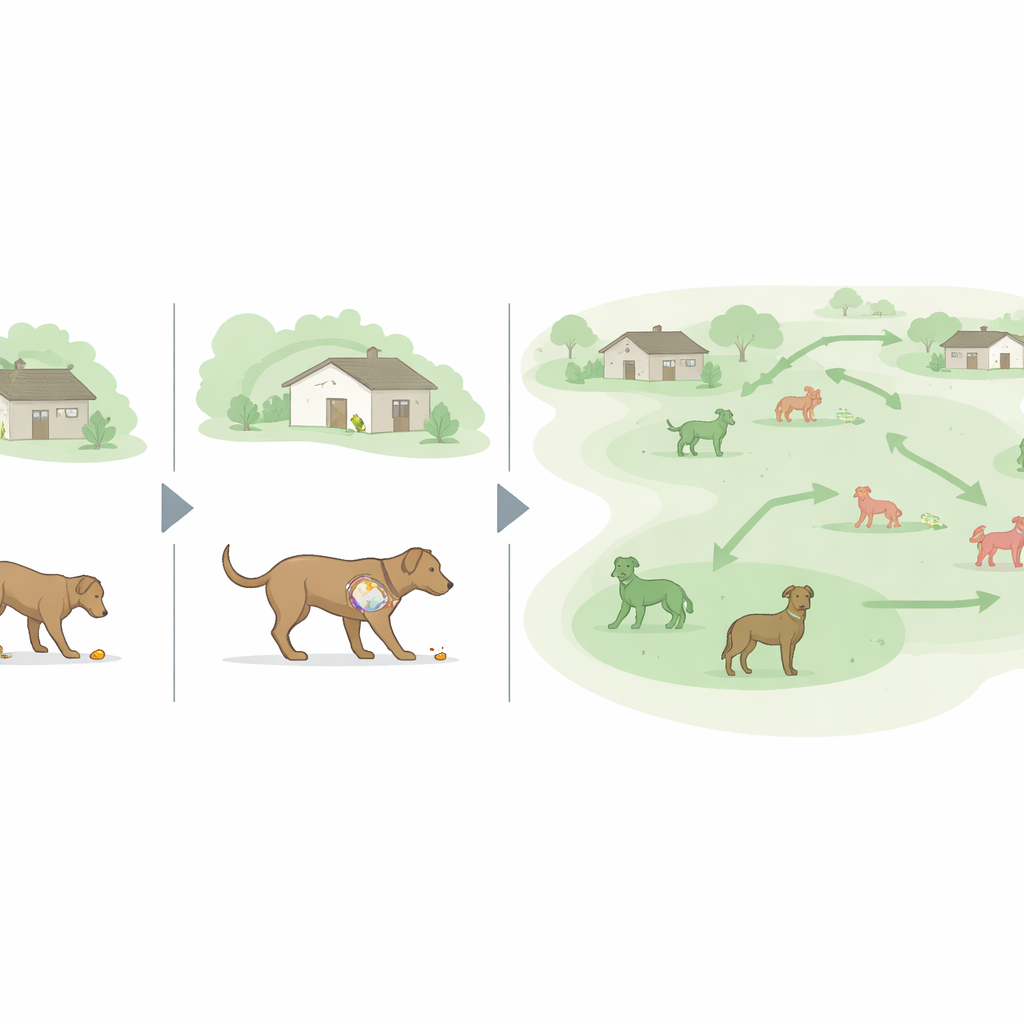
In June 2024, ten field teams set out across 14,745 square kilometers of Zambezi with coolers full of oral vaccine baits. Each team used four-wheel-drive trucks and a smartphone app to navigate pre-defined areas, record every vaccinated dog, and track their own progress in real time. When dogs could be approached, vaccinators offered the bait directly; when they could not, baits were handed to owners along with simple instructions. Over four planned working days, plus an extra day for a remote island, teams distributed 9,393 baits, more than 1,700 of them through dog owners. On average, each team vaccinated around 25 dogs per hour and more than 160 dogs per day—far faster than traditional injection-only campaigns in similar rural settings.
Seeing coverage through maps and doorsteps
To understand how well the campaign protected the region, the researchers combined field data with population maps and satellite-derived building footprints. Using known ratios of people to dogs, they estimated that the oral baits alone reached about 48 percent of the dog population, rising to nearly 57 percent when recent injection-based vaccinations were counted. When the team divided the region into 10-by-10-kilometer squares, the average coverage was around 60 percent, and most of the human population—about four out of five residents—lived inside areas where dogs had been offered vaccine. A separate door-to-door survey of 460 households later in the year backed this up: more than half of all dogs were reported as vaccinated, almost triple the level found in a similar survey in 2021. Most vaccinated dogs had received the oral bait.
What communities experienced
Interviews also revealed how people perceived the new approach. Dog ownership had risen since 2021, and most respondents viewed the bait vaccine positively and were willing to help vaccinate their own animals. The main reason dogs were still unvaccinated was simple lack of awareness, rather than distance or handling problems. Reports of rabies in animals dropped from 12 percent of surveyed neighborhoods in 2021 to about 5 percent in 2024, suggesting that repeated vaccination rounds were starting to curb the virus, even though cases had not disappeared entirely. Dog bites remained common, mostly from owned dogs, but nearly eight in ten victims received post-exposure treatment, and safety rules were followed for the few bites that occurred right after dogs ate vaccine baits.
Lessons for beating rabies
The study shows that even in a flood-prone, hard-to-reach region, teams can vaccinate thousands of dogs in just a few days by combining oral baits, owner participation and digital mapping tools. While the campaign did not yet reach the often-cited goal of vaccinating about 70 percent of dogs—a level expected to break transmission—it still raised coverage sharply and likely contributed to fewer animal rabies reports. The authors conclude that this kind of data-driven, bait-based strategy can form a strong backbone for future efforts: if repeated regularly, focused on pockets with low coverage, and paired with better public education and disease reporting, it could move regions like Zambezi much closer to a future where rabies no longer threatens dogs or the people who live with them.
Citation: Freuling, C.M., Shikongo, M.B., Busch, F. et al. Evaluating the 2024 dog oral rabies vaccination campaign in the Zambezi region, Namibia using GIS and household surveys. Sci Rep 16, 9204 (2026). https://doi.org/10.1038/s41598-026-38405-x
Keywords: rabies control, dog vaccination, oral vaccine baits, Namibia Zambezi, One Health