Clear Sky Science · en
Quality and reliability of weight management short videos on TikTok and Bilibili: cross-sectional study
Why Your Weight-Loss Feed Matters
Many people now turn to quick, catchy videos on apps like TikTok and Bilibili for tips on losing weight and getting healthier. But when advice comes from strangers on a screen, how do you know what to trust? This study looked closely at popular weight management videos on these two platforms to see who is posting them, how accurate they are, and whether the most liked clips are actually the most reliable.
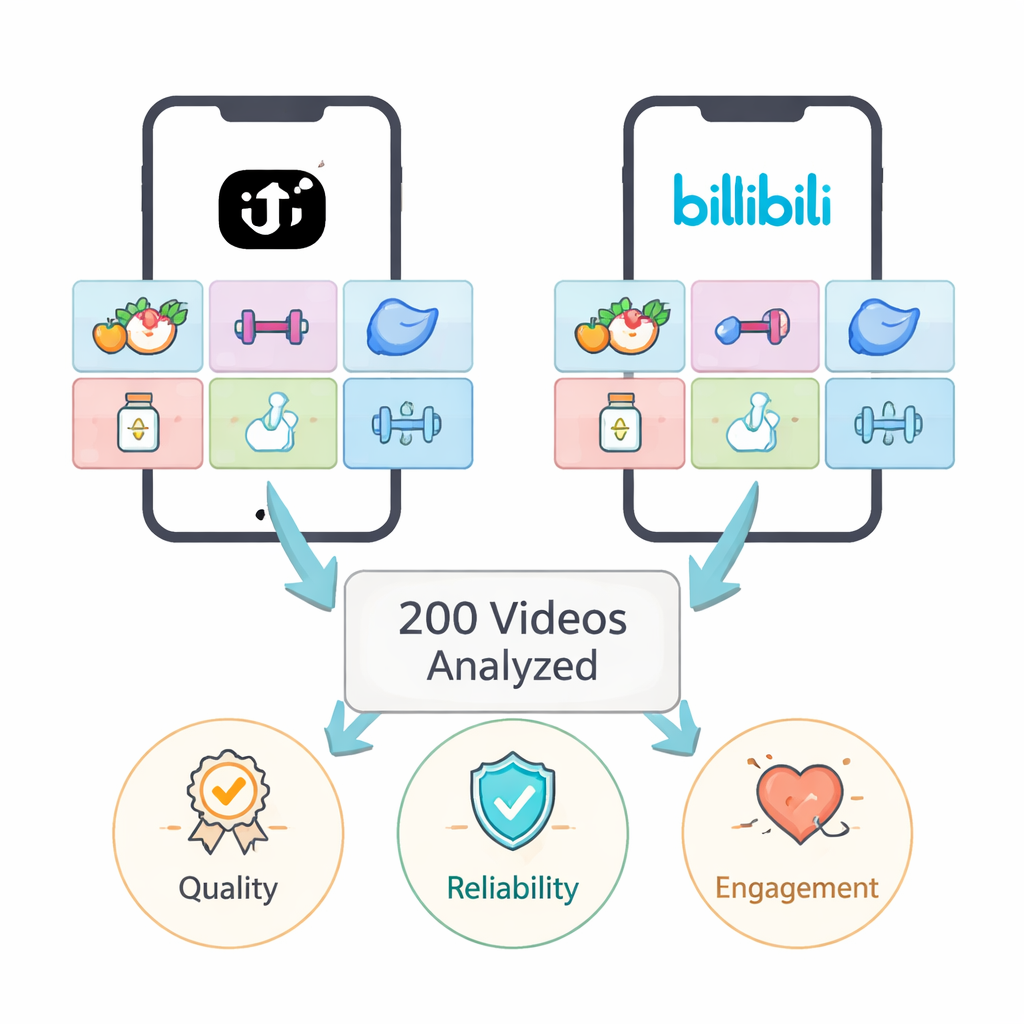
Two Apps, Same Topic, Different Worlds
The researchers focused on the Chinese versions of TikTok and Bilibili, two of the most widely used short-video platforms in China. Using the term “weight management,” they collected the top 100 videos from each app on a single day, after clearing all personal search history to avoid biased recommendations. They then recorded basic details such as how long the videos were, how many likes, comments, saves, and shares they had, and how many followers the creators claimed. Each video was also labeled by who made it—doctors, fitness influencers, everyday users, or non-profit organizations—and by what it talked about, such as diet, exercise, sleep, medications, surgery, or traditional remedies.
How the Videos Were Judged
To go beyond gut feeling, the team used established tools that are normally applied to medical information. One scale, called the Global Quality Score, gives an overall rating from very poor to excellent. Another, known as DISCERN, focuses on how trustworthy the information is, for example whether it explains benefits and risks and cites sources. Two doctors watched every video independently and scored them, then resolved any disagreements with a third reviewer. This careful process helped ensure that the final ratings reflected a consistent professional judgment of quality and reliability, not just first impressions.
Popular Does Not Mean Trustworthy
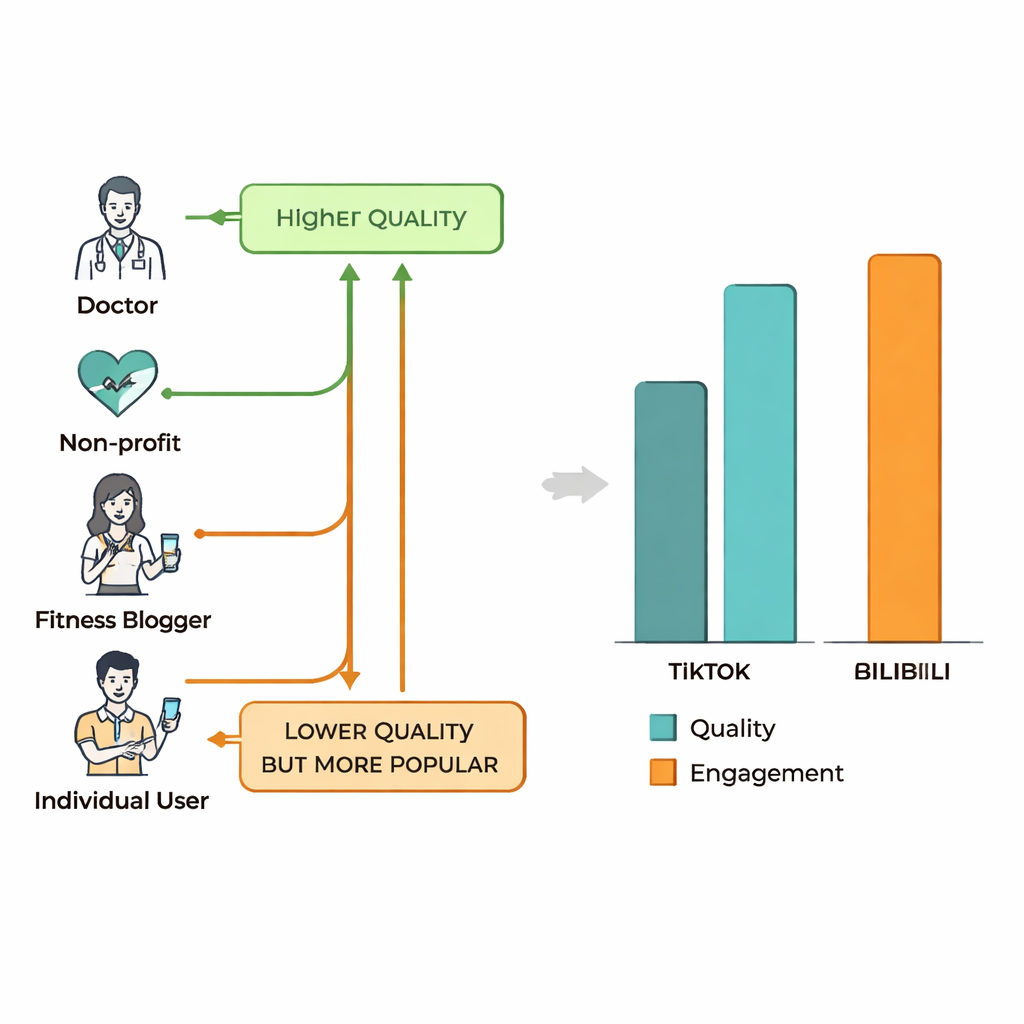
Across the 200 videos, the overall picture was worrying. On average, both TikTok and Bilibili videos scored low on quality, and only moderate on reliability. TikTok clips were shorter but far more popular, attracting many more likes, comments, saves, and shares. Bilibili videos, by contrast, tended to be longer, cover a wider range of topics, and earn higher scores for quality and reliability. The most common creators on both platforms were ordinary individuals, whose videos were the least dependable. Fitness influencers drew the biggest crowds and engagement, but their content usually rated as low in scientific value. Doctors and non-profit groups, though responsible for only a small share of uploads, produced the highest-quality and most reliable videos.
When Attention Rewards the Wrong Things
A striking finding was that the more popular a video was, the worse it tended to be from a scientific standpoint. Clips with higher numbers of likes, comments, shares, and saves were, on average, lower in both quality and reliability. Short, flashy videos with dramatic claims or personal success stories seemed to spread more easily than slower, more detailed explanations rooted in medical evidence. Longer videos, while still far from perfect, were slightly more trustworthy. The platforms’ recommendation systems, which push highly engaged videos to more users, may therefore be amplifying low-quality advice about weight control.
What This Means for Your Health Choices
For everyday viewers trying to manage their weight, the study delivers a clear message: do not assume that a viral video is good guidance just because many people have watched or liked it. On TikTok and Bilibili, the most popular weight-loss clips are often the least reliable. Whenever possible, look for videos from doctors and reputable health organizations, and treat bold promises and quick-fix tips with caution. The authors argue that platforms should strengthen review systems and promote more expert-made content, but until that happens, viewers themselves must be skeptical and double-check online advice with qualified professionals.
Citation: Han, L., Liu, F., Wang, Z. et al. Quality and reliability of weight management short videos on TikTok and Bilibili: cross-sectional study. Sci Rep 16, 7401 (2026). https://doi.org/10.1038/s41598-026-38404-y
Keywords: weight management, social media health, TikTok videos, Bilibili, health misinformation