Clear Sky Science · en
Audience segmentation and messaging approach to gain public support and involvement in coastal social-ecological system management
Why caring about a quiet sea matters to you
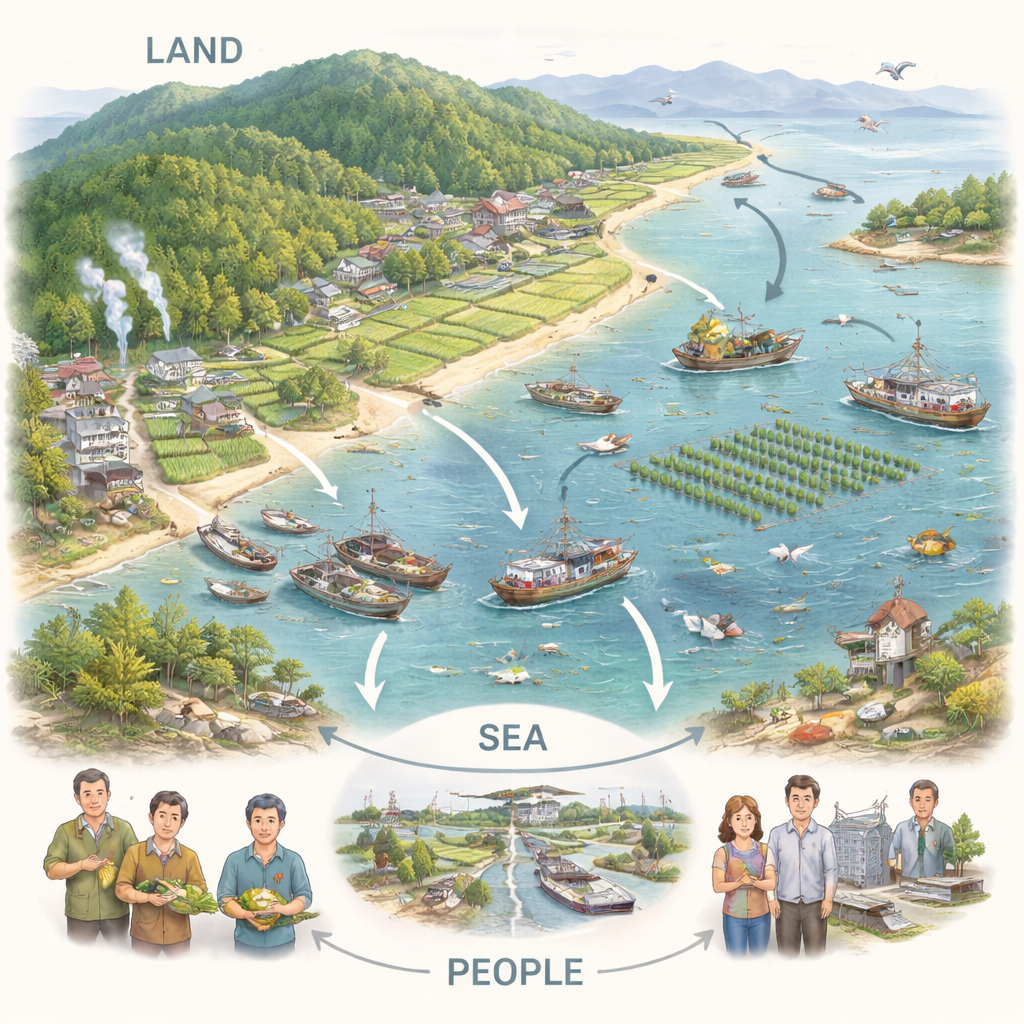
Along many coasts, including Japan’s Seto Inland Sea, the problem is no longer just dirty, polluted water. In some places the sea is becoming too clean, starved of the nutrients that support fish and seaweed. This quiet change—called oligotrophication—can shrink catches, hurt local food traditions, and weaken coastal cultures. The study summarized here asks a simple but powerful question: how can governments win real public support and hands‑on involvement for managing these delicate coastal social–ecological systems, where people and nature are tightly intertwined?
Different kinds of neighbors by the sea
The researchers surveyed 1,800 residents living near parts of the Seto Inland Sea managed by Hyogo Prefecture. Instead of treating the public as one average person, they asked each respondent to pick a statement that best matched their own view of the sea’s nutrient problems and what should be done. From this, four broad groups emerged. The “alarmed” were very worried and wanted immediate action. The “concerned” agreed the issue mattered but felt there was time to decide on the best response. The “cautious” were unsure the problem was real or how to act. Finally, a combined group labeled “disengaged–dismissive” had barely thought about the issue, doubted it, or rejected human responsibility altogether.
Who feels close to the sea—and who doesn’t
These groups differed in more than just opinion. People in the alarmed segment tended to be older, lived closer to the coast, felt a stronger emotional bond with nature, and were more aware of declining fish catches and nutrient shortages. They visited the sea more often, ate local seafood, and took part in coastal events. Those in the disengaged–dismissive group were typically younger, lived farther away, felt little psychological connection to the sea, knew less about the problems, and rarely engaged in sea‑related activities. Across all measures—knowledge, everyday behavior, and how much they valued the sea’s benefits and moral worth—levels declined steadily from alarmed to disengaged–dismissive. This pattern suggests that building both awareness and personal connection to the sea is key to shifting people toward more supportive segments.
Testing messages that speak to different minds
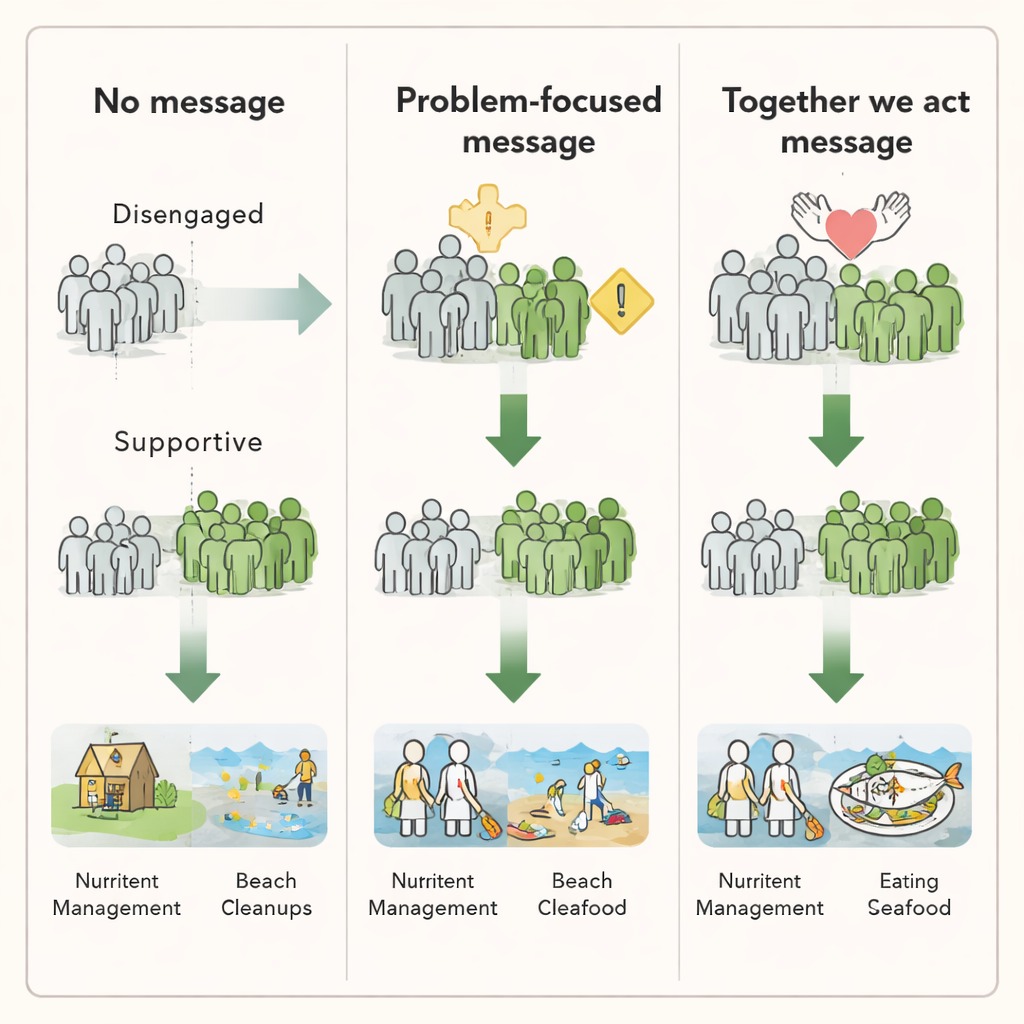
The team then tested whether simple messages could nudge these groups toward stronger backing of coastal management. Everyone answered questions about four government measures designed to restore nutrients: releasing treated water from factories and sewage plants, adding fertilizer, plowing the seabed, and adjusting river drainage. One third of participants received no special message. A second group saw a factual poster highlighting the negative consequences of nutrient‑poor waters for fish and seaweed. A third viewed a moral, action‑oriented poster inviting citizens to help create a “rich and beautiful sea” through activities such as forest care, proper plastic disposal, and eating local seafood. Overall, support for the nutrient plan and willingness to engage in pro‑sea behaviors sloped downward from alarmed to disengaged–dismissive, confirming the importance of segmenting the audience.
What moves the cautious and the disengaged
Messages did not change the views of people who were already alarmed or concerned, but they mattered for those in the middle and at the back of the pack. The problem‑focused message raised support among cautious and disengaged–dismissive residents for less controversial actions like seabed plowing and drainage, bringing their average support close to that of more engaged segments. The collective‑involvement message boosted agreement, especially among disengaged–dismissive people, with everyday actions such as careful plastic disposal and eating local seafood; in some cases their stated support matched that of the alarmed group. However, neither message softened worries about releasing treated factory and sewage water or adding fertilizer—measures many still associated with “polluting the sea.” And while intentions to help increased modestly, actual behavior, such as clicking to register for a citizen council, barely changed.
How this helps coastal communities act together
For lay readers, the core takeaway is that coastal stewardship is not just about choosing the right technical fix for the sea; it is about recognizing that neighbors differ in how much they care, how close they feel to nature, and what kinds of arguments speak to them. This study shows that a single, carefully designed question can sort the public into meaningful segments, and that tailored messages can raise support and willingness to act among the cautious and the indifferent. Still, facts and moral appeals alone may not overcome deep mistrust of certain measures or spur people to take demanding actions. Effective coastal management will likely require combining targeted communication with hands‑on experiences—like school workshops, local events, and visible improvements—that help people feel the sea is part of their own lives and future.
Citation: Uehara, T., Hidaka, T. & Tachibana, S. Audience segmentation and messaging approach to gain public support and involvement in coastal social-ecological system management. Sci Rep 16, 7025 (2026). https://doi.org/10.1038/s41598-026-38402-0
Keywords: coastal management, public engagement, environmental communication, social-ecological systems, audience segmentation