Clear Sky Science · en
Plasma vitamin profiles and their associations with metabolic health and mental wellbeing in midlife Asian women
Why Vitamins Matter in Midlife
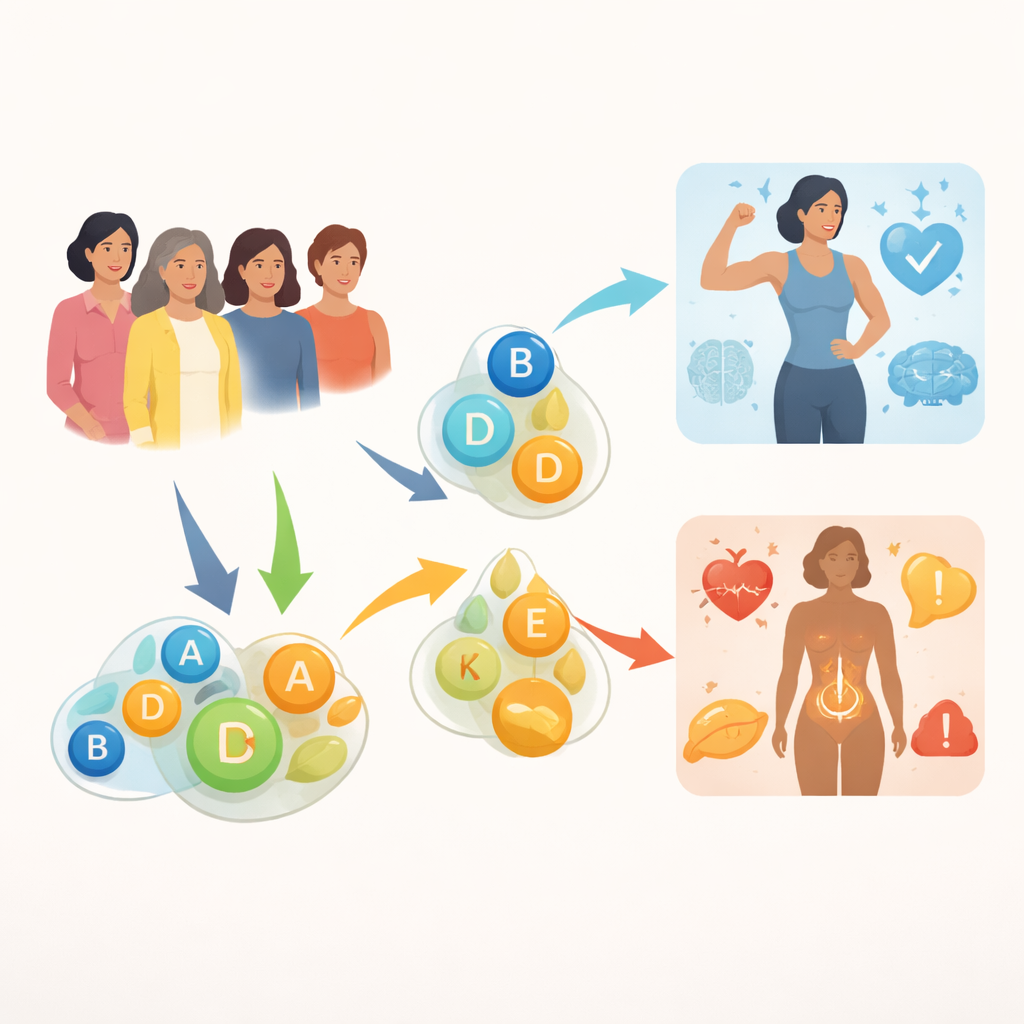
As women move through their late 30s and 40s, many begin to notice changes in weight, energy, mood and strength. This study asked a simple but important question: could the vitamins circulating in the blood help explain which midlife Asian women stay metabolically and mentally healthy, and which develop warning signs such as higher blood sugar, blood pressure and belly fat? By carefully measuring many different vitamins in the blood of Singaporean women, the researchers mapped how these nutrients relate to markers of heart risk, mood and muscle strength.
The Women Behind the Numbers
The research followed 662 women from the long-running GUSTO study in Singapore. At about 40 years of age, these women had their blood drawn after an overnight fast. The samples were analyzed with highly sensitive laboratory methods to measure a wide panel of vitamins, including several forms of B vitamins, vitamins A, D, E and K, plus folate and vitamin B12. At the same visit, the team recorded body mass index, blood pressure, fasting and post-meal blood sugar, insulin, blood fats and a composite "metabolic syndrome" score that captures overall cardiometabolic risk. The women also completed standard questionnaires on depression, anxiety and perceived stress, and, at a later visit, had their hand grip strength tested as a simple indicator of muscle function.
Helpful Vitamins and Healthier Bodies
Several vitamins stood out as being linked to a healthier metabolic profile. Forms of vitamin B1 and B6, vitamin B12 and vitamin D were tied to lower fasting insulin, better insulin sensitivity, lower long-term blood sugar and higher levels of the "good" HDL cholesterol. These same vitamins were associated with lower scores on the combined metabolic risk index. Folate, another B vitamin, showed promising links to both metabolism and mood: women with higher folate tended to have fewer symptoms of depression and reported feeling less stressed. One vitamin B1 breakdown product was even related to stronger hand grip, hinting that good B1 status may support muscle function in midlife.
When More May Not Be Better
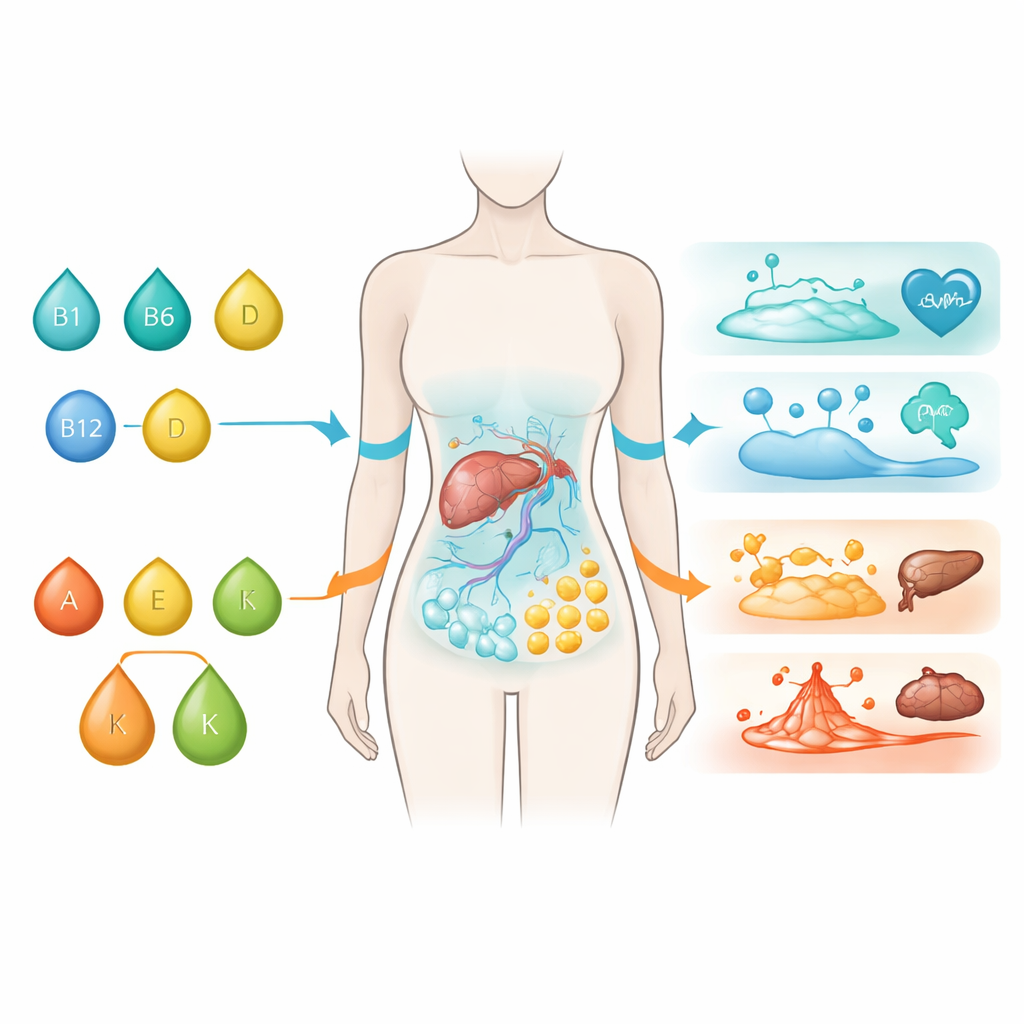
Surprisingly, higher blood levels of some other vitamins went hand in hand with less favorable metabolic signs. Women with more vitamin B3 (nicotinamide) tended to have higher blood pressure, higher long-term blood sugar and worse metabolic syndrome scores. Likewise, higher levels of fat-soluble vitamins A, E and K were linked to higher blood fats, higher blood sugar and greater overall metabolic risk. These patterns were especially clear in women with a body mass index of 23 or above, the Asian cut-off for overweight. When the researchers adjusted their analyses for triglycerides, a type of blood fat that carries these fat-soluble vitamins, many of the harmful-looking links weakened. This suggests that high vitamin A and E in the blood may sometimes be markers of high blood fat and underlying metabolic strain, rather than direct causes of harm.
Body Weight Changes the Picture
Body size turned out to be an important modifier of these relationships. Women with higher body mass index not only had less favorable metabolic profiles overall, they also had lower circulating levels of many beneficial vitamins, including vitamin D, folate, vitamin B6 and vitamin B12, and were more likely to be frankly deficient. In these higher-weight women, the protective associations of B vitamins and vitamin D with metabolic risk were stronger, while the unfavorable associations of vitamins A, E and K with metabolic markers were more evident. This pattern supports the idea that excess body fat can both worsen metabolism and alter how vitamins are stored and carried in the blood, potentially increasing the need for certain nutrients just as risk is rising.
What the Findings Mean for Everyday Life
Overall, the study supports a picture in which good blood levels of B vitamins and vitamin D travel together with better metabolic health and, for folate, slightly better mental wellbeing in midlife Asian women, particularly those who are overweight. At the same time, very high blood levels of vitamin B3 and of fat-soluble vitamins A and E may signal elevated blood fats and a more stressed metabolism. Because this research is observational, it cannot prove that changing vitamin intake will directly improve health. Still, it highlights the potential value of balanced diets and, where appropriate, targeted supplementation to maintain adequate B and D vitamins during the midlife transition. Future clinical trials will be needed to test whether improving vitamin status can truly lower metabolic risk for Asian women as they age.
Citation: Tan, K.M.L., Tint, M.T., Cabral, R.M. et al. Plasma vitamin profiles and their associations with metabolic health and mental wellbeing in midlife Asian women. Sci Rep 16, 8248 (2026). https://doi.org/10.1038/s41598-026-38390-1
Keywords: vitamins, metabolic syndrome, midlife women, Asian health, vitamin D