Clear Sky Science · en
Tephra-mediated manganese cycling shapes coral responses to coastal sedimentation
When Ash Clouds Meet Coral Reefs
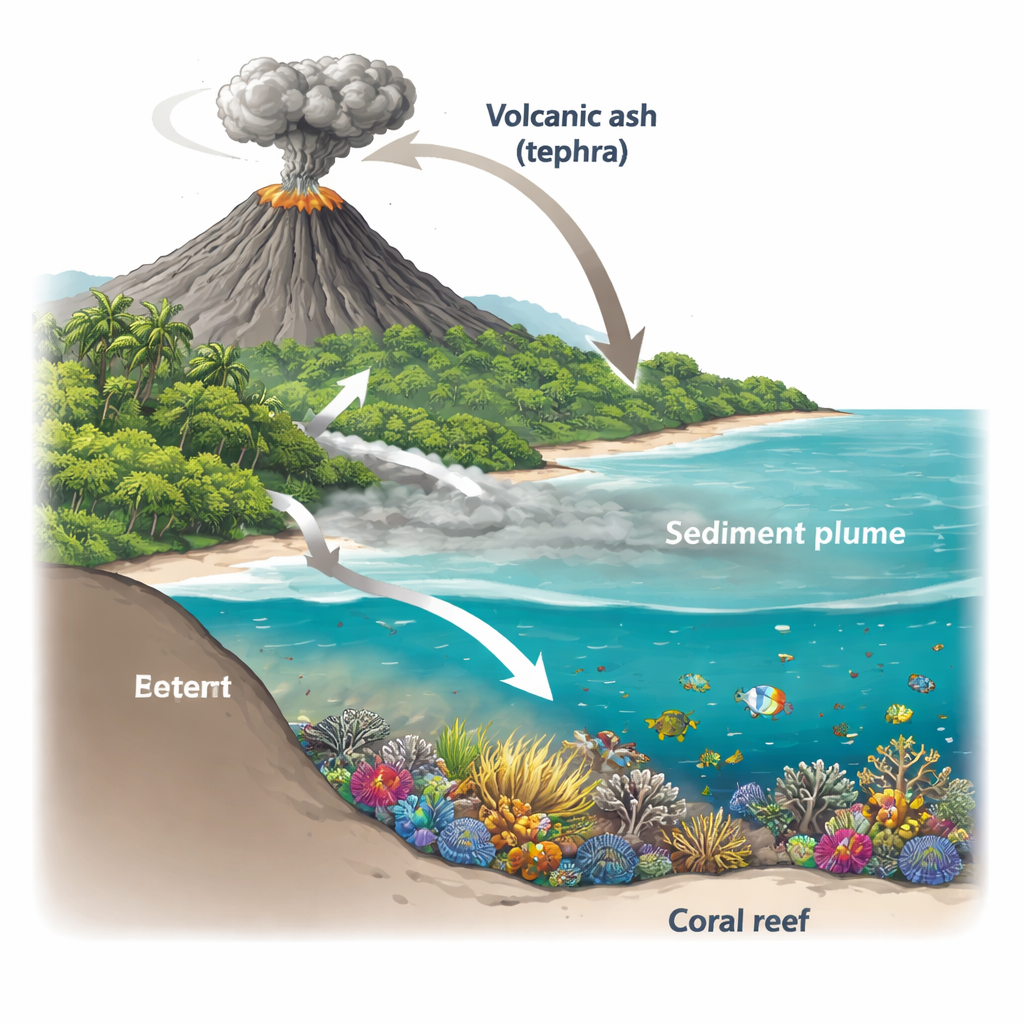
Volcanic eruptions often make headlines for the damage they cause on land, but their effects do not stop at the shoreline. When clouds of ash and rock fragments settle out of the sky, they wash into tropical seas, clouding the water and dumping heavy sediments onto already stressed coral reefs. This study turns that gloomy picture on its head by revealing an unexpected twist: volcanic ash can also deliver a vital nutrient that helps corals cope with the very sediment stress the eruption creates.
Volcano Dust and Cloudy Seas
Explosive eruptions fling shattered rock, known as tephra, across island landscapes. Over weeks to decades, rain and rivers sweep this material downslope into coastal waters, where it raises sediment levels and makes the water murkier. Because reef-building corals rely on sunlight to power their internal algae, scientists have long assumed that more turbidity almost always means more stress, slower growth, and occasionally death. Yet, puzzlingly, some reefs near sediment-laden coasts still flourish, and even seem more resistant during heatwaves. This contradiction hints that ash and sediment may be delivering something useful along with the bad news.
A Hidden Nutrient in Volcanic Ash
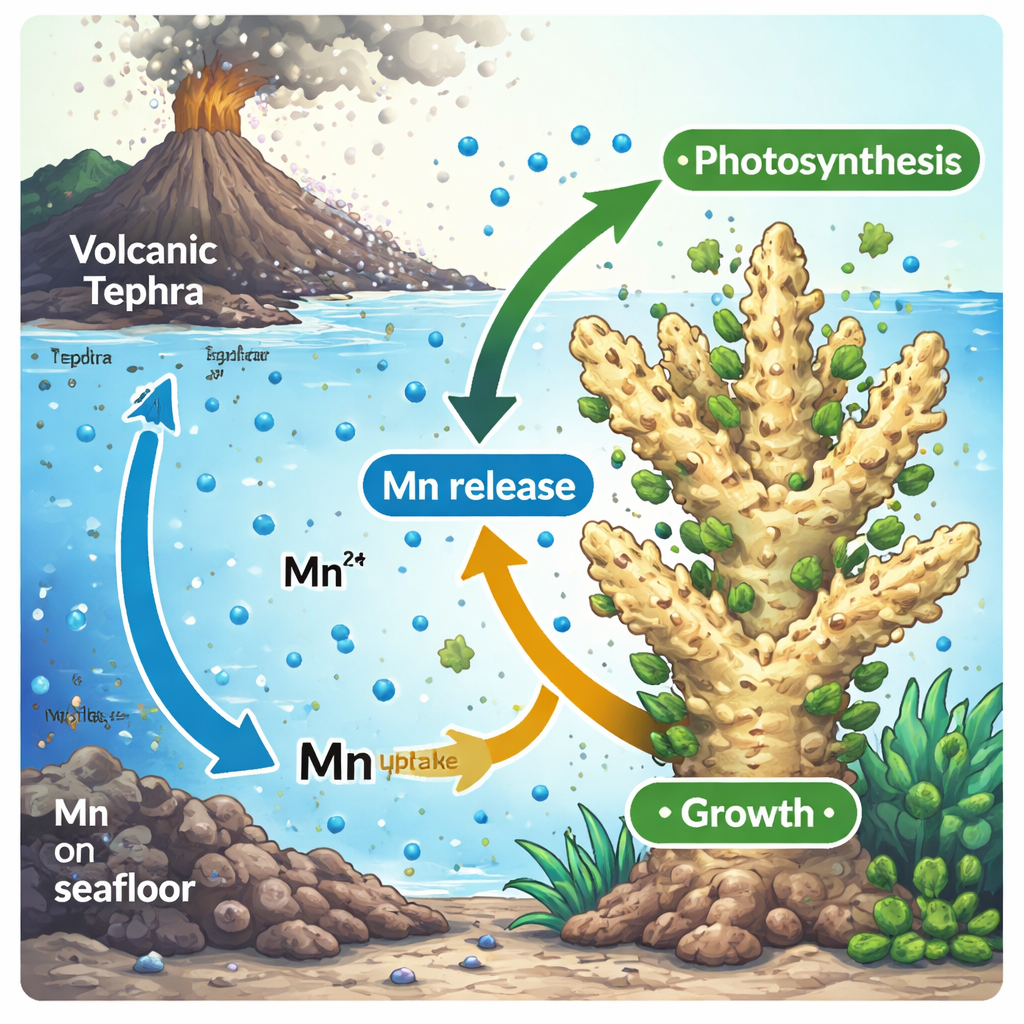
Tephra carries a suite of minerals and trace metals, including manganese, an essential element for photosynthesis in plants and algae. The researchers focused on Stylophora pistillata, a common reef-building coral, and exposed small colonies to four different tephra samples collected from around La Soufrière volcano on the Caribbean island of St. Vincent. Some samples were freshly fallen ash; others had been reworked by rivers or deposited in the sea. In carefully controlled tanks, corals were bathed daily in ash-laden seawater while light, water chemistry, and coral physiology were closely tracked.
Brighter Corals in Murkier Water
Despite extra sediment and dimmer light, all ash treatments quickly boosted the corals’ photosynthetic performance. Measurements of their internal algae showed rapid and sustained increases in how efficiently they converted light into chemical energy, as well as higher rates of oxygen production—direct signs of stronger photosynthesis. These gains followed a clear pattern: even small rises in dissolved manganese, from roughly background levels up to about 3 micrograms per liter, led to large improvements, while further increases beyond about 10 micrograms per liter added little extra benefit. Importantly, manganese levels stayed far below those known to be toxic to marine life. In some treatments, the corals also showed higher skeletal growth and more symbiotic algae, suggesting that the extra energy was being invested in building reef structure.
Not All Ash Is Created Equal
Although all four tephra types contained similar overall chemistry, they did not release manganese into seawater to the same degree. Fresh ash that had not yet been washed or altered by rainwater leached the most manganese, while older, river-transported deposits released much less. Smaller particles and pristine ash surfaces, coated with easily dissolved salts, appeared to drive the strongest manganese pulse. Yet even the more weathered and remobilized material—likely the kind most reefs experience for years after an eruption—still supplied enough manganese to improve coral photosynthesis. This means that ongoing erosion of volcanic landscapes can quietly fuel a long-term trickle of beneficial micronutrients to nearby reefs.
What This Means for Coral Reefs
For non-specialists, the key message is that volcanic ash is not simply a smothering blanket for corals. By leaking small but significant amounts of manganese, tephra can strengthen the “solar panels” inside corals, allowing them to capture light more efficiently even when waters are clouded by sediment. In the real world, this beneficial effect won’t erase all the dangers of eruptions or other human-driven stresses, and the study was done in laboratory tanks rather than on full reefs. But it does reveal a surprising way that Earth’s own geology may, at times, help corals weather the challenges of sedimentation, and highlights manganese-rich volcanic sediments as an overlooked player in the health and resilience of tropical reef ecosystems.
Citation: Förster, F., Ferrier-Pagès, C., Fries, A. et al. Tephra-mediated manganese cycling shapes coral responses to coastal sedimentation. Sci Rep 16, 7216 (2026). https://doi.org/10.1038/s41598-026-38388-9
Keywords: coral reefs, volcanic ash, manganese, sedimentation, photosynthesis