Clear Sky Science · en
Impact of polystyrene microplastic exposure at low doses on male fertility: an experimental study in rats
Invisible Plastics, Visible Risks
Tiny plastic particles are turning up in our food, water, and even the air we breathe. While they are too small to see, these “microplastics” may not be harmless. This study asks a question with direct relevance for many families: can long-term exposure to very small amounts of polystyrene microplastics—the kind used in foam cups and packaging—quietly damage male fertility?
Everyday Plastics Inside the Body
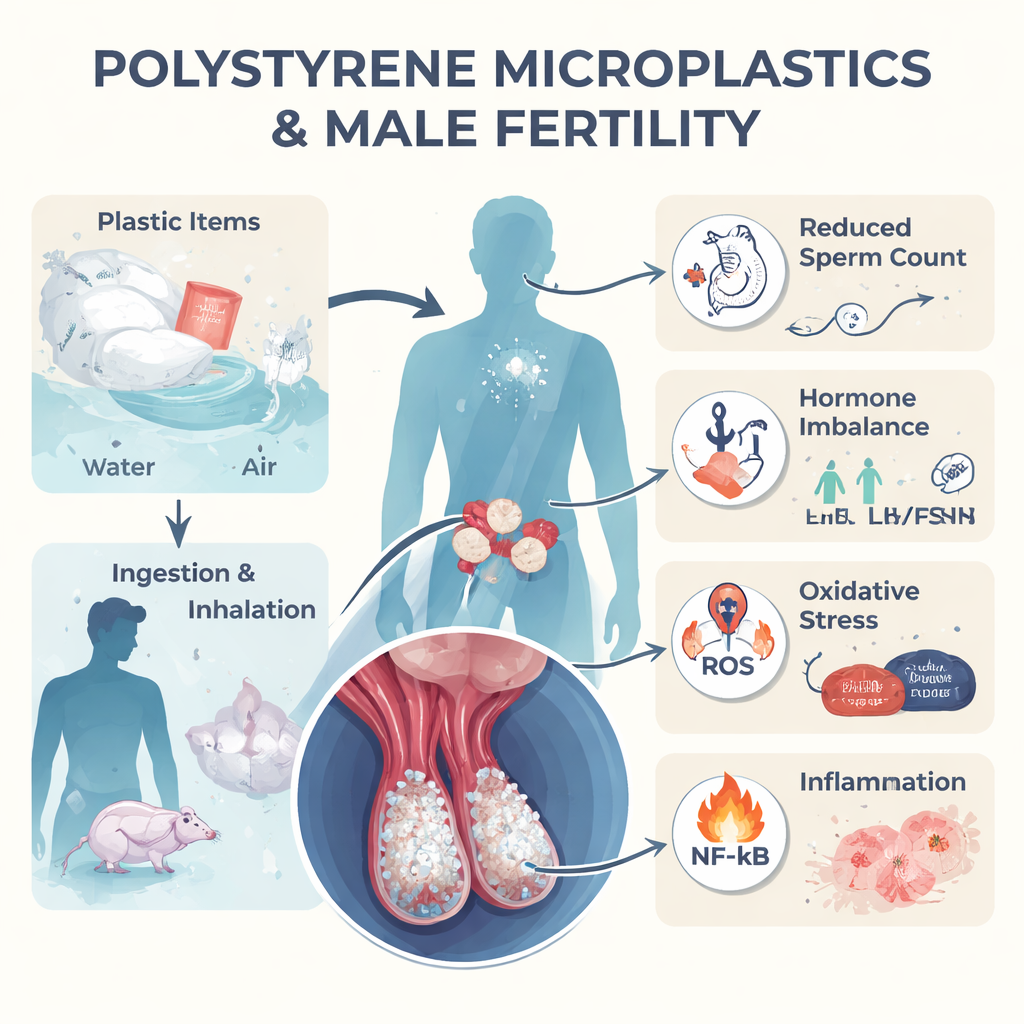
Microplastics are plastic fragments smaller than a grain of sand. Polystyrene microplastics, in particular, come from products like disposable food containers, cosmetic scrubs, and industrial materials. They can enter the body when we drink contaminated water, eat seafood, or inhale dust. Previous animal work showed that high doses can harm reproductive organs. The authors of this paper wanted to know whether much lower, environmentally realistic doses could still disturb the male reproductive system, focusing on sperm, sex hormones, and testicular tissue.
A Careful Test in Laboratory Rats
Researchers studied adult male rats divided into six groups. One group received only water, while the others were given polystyrene microplastics by mouth every day for 45 days at doses ranging from 0.1 to 40 micrograms per kilogram of body weight—levels far below many earlier experiments and within the same order of magnitude as estimated human exposure. At the end of the study, the team examined the animals’ blood, sperm, and testes. They assessed sperm count, movement, and shape; measured reproductive hormones such as testosterone, follicle-stimulating hormone (FSH), and luteinizing hormone (LH); quantified markers of oxidative stress and antioxidant defenses; checked key mitochondrial (energy factory) genes; and inspected testicular structure under the microscope. They also used a sensitive chemical technique to confirm whether microplastics had actually reached the testes.
From Tiny Particles to Failing Sperm
The results were striking. As the dose of microplastics increased, sperm count and motility fell, while the percentage of abnormal sperm rose. At the same time, testosterone levels dropped, whereas FSH and LH climbed—an endocrine pattern that suggests the testes themselves were failing and the brain was trying, unsuccessfully, to compensate. The testes and epididymis (where sperm mature) became relatively smaller, while the prostate grew larger. Chemical analysis detected polystyrene components inside the testes at the three highest doses, confirming that particles, or their breakdown products, can reach and accumulate in the organ where sperm are made.
Cellular Stress, Energy Failure, and Inflammation
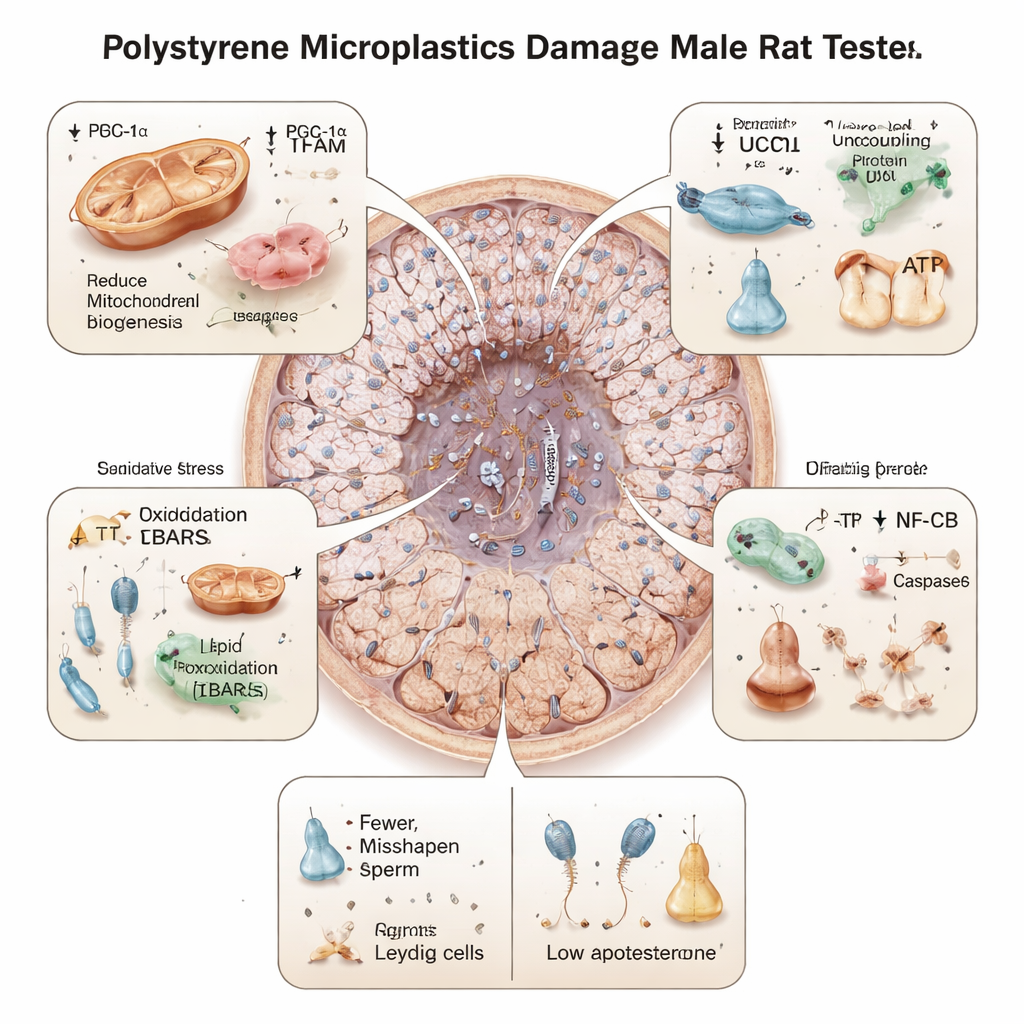
On a microscopic level, the testes of exposed rats showed disrupted sperm production. The orderly layers of developing sperm cells were replaced by vacuoles, cell loss, and, at the highest doses, nearly empty tubules with very few sperm and depleted hormone-producing Leydig cells. Biochemical tests revealed a surge in oxidative stress: a rise in lipid damage markers (TBARS) alongside a drop in the body’s natural antioxidants, including glutathione and enzymes such as superoxide dismutase and catalase. At the same time, genes that support healthy mitochondria (PGC-1α and TFAM) were dialed down, while a protein linked to energy-wasting mitochondrial “uncoupling” (UCP1) went up. Inflammatory and cell-death pathways were also switched on, as seen by increased levels of NF-κB and caspase‑3. Together, these changes paint a picture of testicular cells under siege—starved of energy, bombarded by reactive molecules, and pushed toward self-destruction.
What This Means for Fertility and Everyday Life
The authors conclude that even low, long-term doses of polystyrene microplastics can impair semen quality, disturb sex hormones, and damage testicular tissue in rats. The study points to a unifying chain of events: microplastics reach the testes, trigger oxidative stress, cripple the cell’s energy factories, and ignite inflammation and programmed cell death. The end result is fewer, less vigorous, and more misshapen sperm, along with falling testosterone. While rats are not humans and the study did not measure fertility outcomes directly, the doses used are comparable to upper estimates of human exposure. These findings add to growing evidence that our heavy reliance on disposable plastics may carry hidden reproductive costs, and underscore the value of reducing microplastic pollution and better understanding its long-term impact on human health.
Citation: Alsenousy, A.H.A., Khalaf, A.H.Y., Ibrahim, H.Z. et al. Impact of polystyrene microplastic exposure at low doses on male fertility: an experimental study in rats. Sci Rep 16, 7474 (2026). https://doi.org/10.1038/s41598-026-38385-y
Keywords: microplastics, male fertility, polystyrene, oxidative stress, endocrine disruption