Clear Sky Science · en
Relationship between adjustability of grasping force and upper limb/hand function in individuals with cerebrovascular disorders
Why the strength of a gentle grip matters
Turning a doorknob, picking up a mug, or holding a phone all depend on one subtle skill: using just the right amount of hand strength. For people recovering from a stroke or other cerebrovascular disorders, this ability to finely adjust grip—not just squeeze hard—can make the difference between safe independence and daily frustration. This study explores how well stroke survivors can tune their grasping force and how that skill relates to the everyday use and function of their arms and hands.
A closer look at everyday hand control
Traditional tests in rehabilitation usually measure how fast someone can move or how strongly they can grip. But real life rarely asks for maximum strength; it asks for the right strength at the right moment. The researchers focused on “adjustability of grasping force,” meaning how accurately a person can match their grip to a changing target. They reasoned that this fine control might reveal aspects of arm and hand function that standard tests miss, especially in people with relatively mild weakness after a stroke.
A simple device to measure a subtle skill
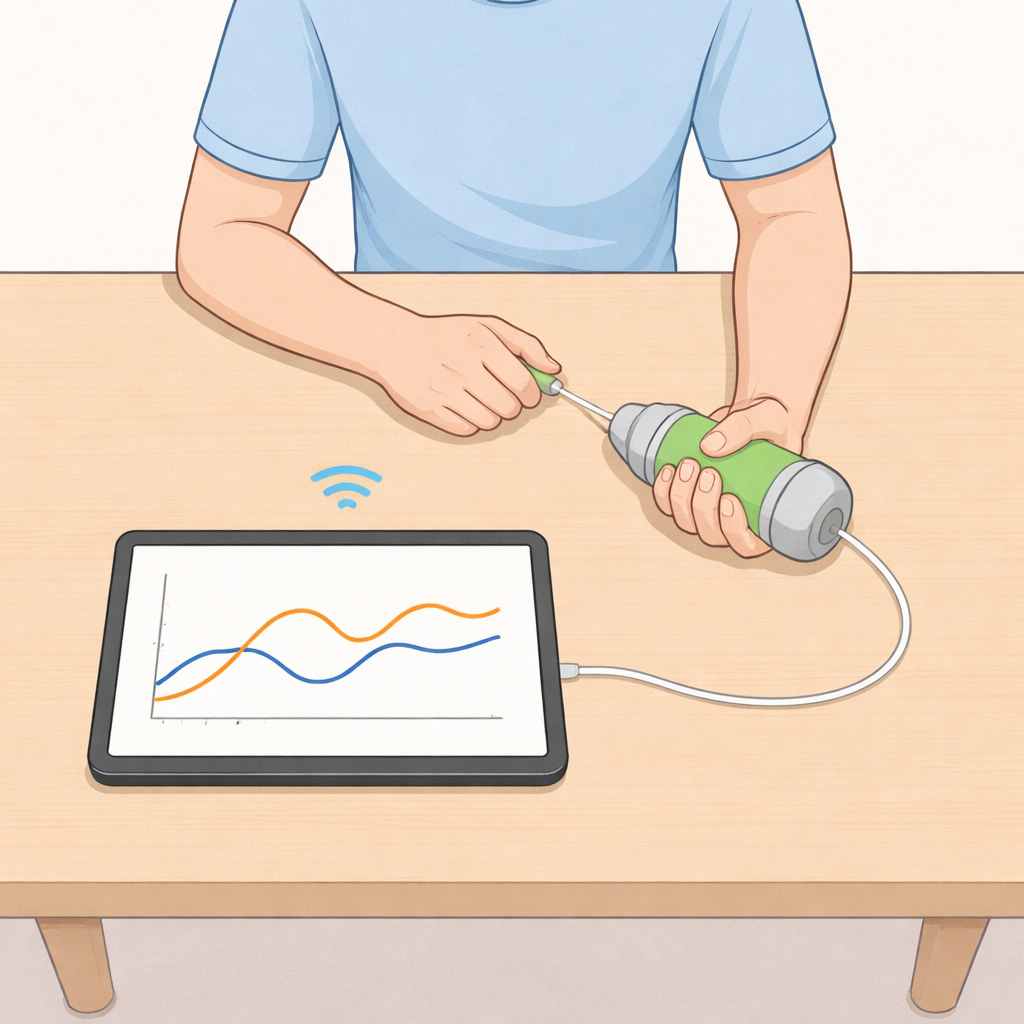
To capture this fine control, the team used a device called iWakka, a light plastic cylinder split lengthwise and fitted with springs and sensors. Participants, all in the early recovery phase after a stroke, sat with both forearms resting comfortably on a table and gripped the cylinder with their whole hand. On a tablet screen, they watched a moving line that represented a target grip force and tried to match it in real time. Sometimes the target stayed steady, sometimes it rose, and sometimes it fell. The researchers calculated an “AGF score” by measuring how far the actual grip was from the target; smaller errors (lower scores) meant better control.
How grip tuning links to arm function
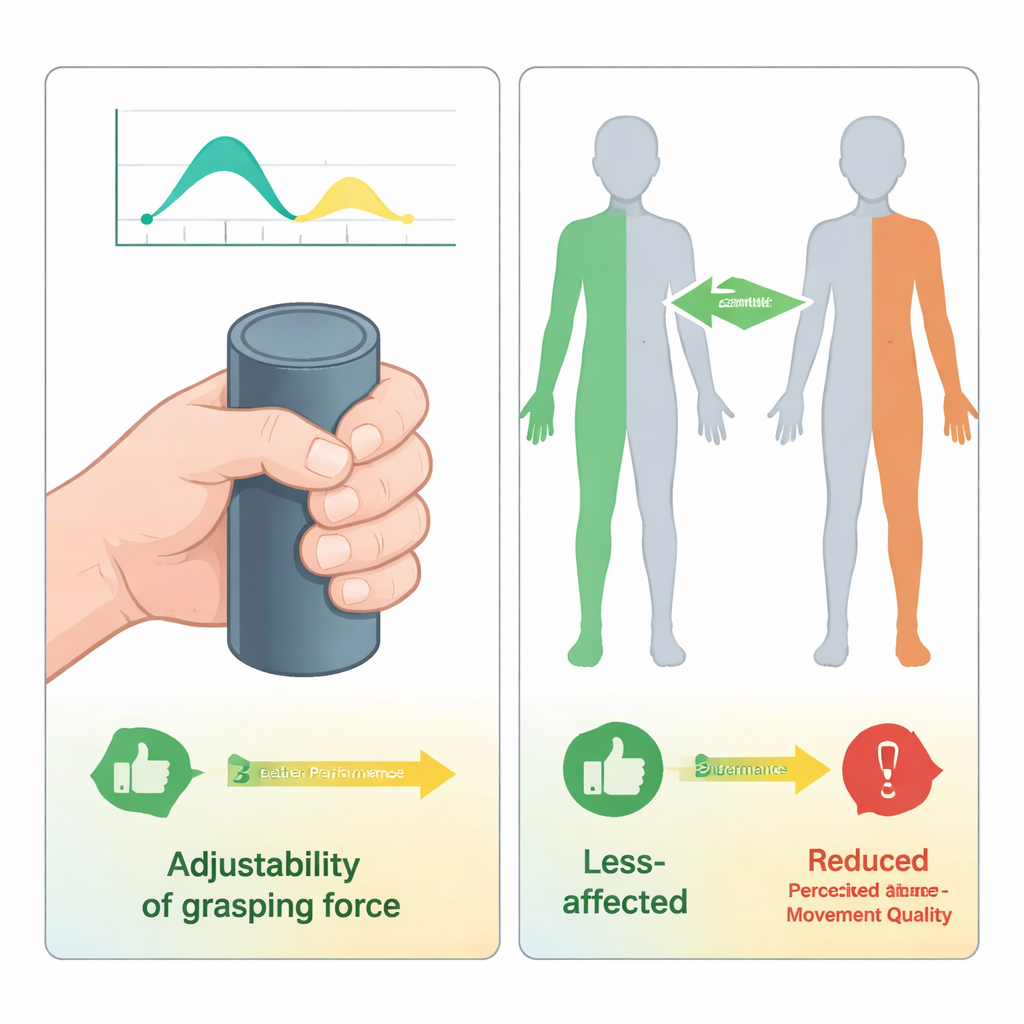
Each of the 12 participants also completed widely used clinical tests: measures of arm movement, hand dexterity, and how often and how well they used their more-affected arm in daily life. The team then looked at how AGF scores related to these outcomes, taking age into account because older adults naturally tend to show less precise force control. They found that on the less-affected side—the arm people rely on more after a stroke—better grip adjustment in the “steady hold” part of the task was linked to better performance on a detailed arm-function test. In other words, people who could keep a steady, accurate grip tended to handle objects more effectively with that arm.
A surprising trade-off between the two arms
The most unexpected result was psychological rather than mechanical. When the researchers looked at participants’ own ratings of how well they used their more-affected arm in daily life, they saw a puzzling pattern: those with poorer grip adjustment on the less-affected side actually rated the quality of movement of their more-affected arm higher, while those with better control on the less-affected side rated the more-affected arm’s movement quality lower. One explanation is behavioral: people who struggle more with their stronger arm may be forced to use the weaker one more often, which can make them notice and value its contributions. By contrast, individuals who can rely heavily on their less-affected arm may gradually neglect the more-affected one and feel that it performs worse.
What this means for rehabilitation and daily life
This preliminary study, though small, suggests that the quiet skill of tuning grip strength is linked to how well the “good” arm functions after a stroke—and may shape how people perceive the weaker arm. For patients and therapists, the message is twofold: the less-affected arm should not be ignored, because its grip-control abilities both support independence and may influence how much the more-affected arm is used. At the same time, simply having a strong or fast arm is not enough; being able to apply just the right amount of force is a key part of genuine recovery. Training and measuring this subtle ability could help design rehabilitation programs that better support safe, confident use of both hands in everyday life.
Citation: Kaneno, T., Kawahara, K., Yabe, T. et al. Relationship between adjustability of grasping force and upper limb/hand function in individuals with cerebrovascular disorders. Sci Rep 16, 7263 (2026). https://doi.org/10.1038/s41598-026-38384-z
Keywords: stroke rehabilitation, hand function, grip control, cerebrovascular disease, motor recovery