Clear Sky Science · en
Camellia sinensis-synthesized silver nanoparticles and meropenem combination against extensively drug-resistant Klebsiella pneumoniae
Why a cup of tea matters in the fight against superbugs
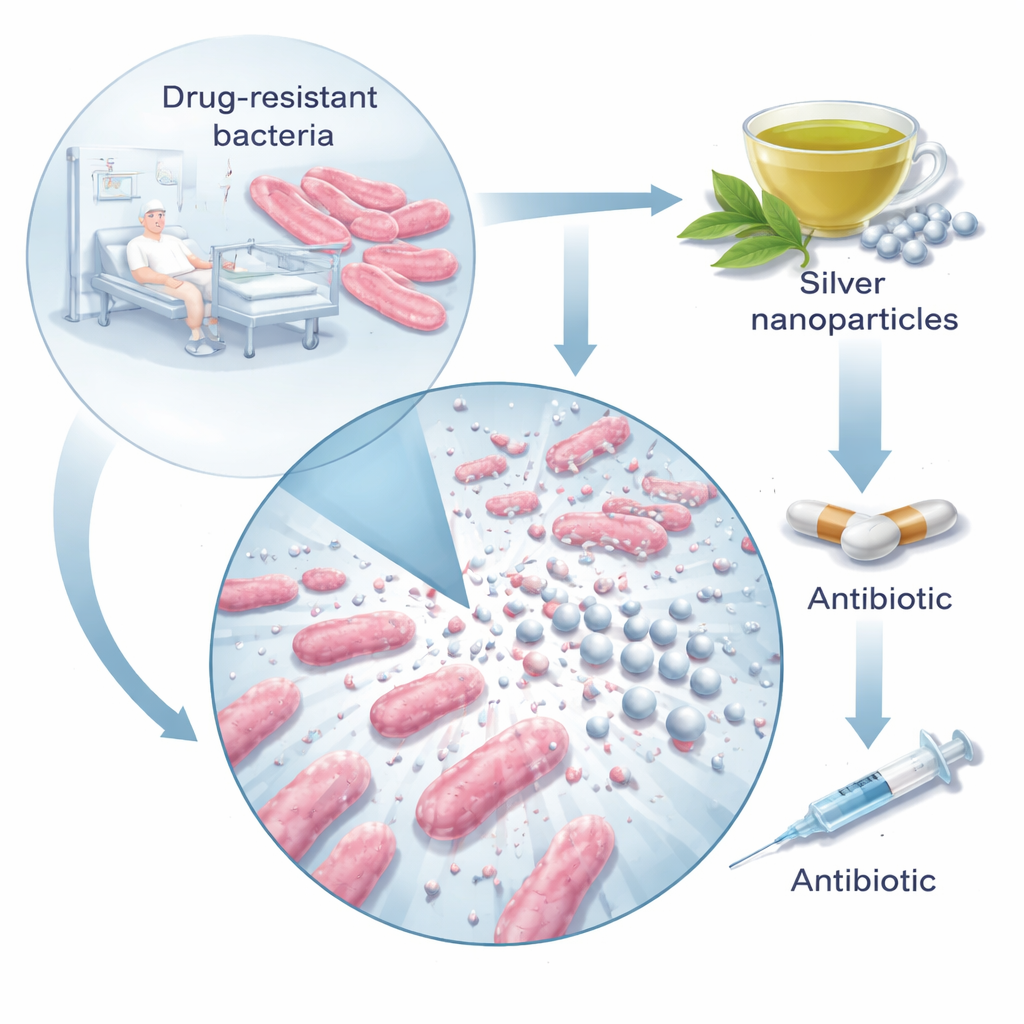
Hospitals around the world are seeing more infections that no longer respond to our most powerful antibiotics. One particularly troublesome germ is Klebsiella pneumoniae, which can cause pneumonia, blood infections and dangerous complications in vulnerable patients. This study explores an unusually simple helper in that battle: silver particles made using common green tea, combined with the antibiotic meropenem, to see whether this pairing can knock down highly drug-resistant Klebsiella strains.
The rise of a hard-to-treat hospital germ
Klebsiella pneumoniae lives in many hospitals and can easily infect people whose immune systems are already under strain. The researchers collected 100 samples of disease-causing bacteria from patients in an Egyptian hospital and identified 67 as Klebsiella pneumoniae. Alarming patterns emerged: more than 90 percent of these Klebsiella strains were “extensively drug-resistant,” meaning they were resistant to almost all common antibiotic families, including powerful last-resort drugs such as carbapenems. Many strains also carried extra genetic material that makes them more aggressive and better at forming sticky layers called biofilms that shield them from treatment.
Uncovering what makes these germs so tough
To understand how these bacteria became so hard to kill, the team examined both their genetic makeup and their resistance traits. Using a DNA fingerprinting technique, they showed that the Klebsiella strains were not all copies of a single outbreak strain but instead represented a diverse collection, suggesting the problem is widespread rather than a one-time event. The scientists also looked for well-known resistance genes and found that each of the 29 closely studied strains carried several. Some of these genes help the bacteria destroy beta-lactam antibiotics such as penicillins and cephalosporins, while others specifically block carbapenems. Together, these genes explain why standard drugs so often fail.
Turning green tea into a tiny weapon
Instead of inventing a brand-new drug, the researchers turned to nanotechnology and plants. They used an extract of green tea leaves (Camellia sinensis) to gently convert silver ions into extremely small silver particles called nanoparticles. This “green” method avoids harsh chemicals, relying on natural compounds in the tea to form and stabilize the particles. Microscopy and other tests showed that the resulting silver nanoparticles were mostly spherical and tens of billions of a meter across—small enough to interact easily with bacteria but large enough to be handled in the lab.
Silver and meropenem join forces
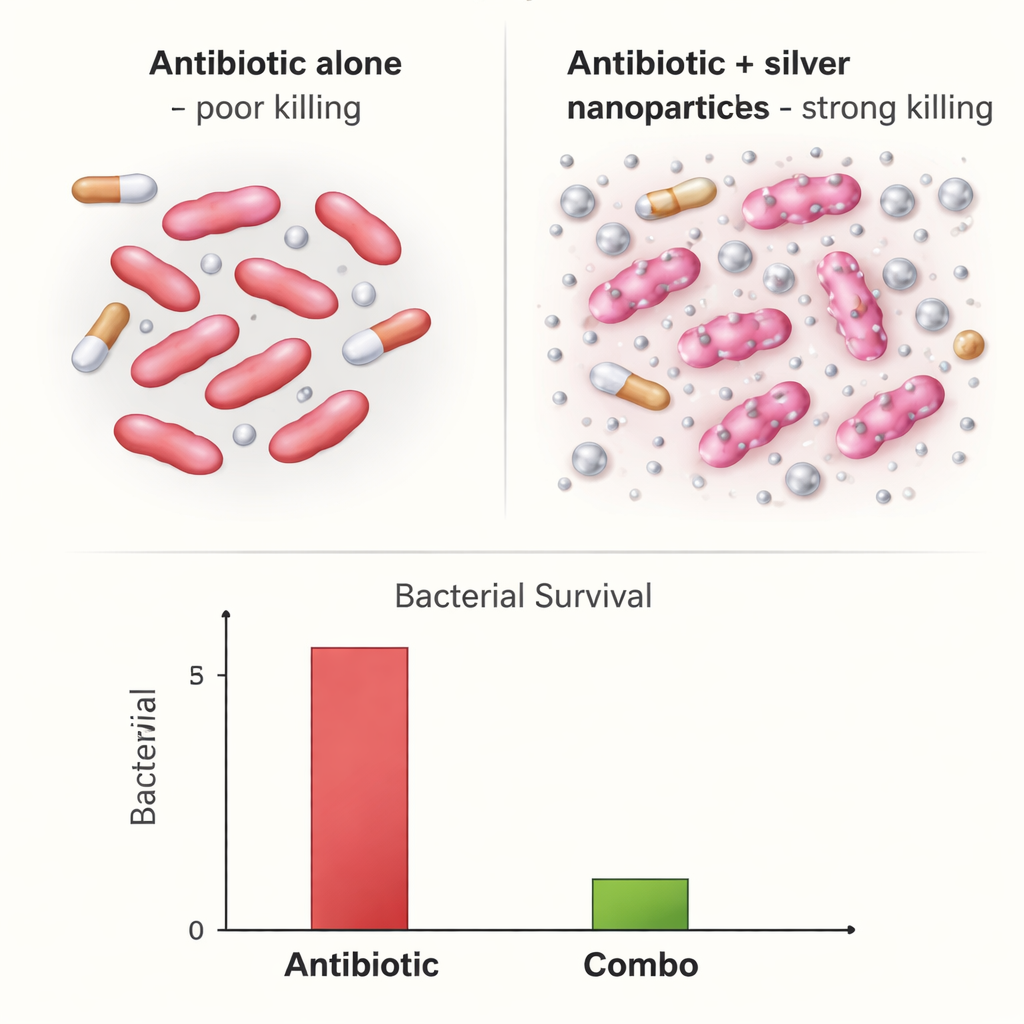
The crucial question was whether these tea-made silver nanoparticles could help meropenem, an important hospital antibiotic, regain its punch against extensively drug-resistant Klebsiella. On lab plates, silver nanoparticles alone produced clear “kill zones” around wells where they were applied, showing that they could damage the bacteria by themselves. When the team combined the nanoparticles with meropenem, those kill zones became noticeably larger for all 29 tested strains. In more precise liquid tests that measured how much of each substance was needed to stop bacterial growth, the combination allowed both the antibiotic and the silver to work at lower doses. Detailed calculations showed that nearly two-thirds of the strains experienced full synergy—where the pair worked better together than expected from their individual effects—and the rest showed partial synergy.
What this could mean for patients
For non-specialists, the main message is that pairing an existing antibiotic with carefully designed, plant-made silver particles can weaken even extremely resistant hospital germs. By helping meropenem work at lower doses, silver nanoparticles could one day extend the useful life of this vital drug and reduce the need to reach for more toxic or experimental options. The work was done in the lab, not in patients, so questions about safety, dosing and long-term environmental impact still need careful study in animals and clinical trials. But the results suggest that everyday materials, such as green tea, might help create new tools against superbugs—not by replacing antibiotics, but by boosting their strength when we need it most.
Citation: Elmasry, E.M., Hegazy, E., El-Housseiny, G.S. et al. Camellia sinensis-synthesized silver nanoparticles and meropenem combination against extensively drug-resistant Klebsiella pneumoniae. Sci Rep 16, 7475 (2026). https://doi.org/10.1038/s41598-026-38375-0
Keywords: antimicrobial resistance, Klebsiella pneumoniae, silver nanoparticles, green tea, antibiotic synergy