Clear Sky Science · en
Digital image analysis-based predictors of effective permanent make-up removal with laser and chemical remover
When Beauty Procedures Go Wrong
Eyebrow permanent make-up is meant to save time and boost confidence, but when the color or shape turns out wrong, people can feel disfigured rather than enhanced. Fixing bad permanent eyebrows is not easy: removal can be slow, painful, and unpredictable. This study asked a simple, practical question: can we use objective color measurements from photographs to predict how best to remove unwanted eyebrow pigment, and when laser treatment alone will not be enough?
Why Removing Ink Is So Difficult
Cosmetic eyebrow pigments are more complex than ordinary black tattoo ink. They often contain mixtures of metal oxides and organic dyes to create natural-looking browns and beiges. Traditional laser removal relies on very short bursts of light that are strongly absorbed by pigment particles, heating and breaking them up while sparing the surrounding skin. This works best for dark colors such as black and navy blue. Brown, yellow, orange, and red tones are far more stubborn and can even darken paradoxically when struck by the laser, because some pigment ingredients change their chemical form and turn black. As a result, many patients need numerous sessions and still risk color changes or scarring.
Using Photos as Measuring Tools
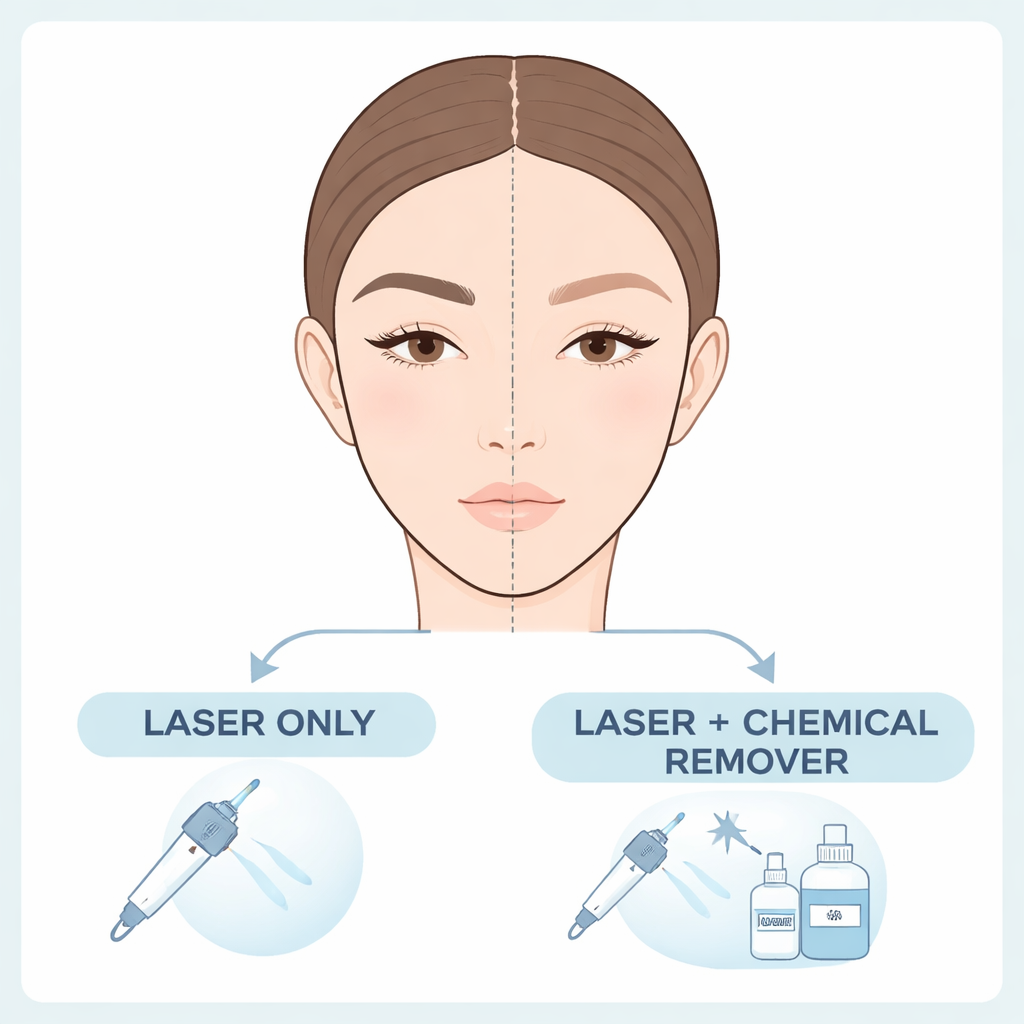
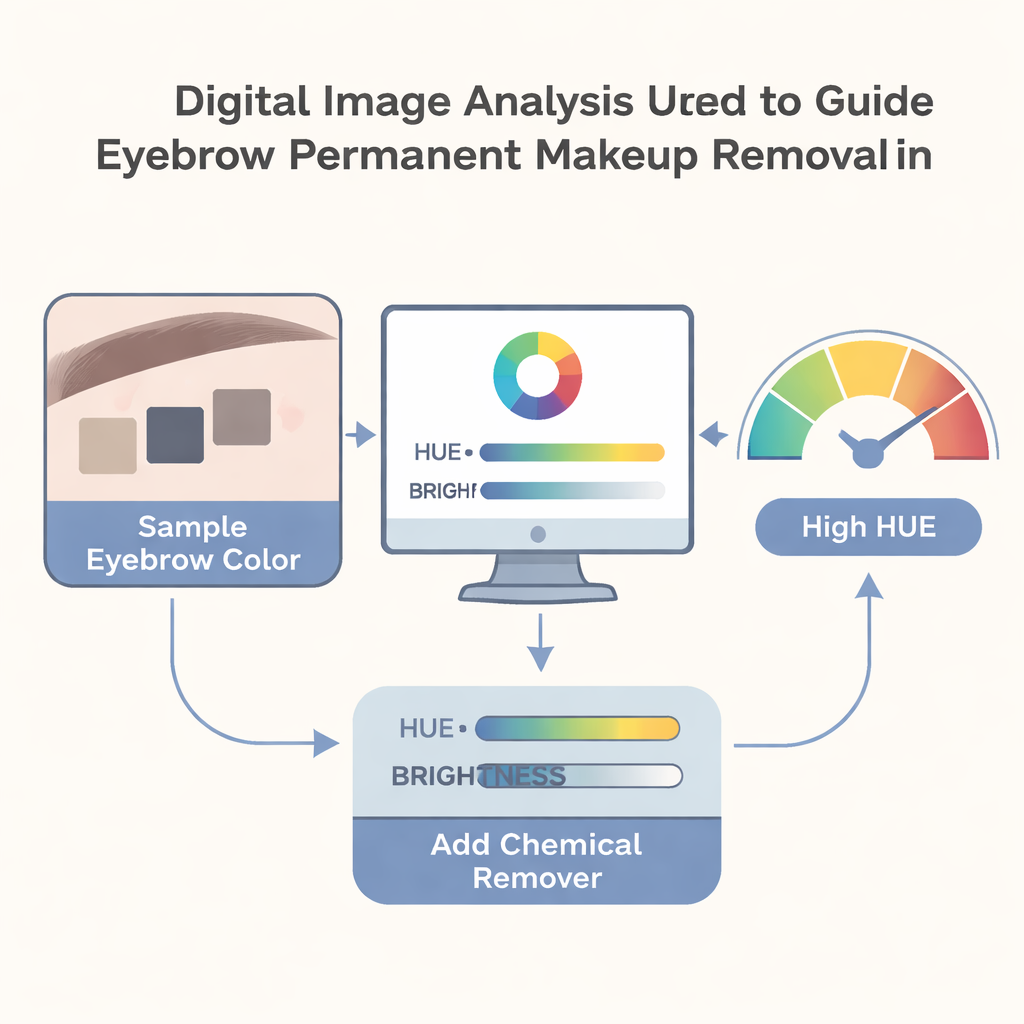
The researchers followed 75 women seeking removal of unsatisfactory eyebrow permanent make-up in a private clinic. All had light to medium skin types and were treated by the same specialist. Depending on how well the eyebrows responded, women received either laser alone or laser plus a chemical remover solution that is punctured into the skin like pigment. Standardized photographs were taken before treatment and at least six months after the final session. From each image, the team selected three small areas of skin with pigment but no hair and used free image-editing software to read out precise color values. They recorded the familiar red–green–blue (RGB) components as well as hue, saturation, and brightness, then calculated how far the color had shifted overall and how much lighter it had become.
What Color Can—and Cannot—Predict
By comparing the numbers, the authors confirmed that all color parameters changed significantly after treatment, reflecting visible fading of the pigment. However, the starting color did not predict how many laser sessions a person would eventually need. The more interesting finding was that one specific aspect of color—called hue—helped predict whether laser alone would work or whether the chemical remover would be necessary. Eyebrows whose measured hue was above a certain cut-off value, corresponding to more yellow or orange tones, were more likely to need the additional chemical remover to achieve a satisfactory result. In other words, even when these warm tones were not obvious by eye, the digital analysis could flag them as poor laser candidates.
Feelings Versus Measurements
Despite the objective color changes, the study found no clear link between the measured fading of the pigment and how satisfied the women felt at the end of treatment. On average, satisfaction scores were high, but they did not track with how much the color had lightened, how far it had shifted, or how many sessions were needed. This suggests that personal expectations, eyebrow shape, and overall facial appearance matter as much as, or more than, precise color values. A small improvement in shape, or simply feeling that a past mistake had finally been addressed, may bring greater relief than perfect color matching.
What This Means for Patients and Clinicians
The authors conclude that digital image analysis of eyebrow photographs may become a useful planning tool rather than a magic predictor. Measuring hue can give clinicians an early warning that certain orange or yellowish pigments are unlikely to respond fully to laser alone, so they can discuss adding a chemical remover from the start. At the same time, the study shows that successful correction of bad permanent make-up is not just a technical problem of lightening ink. It is a complex, personal process shaped by psychology, expectations, and facial aesthetics. Future work in more diverse groups, using newer laser technologies and richer clinical data, could sharpen these predictive tools and help tailor treatment plans that better match what patients truly hope to achieve.
Citation: Pióro, W., Korczak, K., Jewczak, M. et al. Digital image analysis-based predictors of effective permanent make-up removal with laser and chemical remover. Sci Rep 16, 6896 (2026). https://doi.org/10.1038/s41598-026-38366-1
Keywords: eyebrow permanent makeup, laser tattoo removal, cosmetic complications, digital image analysis, chemical pigment remover