Clear Sky Science · en
Genetic monitoring of an endangered arable weed reveals local maintenance of genetic variation in times of land use and climate change
Why farmers and nature lovers should care
Across Europe, familiar wildflowers that once dotted cereal fields are quietly vanishing. This study follows one such plant, the blue field madder, to ask a deeper question: as these weeds disappear from view, are we also losing the hidden genetic variety that helps species cope with changing farms and climate? By tracking the plant’s DNA over 13 years in real fields, the researchers show that some invisible safeguards in nature, buried in the soil itself, may be slowing the genetic damage—at least for now.
A small weed with a big story
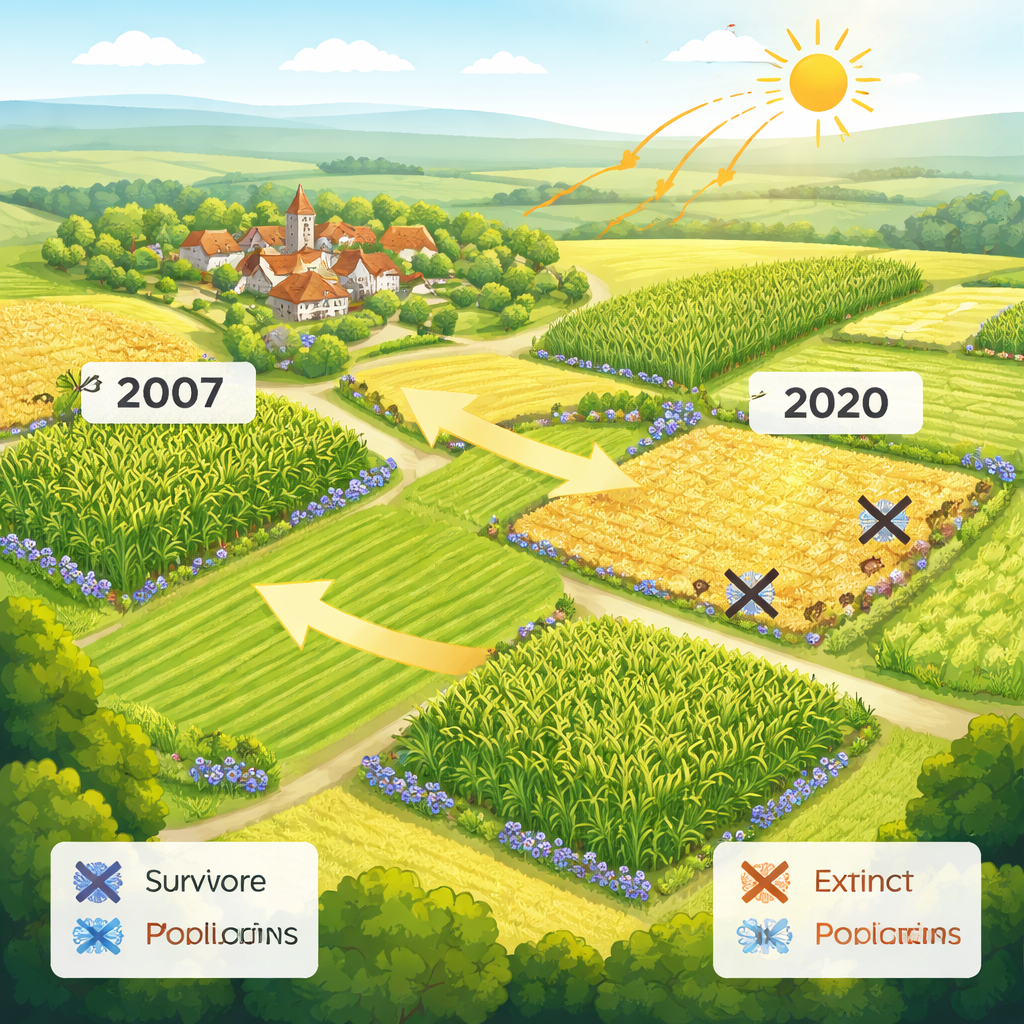
Blue field madder is a delicate, pink‑to‑purple wildflower that lives in the margins of crop fields. Once common in Central Europe, it has declined sharply with modern intensive farming and is now listed as near threatened in Germany and Bavaria. New machinery, cleaner seed, heavy fertilizer and herbicide use, and the shift to tall, dense crops like maize all make life harder for light‑loving “arable weeds” such as this one. These plants might look insignificant, but together they support farmland insects, birds, and soil life, and they hold unique genetic traits that may be useful for future crops.
Checking the plant’s DNA over time
To see how this species is faring beneath the surface, the team revisited 12 field‑margin sites near the city of Regensburg in southeast Germany. They had sampled the same locations in 2007, and returned in 2020 to collect new leaves from ten plants per surviving site. In the meantime, a quarter of the original populations had vanished entirely—blue field madder could no longer be found at three of the 12 locations. Using a modern DNA fingerprinting method that reads hundreds of tiny genetic differences across the genome, the scientists compared how much genetic variation existed within each site and how distinct the sites were from one another in the two years.
What the genes revealed
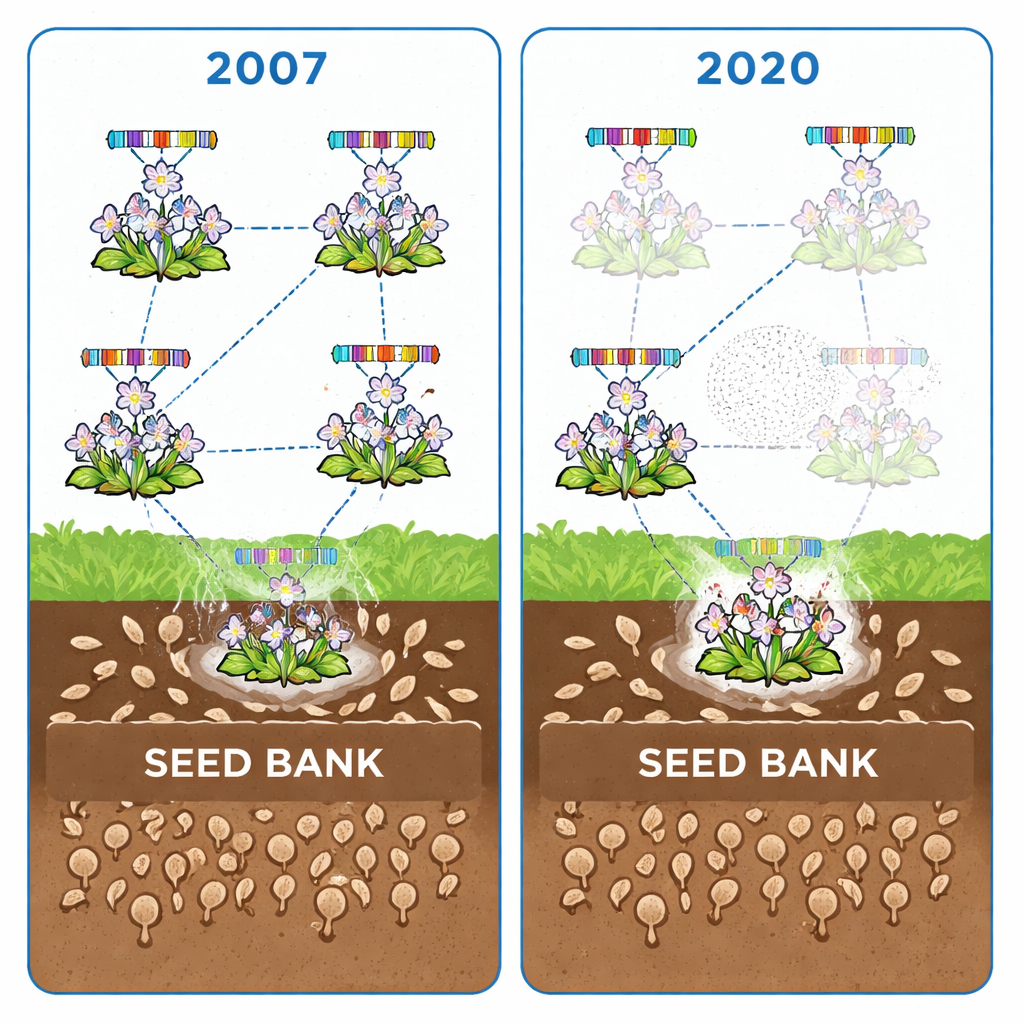
Despite the loss of whole local populations and concerns about shrinking numbers, the genetic picture was surprisingly stable. The amount of genetic variation within populations, and the degree to which populations differed from each other, were almost the same in 2007 and 2020. More detailed analyses that grouped plants into genetic clusters also showed similar patterns across time, with only modest shifts in how particular sites were assigned to clusters. Estimates of “effective population size”—a measure related to how many individuals are really contributing genes to the next generation—were low for many sites and changed in mixed ways. Some appeared to have shrunk, some to have grown, and some were too uncertain to pin down.
The hidden safety net in the soil
How can genetic variation hold steady while populations are disappearing? The authors point to a key feature of many arable weeds: long‑lived seeds. Blue field madder seeds can stay dormant but viable in the soil for up to about ten years. These soil seed banks act like time capsules, storing genetic diversity from past generations. When conditions allow, old seeds sprout and “refresh” the above‑ground population, masking the immediate genetic impact of recent losses and isolation. In effect, the soil keeps feeding genetic variety back into the visible plants, delaying the expected spiral of inbreeding and decline that often follows habitat loss.
What this means for conservation
For now, the study suggests that blue field madder is more threatened by the ongoing disappearance of its field‑margin habitats than by an immediate collapse of its genetic health. But this buffering effect from the seed bank will not last forever. As more fields switch to intensive crops and as drought and heat events become more frequent, fewer seeds are likely to be added to the soil, and those already buried will eventually be used up. The authors argue that we need long‑term genetic and population monitoring, over several decades, to catch these delayed changes. Protecting and restoring traditional field margins today could help ensure that this modest weed—and the genetic variety it represents—remains part of our agricultural landscapes in a warming, heavily managed world.
Citation: Gradl, E., Shimono, Y., Listl, D.M. et al. Genetic monitoring of an endangered arable weed reveals local maintenance of genetic variation in times of land use and climate change. Sci Rep 16, 4991 (2026). https://doi.org/10.1038/s41598-026-38363-4
Keywords: arable weeds, genetic diversity, soil seed bank, farmland biodiversity, climate and land use change