Clear Sky Science · en
Cardiorespiratory fitness responses to a Daily Mile program in overweight youth from a low-income Colombian school
Why a short daily walk at school matters
Across the world, many teenagers move too little and spend too much time sitting, which raises their risk of obesity, heart disease, and even poorer school performance later in life. This study tested a very simple idea in a low-income school in Colombia: could adding just 15 minutes of brisk walking or running, three times a week during the school day, noticeably improve the fitness of overweight and obese adolescents without special equipment or extra money?
A simple routine added to a normal school day
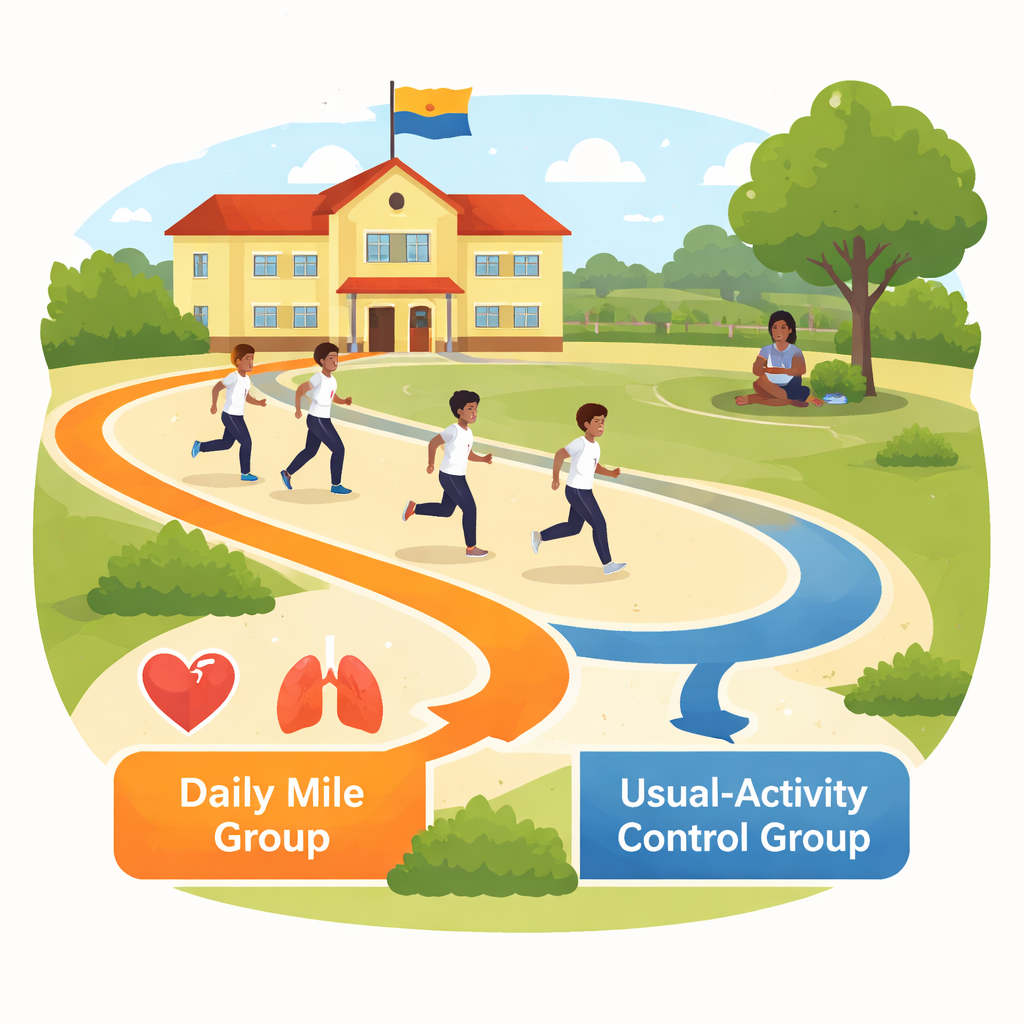
Researchers worked with a public secondary school in the Colombian city of Bucaramanga, where many students come from low-income families and have limited access to safe places for exercise. They identified 67 adolescents aged 11 to 17 who were overweight or obese; 45 of them eventually took part in the study. Students were randomly placed into two groups. One group continued with their usual classes and regular physical education. The other group followed “The Daily Mile,” a program in which students go outside during recess and spend about 15 minutes walking, jogging, or running around a marked route at their own pace, wearing normal school clothes.
How the team measured changes in health
Before and after the 10-week program, all students completed a set of tests at school. These included measurements of weight, height, and blood pressure; strength tests for the hands and legs; and a test of how pressure is distributed on the soles of the feet while standing. Most importantly, the researchers assessed cardiorespiratory fitness—the body’s ability to supply oxygen to working muscles—using a 20-meter shuttle run test. In this test, students run back and forth between two lines 20 meters apart, keeping pace with beeps that get faster over time. The total distance covered provides a practical way to judge how fit their hearts and lungs are.
What changed after ten weeks of moving more
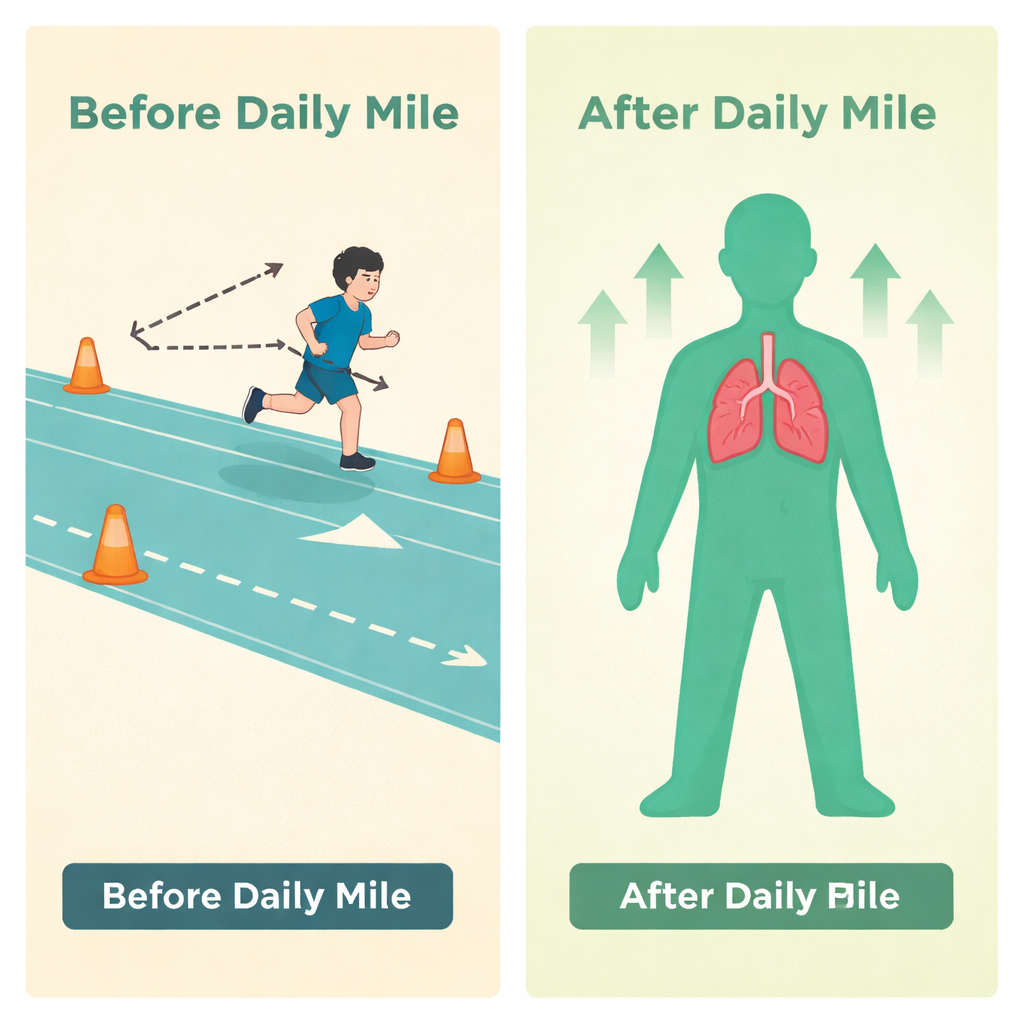
After 10 weeks, the Daily Mile group did not show meaningful changes in body weight, blood pressure, muscle strength, or pressure under the feet compared with the control group. That may sound disappointing, but these aspects of health often change slowly and typically require longer or more complex programs that include nutrition and strength training. However, one result stood out clearly: cardiorespiratory fitness improved in the Daily Mile group. On average, these students ran about 150 meters farther in the shuttle run test than those in the control group. Statistical analyses that accounted for age, sex, and body mass index confirmed that this improvement was very unlikely to be due to chance.
Why better endurance is still a big win
The greater distance covered in the shuttle run suggests that students who did the Daily Mile could keep moving for longer before getting tired, even though their body weight had not yet changed. This kind of endurance improvement likely reflects early changes inside the body, such as more efficient muscles, a stronger heart, and better breathing. Other research has shown that higher cardiorespiratory fitness in youth is linked to a lower risk of heart disease and diabetes in adulthood, as well as better mental health and academic performance. For teenagers living in neighborhoods where it can be unsafe or difficult to exercise outside of school, building this fitness through a brief, structured school routine may be especially valuable.
What this means for schools and families
The study shows that a low-cost, easy-to-run program like the Daily Mile can be successfully added to the school day in a low-resource setting and can quickly boost the fitness of overweight and obese adolescents. While it did not change weight or body composition over just 10 weeks, the improvement in endurance points to meaningful health benefits if such activity is maintained and potentially combined with better nutrition and strength exercises. For parents, teachers, and policymakers, the message is straightforward: giving students a short, regular chance to move more at school can be a powerful first step toward healthier hearts and healthier futures, particularly in communities where other opportunities to be active are scarce.
Citation: De la Rosa, A., Ojeda-Aravena, A., Niño-Cruz, G.I. et al. Cardiorespiratory fitness responses to a Daily Mile program in overweight youth from a low-income Colombian school. Sci Rep 16, 7050 (2026). https://doi.org/10.1038/s41598-026-38361-6
Keywords: Daily Mile, adolescent obesity, school physical activity, cardiorespiratory fitness, Colombia