Clear Sky Science · en
Integration of short non coding RNA and genetic factors for coronary artery disease risk prediction in a prospective study
Why tiny blood clues can matter for your heart
Heart attacks often seem to strike out of the blue, even in people who watch their diet and blood pressure. Doctors already track cholesterol, smoking, and family history, and newer tools can even estimate your inherited risk from your DNA. Yet many heart attacks still aren’t predicted in time. This study looks for extra warning signs in the blood—tiny molecules released by cells—asking whether they can, together with genetic information, flag people years before they develop coronary artery disease.
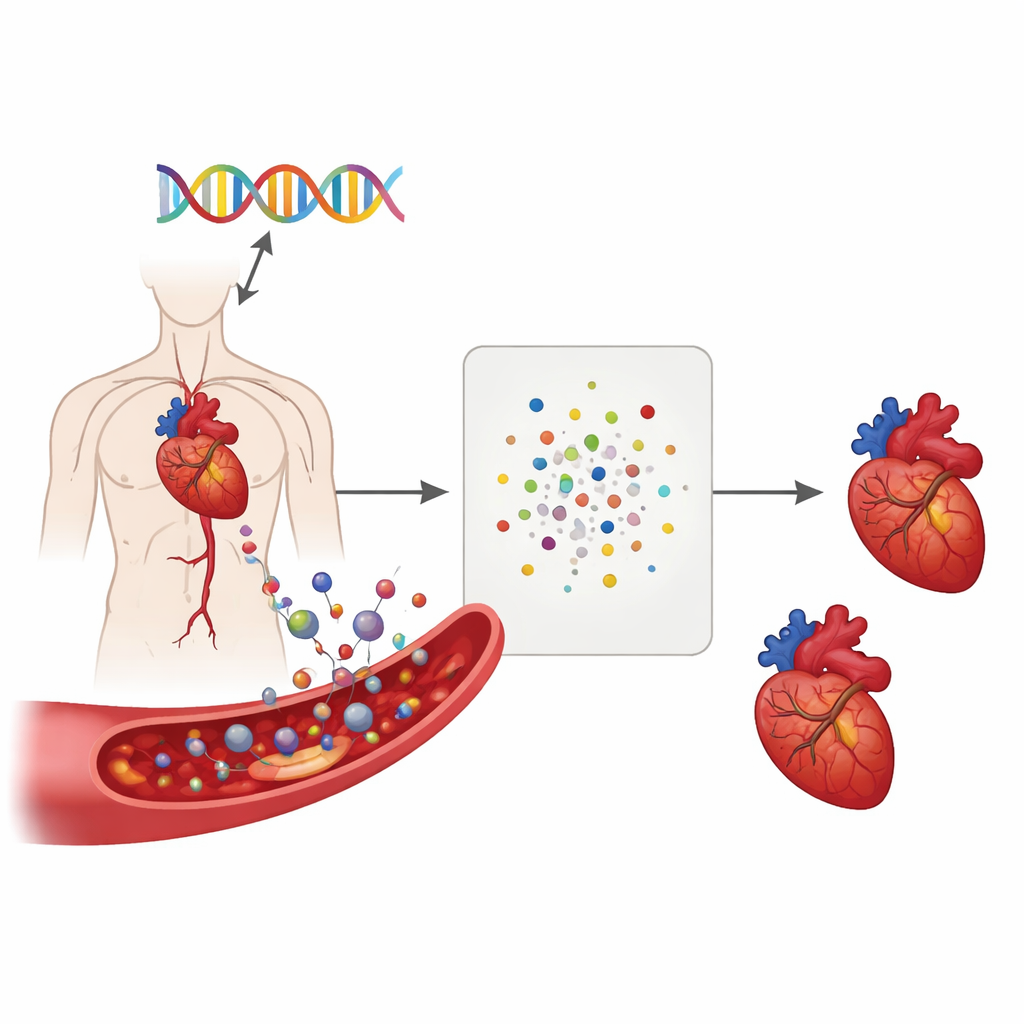
Small messengers riding in blood bubbles
Our cells constantly send out microscopic “packages” called extracellular vesicles, tiny bubbles that circulate in the blood and carry molecular messages. Inside these bubbles are short pieces of RNA—molecules related to DNA—that help tune how cells behave. Two types, known as microRNAs and piRNAs, are especially interesting because their patterns shift when tissues are stressed or diseased. The researchers wondered whether a specific pattern of these RNAs in healthy-looking adults could reveal who was quietly on the path toward clogged heart arteries.
Following people before heart disease appears
The team drew on EPICOR, a long-running Italian study that has tracked thousands of volunteers over time. From this cohort they selected 91 people who were apparently healthy at the start but went on to have a heart attack or related coronary event about six years later, and matched them to 91 similar people who stayed disease-free. Using next-generation sequencing, they read the profiles of small RNAs inside vesicles isolated from stored blood samples collected at the start—well before any clinical signs of heart disease.
Finding a molecular pattern of future risk
The analysis uncovered 172 different small RNAs in these vesicles, and 44 of them differed clearly between people who later developed coronary disease and those who did not. Most of the microRNAs were more abundant in future patients, while many piRNAs were less abundant. The team then focused on the ten strongest signals and confirmed eight of them with a more targeted laboratory test. Among these, two piRNAs—called piR-619 and piR-23533 in the technical literature—stood out as the most consistently reduced in people who would go on to develop coronary problems. When the researchers fed these two piRNA levels into a machine-learning model alongside basic clinical measures such as age and cholesterol, the model became better at telling future patients from controls than when it relied on clinical data alone.
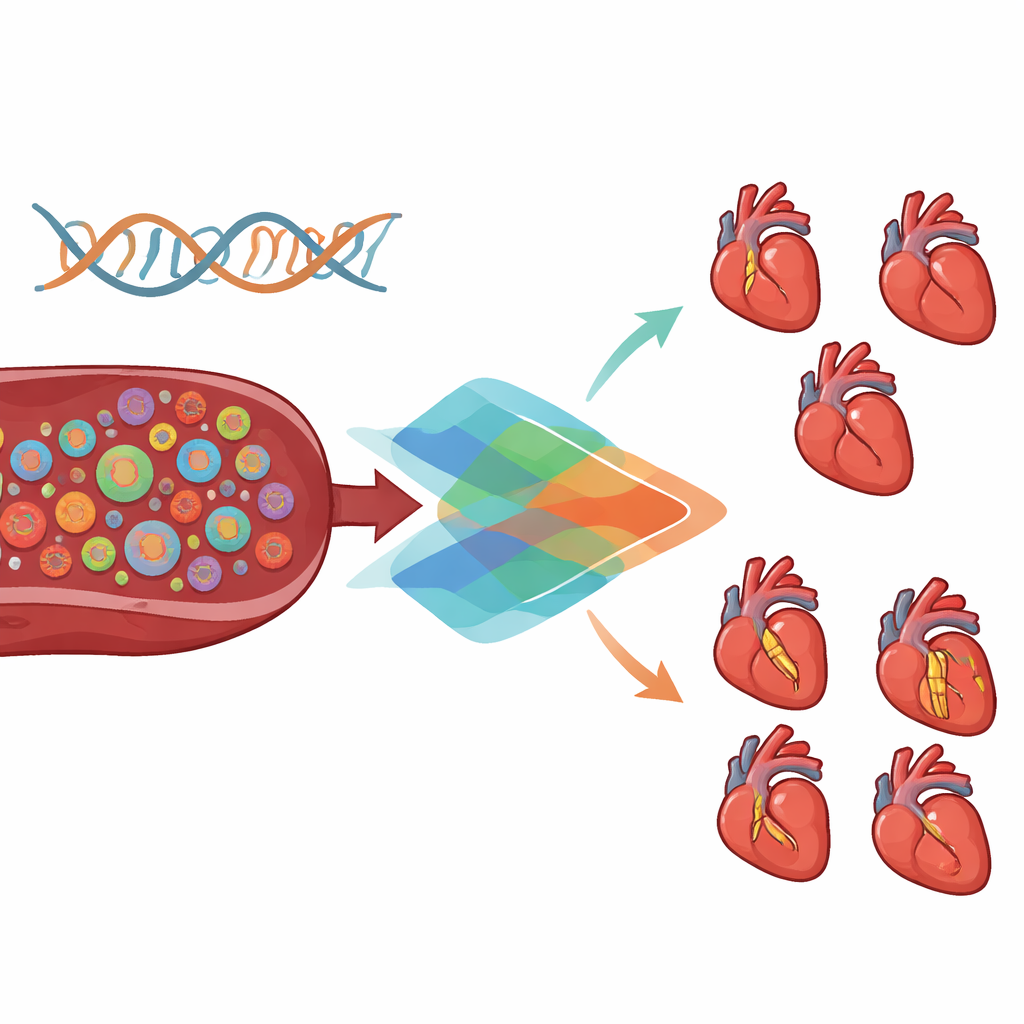
Blending DNA risk with blood signals
To see whether inherited risk and blood signals could reinforce each other, the scientists calculated a polygenic risk score for coronary artery disease for each person. This score compresses information from millions of DNA markers into a single estimate of how strongly someone’s genes predispose them to clogged arteries. As expected, people with high scores were more likely to experience coronary events. But when the researchers combined the genetic score with the two piRNAs and smoking status, the estimated risk for those above a high-risk threshold rose further, suggesting that these blood-borne signals add information beyond DNA alone.
What this could mean for patients
The work is still early and based on a relatively small group, and the findings need to be repeated in larger, independent populations before they can influence medical practice. Even so, the results hint that a fingerprint made of tiny RNA fragments, carried in blood vesicles and read together with a person’s genetic profile, might one day help doctors pick out people who are quietly heading toward coronary artery disease. That could allow more tailored monitoring and prevention—such as earlier lifestyle changes or medication—for those at highest risk, potentially reducing the toll of heart attacks and related conditions.
Citation: Casalone, E., Rosselli, M., Birolo, G. et al. Integration of short non coding RNA and genetic factors for coronary artery disease risk prediction in a prospective study. Sci Rep 16, 8364 (2026). https://doi.org/10.1038/s41598-026-38355-4
Keywords: coronary artery disease, blood biomarkers, genetic risk score, microRNA and piRNA, heart disease prediction