Clear Sky Science · en
Field efficacy of new-generation insecticides and household residue mitigation techniques assessed by LC-MS/MS for safe tomato consumption
Why this matters for your dinner plate
Tomatoes are a staple in kitchens around the world, but keeping them free from insect damage often means using chemical sprays. This raises an important question for anyone who eats fresh produce: can farmers control pests without overloading fruits with pesticide residues, and can home washing really make tomatoes safer to eat? This study from India tackles both sides of that question—how to protect the crop in the field and how to reduce residues in the kitchen—using modern measurement tools to see exactly what is left on the fruit.
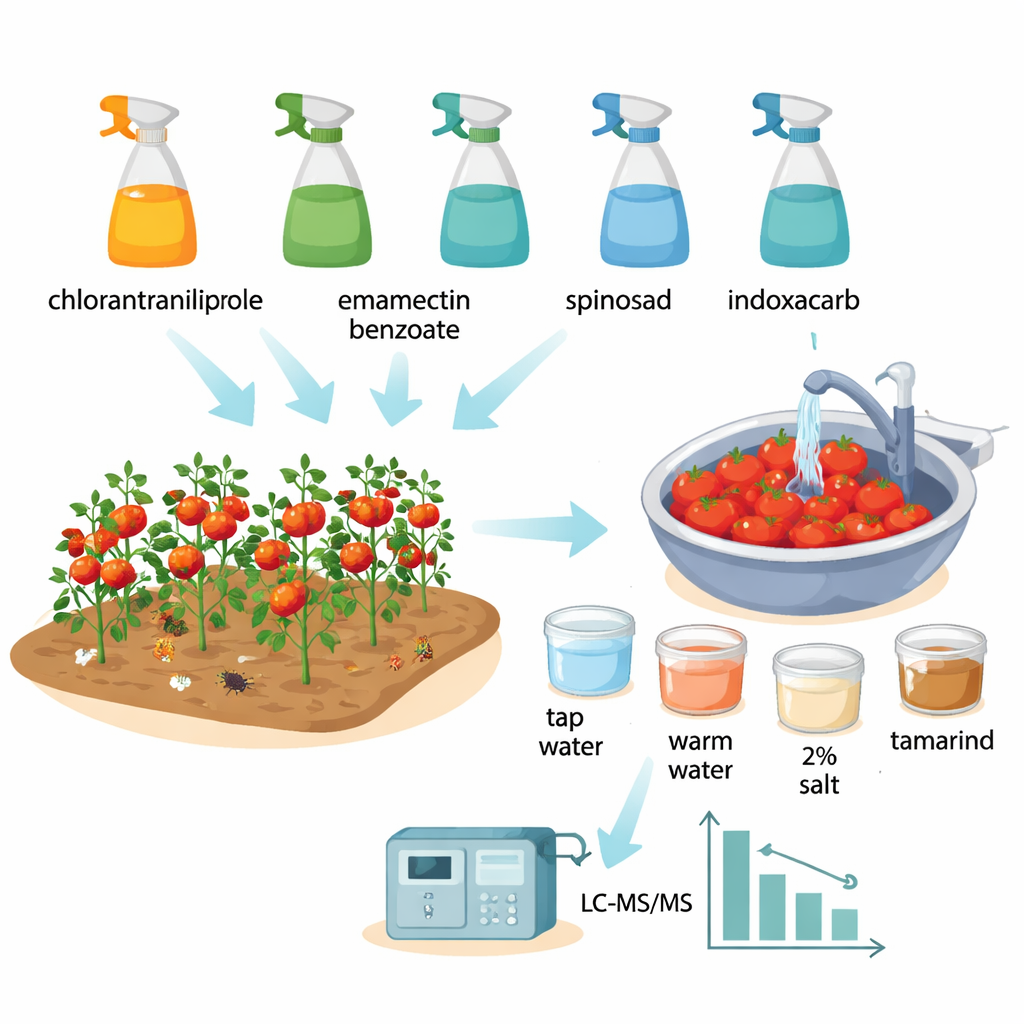
Fighting worms and sap-suckers in the field
The researchers worked with farmers growing a popular tomato variety over two seasons in Meghalaya, a hilly region of northeast India. Tomatoes there are attacked mainly by the fruit borer, a caterpillar that tunnels into fruits, and by aphids that suck plant sap. Four modern insecticides—chlorantraniliprole, emamectin benzoate, spinosad, and indoxacarb—were sprayed at three dose levels: the recommended label rate, a slightly higher rate, and double the rate. Plots with no insecticide served as the comparison. The team tracked pest numbers on the plants after spraying, counted helpful ladybird beetles that naturally eat pests, and measured final tomato yields and profit for each treatment.
Striking a balance between control and conservation
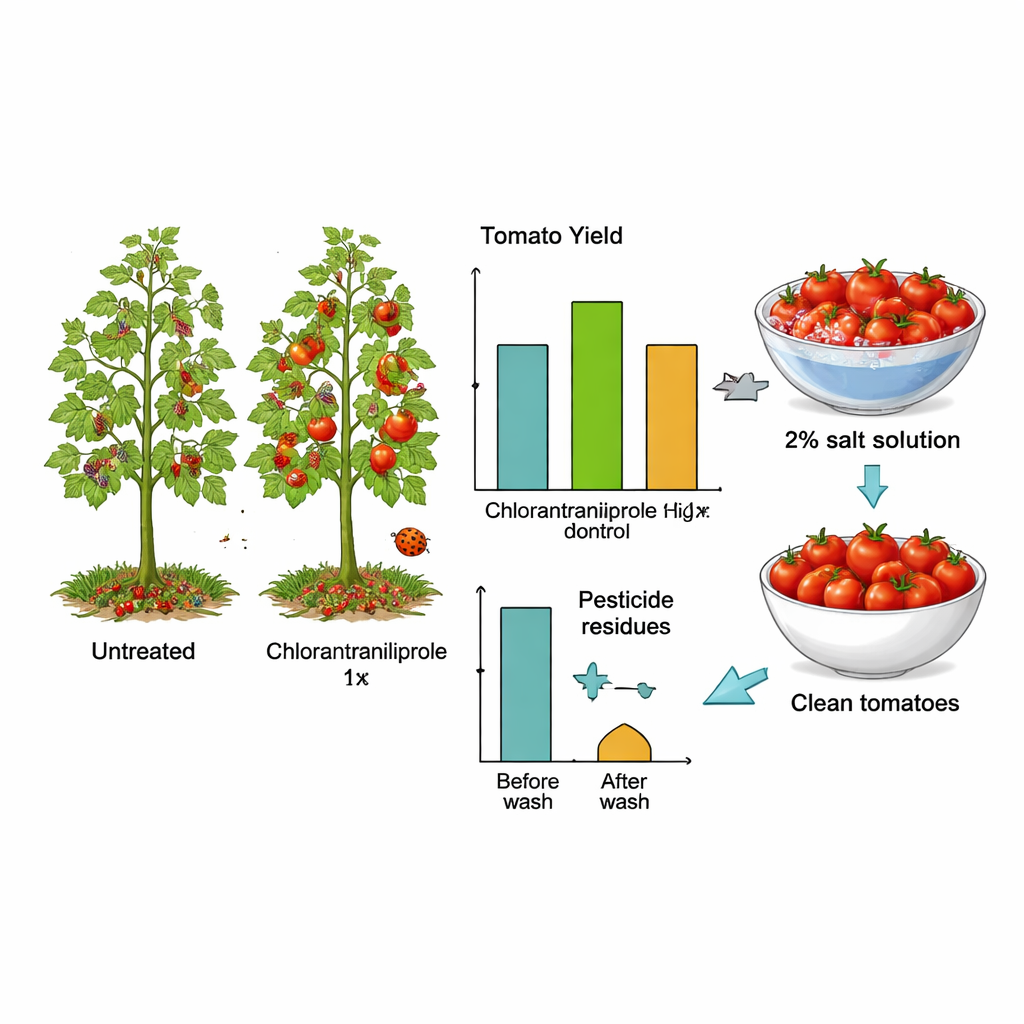
Among all options, chlorantraniliprole at the normal label dose stood out. It cut fruit borer numbers by roughly half to three-quarters compared with unsprayed fields and also lowered aphid populations, leading to yields of about 17.4 tonnes per hectare—more than double the control plots. Yet spraying more than the recommended amount offered only small extra gains in pest control and yield. At the same time, heavier doses of every insecticide knocked down populations of ladybird beetles, which are natural allies in the field. The recommended dose of chlorantraniliprole gave strong pest suppression while leaving more of these beneficial insects alive and delivered the best return on investment for farmers.
Testing simple kitchen washes to cut residues
To see what remains on tomatoes by the time they reach the kitchen, the scientists collected fruits two hours after the second field spray—when residues are still relatively high. They then tried common household cleaning methods: rinsing under tap water, washing in warm water at about 50 °C, and soaking in weak solutions of table salt, lemon juice, or tamarind pulp. Using a highly sensitive technique called LC-MS/MS, which can detect pesticide traces at parts-per-billion levels, they measured residues of all four insecticides before and after each wash. This allowed them to calculate exactly how much each method removed.
Salt and warm water do the heavy lifting
Across all four insecticides and all dose levels, washing made a clear difference. The most effective method was a 2% salt solution—about 20 grams of salt per liter of water—which removed more than 84% of residues from tomatoes sprayed at the recommended dose. Warm water washes performed nearly as well, typically removing around 80–85%. Lemon juice and tamarind solutions also cut residues substantially, while simple running tap water was the least effective but still removed roughly three-quarters of residues at normal field doses. The cleaning worked best when farmers had used the recommended spray rate; doubling the dose left more chemical on the fruit and made it harder for any home treatment to wash away completely.
What this means for farmers and families
For farmers, the study shows that sticking to the label rate of chlorantraniliprole can successfully protect tomatoes from major pests, maintain helpful insects, and maximize profit—without resorting to heavier spraying. For consumers, it offers reassuring and practical advice: soaking tomatoes for a minute or so in slightly salty water or washing them in warm water can dramatically cut pesticide residues, with simple rinsing under the tap still offering meaningful reduction. Together, smart choices in the field and in the kitchen can keep tomatoes both plentiful and safer to eat.
Citation: Reddy, C.A., Pathak, M., Kumar, Y.B. et al. Field efficacy of new-generation insecticides and household residue mitigation techniques assessed by LC-MS/MS for safe tomato consumption. Sci Rep 16, 7214 (2026). https://doi.org/10.1038/s41598-026-38350-9
Keywords: tomato pest control, pesticide residues, household washing, food safety, chlorantraniliprole