Clear Sky Science · en
Pharmacological profiling of Gnetum gnemon var. tenerum extracts exhibits antibacterial, antioxidant, cytotoxic and anti-inflammatory activities
Everyday Plant, Hidden Healing Power
In parts of Southeast Asia, a leafy vine called Gnetum gnemon var. tenerum is eaten as a vegetable and brewed in traditional remedies. This study asks a question many readers might share: can a familiar food plant really help fight some of today’s biggest health threats, such as infections, cancer, and chronic inflammation? By testing leaf extracts in the lab, the researchers explore whether this common plant could be a future source of safer, multi‑purpose medicines.
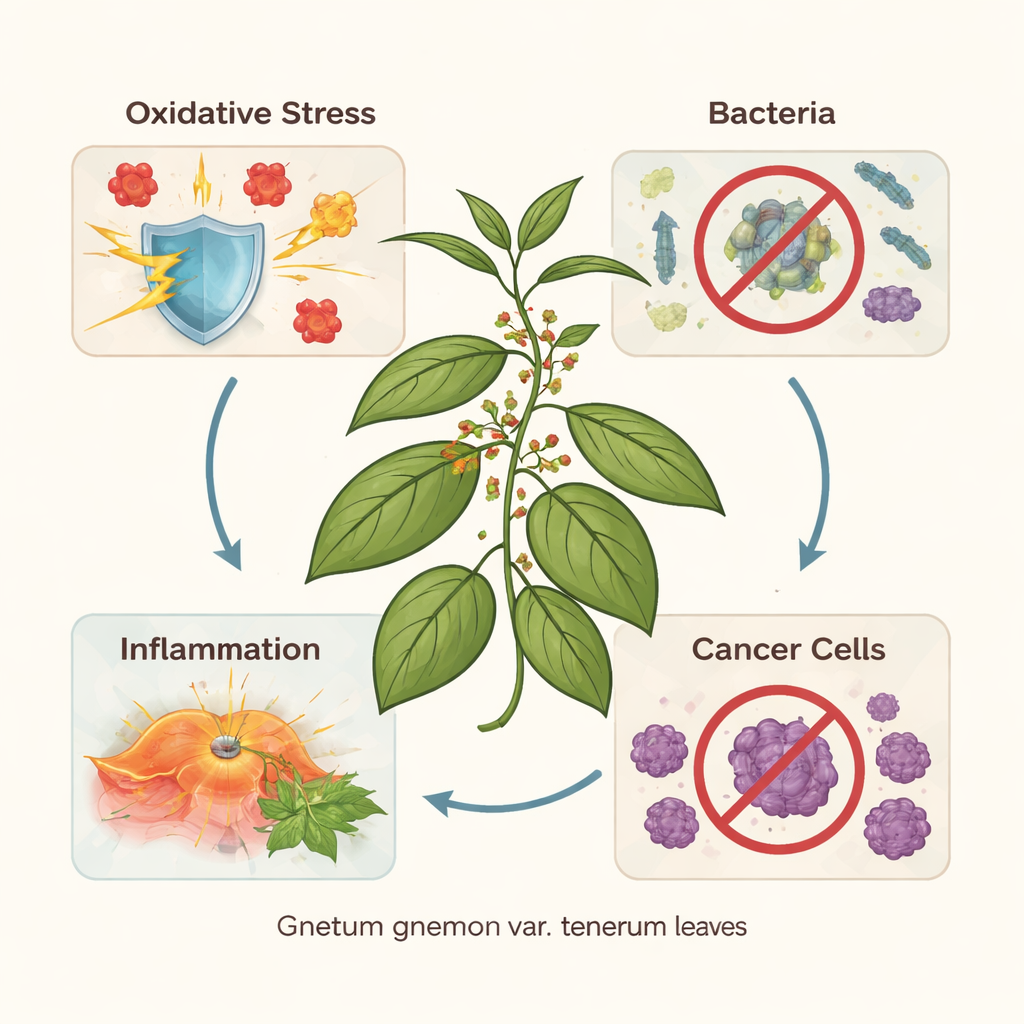
From Kitchen Garden to Test Tube
The team began by carefully collecting and identifying Gnetum leaves from southern Thailand, then preparing a concentrated leaf extract. To see which natural chemicals were present, they used a sensitive technique called LC–MS, revealing 77 different compounds. Many belonged to families already known for health benefits, including flavonoids (plant pigments with strong antioxidant activity) and phenylethanolamine derivatives, along with various amino acids and related molecules. The scientists then separated the crude extract into several fractions using different solvents—diethyl ether, chloroform, ethyl acetate, n‑butanol, and water—to find out which mixture of plant chemicals was most active.
Natural Shields Against Oxidative Damage
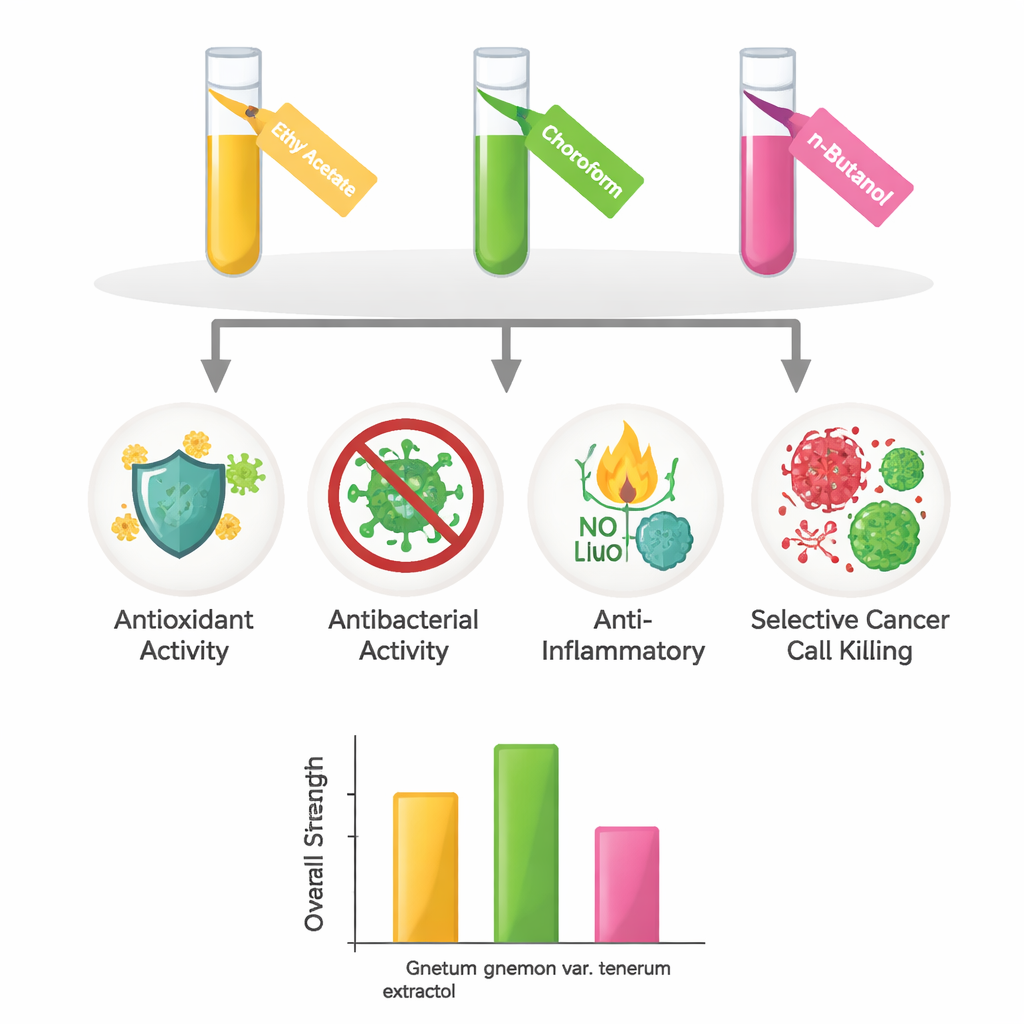
One major focus was antioxidant power—the ability to neutralize harmful “free radicals” that contribute to aging and chronic diseases. The researchers measured the total amount of phenolic and flavonoid compounds in each fraction and tested how well they could quench two standard chemical radicals, ABTS and DPPH. The ethyl acetate fraction stood out with the highest levels of these plant antioxidants and the strongest radical‑scavenging ability, followed closely by the n‑butanol fraction. Fractions richer in these compounds tended to be better antioxidants, reinforcing the idea that phenolics and flavonoids act as the plant’s—and potentially our—natural chemical shields.
Taking On Bacteria and Cancer Cells
Because antibiotic resistance is a growing global concern, the team also tested whether Gnetum leaf fractions could slow or stop five disease‑causing bacteria, including Acinetobacter baumannii, Salmonella Typhi, Shigella flexneri, Enterococcus faecalis, and Klebsiella pneumoniae. The chloroform and ethyl acetate fractions showed the strongest effects, creating large zones where bacteria could not grow and requiring relatively low concentrations to halt bacterial multiplication. Most fractions acted more as growth stoppers than outright killers, suggesting a potential role as supportive or combination therapies. When the extracts were applied to human cells, they reduced the survival of stomach (AGS) and colon (HT‑29) cancer cells in a dose‑dependent way, while normal intestinal cells (HIEC‑6) were less affected. This selective action is important: it hints that some compounds may target cancer cells more than healthy tissue.
Cooling the Fires of Inflammation
Long‑lasting, low‑grade inflammation underlies many modern illnesses, from arthritis and heart disease to some cancers. To see whether Gnetum might help calm this process, the researchers used immune‑like cells (RAW264.7 macrophages) stimulated with bacterial components to produce nitric oxide (NO), a key inflammatory messenger. At doses that did not seriously harm the cells, the chloroform and especially the ethyl acetate fractions significantly lowered NO production, in some cases approaching the effect of aspirin used as a reference drug. This suggests that certain Gnetum compounds interfere with inflammatory signaling pathways and might, with further study, be developed into anti‑inflammatory agents.
What This Means for Future Remedies
Putting all of these tests together, the study supports what traditional healers have claimed for generations: Gnetum gnemon var. tenerum is more than just a leafy green. Its leaf extracts, particularly the ethyl acetate and chloroform fractions, combine antioxidant, antibacterial, anti‑inflammatory, and cancer‑cell‑targeting activities in the lab. That does not mean people should treat this plant as a proven medicine yet—these experiments were done in dishes, not in patients, and the exact active molecules still need to be isolated and tested for safety. But the findings show that an everyday food plant can harbor a rich pharmacy of natural compounds, pointing the way toward new drugs and functional foods that might one day help protect against infections, chronic inflammation, oxidative stress, and certain cancers.
Citation: Techarang, T., Kooltheat, N., Mitsuwan, W. et al. Pharmacological profiling of Gnetum gnemon var. tenerum extracts exhibits antibacterial, antioxidant, cytotoxic and anti-inflammatory activities. Sci Rep 16, 7021 (2026). https://doi.org/10.1038/s41598-026-38348-3
Keywords: medicinal plants, antioxidants, antibacterial extracts, natural anti-inflammatory, cancer cell studies