Clear Sky Science · en
An analytic hierarchy process–based prioritization of psychological factors influencing academic performance among university students in China
Why Your Mindset Matters for Grades
Parents, teachers, and students often ask the same question: why do some students thrive at university while others struggle, even when they seem equally bright? This study looks beyond IQ and hours spent studying to examine the inner psychological forces that help or hinder academic success. By carefully weighing students’ own judgments, the researchers reveal which mental and emotional factors matter most for grades—and how universities can better support both performance and well-being.
The Inner Drivers Behind Student Success
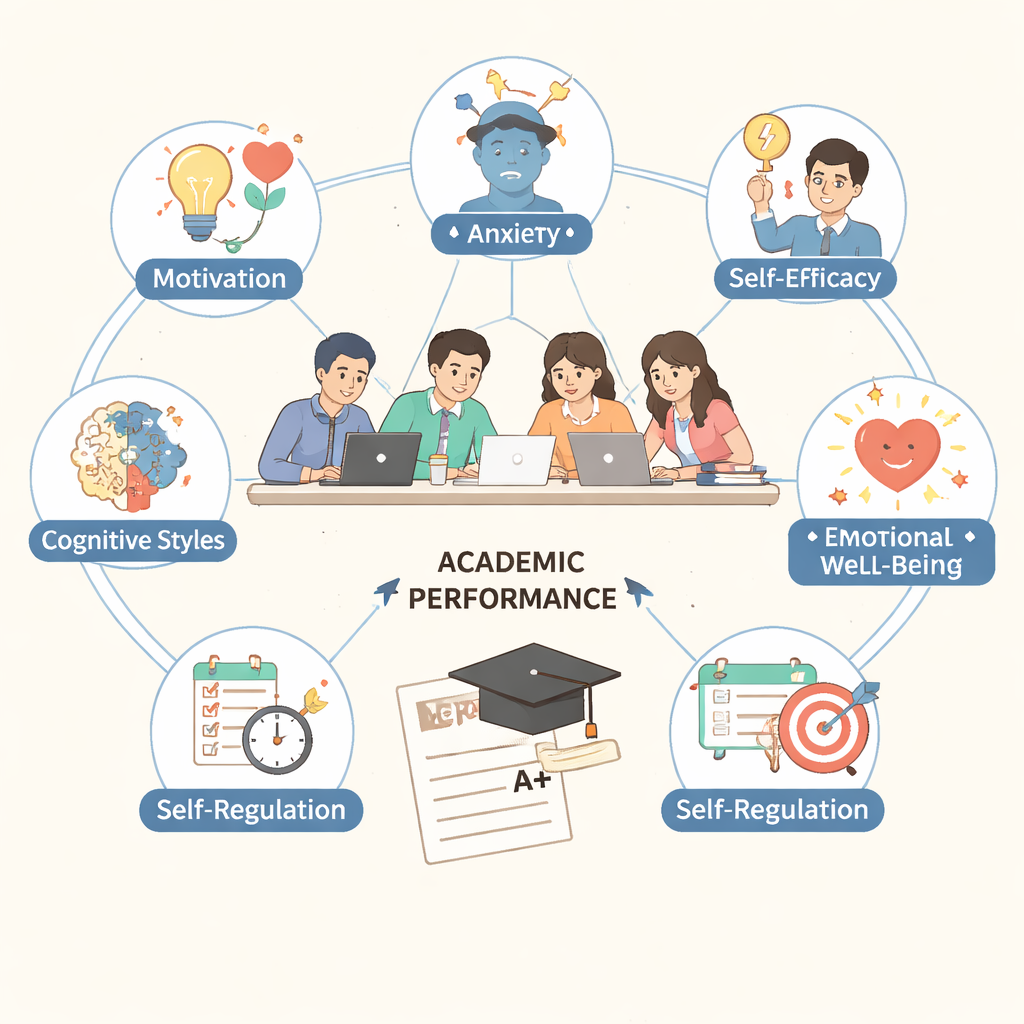
The researchers focused on six common psychological ingredients of learning: motivation, anxiety, self-belief, emotional health, study self-control, and thinking style. Rather than treating these elements separately, they built a single, structured framework to compare their importance. The central question was simple but powerful: when students themselves weigh these factors against each other, which ones rise to the top as the biggest drivers of academic performance?
A Structured Way to Compare What Matters Most
To tackle this question, the team used a decision-making method called the Analytic Hierarchy Process, or AHP. They recruited 200 full-time students from a Chinese university, spanning different majors and including both undergraduates and postgraduates. After a brief online orientation explained each psychological term in plain language with everyday study examples, students completed a series of pairwise comparisons—judging, for instance, whether motivation or anxiety mattered more for their grades, and by how much. Specialized software then combined all these judgments into a set of numerical weights, while also checking that the answers were logically consistent rather than random or contradictory.
Motivation Tops the List, Anxiety a Close Second
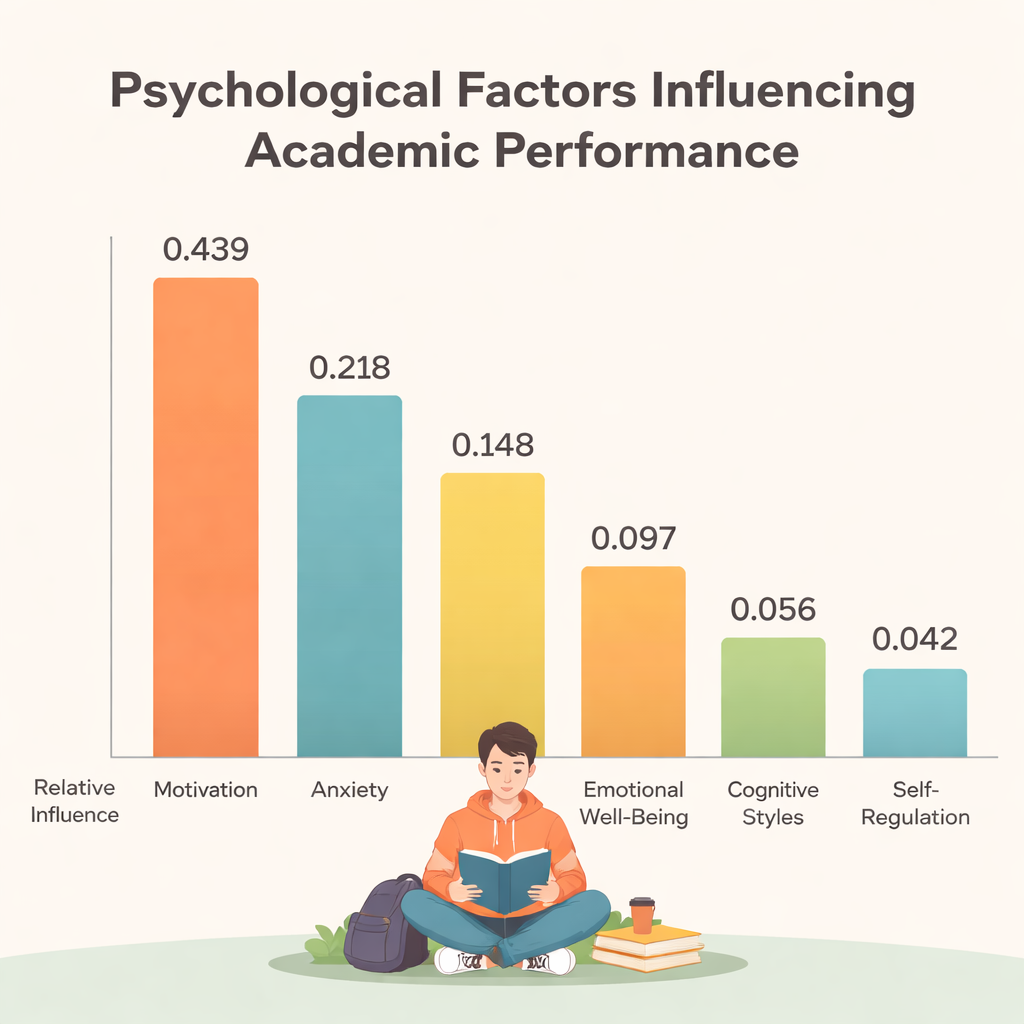
The results point clearly to motivation as the single most powerful factor: it received a weight of 0.439, almost twice that of most other variables. Highly motivated students are more likely to stick with difficult tasks, manage their time, and keep going when coursework becomes demanding. Anxiety came second with a weight of 0.218. A little nervousness can sharpen focus, but too much anxiety drains attention and confidence, making it harder to recall information or think clearly during exams. Self-belief, or self-efficacy, ranked third at 0.148, showing that believing “I can handle this” is closely tied to better strategies, persistence, and outcomes.
The Supporting Roles of Feelings, Habits, and Thinking Style
Emotional well-being, cognitive style, and self-regulation played smaller but still meaningful roles, with weights of 0.097, 0.056, and 0.042 respectively. Students who feel generally positive and emotionally balanced cope better with stress and stay engaged over the semester, even if this factor is not as dominant as motivation. Differences in preferred ways of thinking—more analytical or more holistic approaches—shape how students absorb and use information, but appear less critical for grades than sheer drive or confidence. Likewise, the ability to plan, monitor, and adjust one’s study habits supports learning, yet it seems to work best when paired with strong motivation and self-belief.
From Numbers to Real-World Change
Because the overall consistency check was very strong, the authors argue that these rankings faithfully reflect how students experience their own learning. The message for educators is straightforward: if you want to move the needle on academic performance, focus first on nurturing motivation, shoring up students’ confidence in their abilities, and helping them keep anxiety at a manageable level. Practical steps might include more engaging and relevant coursework, feedback that emphasizes progress and capability, and accessible counseling or stress-management programs. Building healthier emotions, flexible thinking, and better study habits can then reinforce these core strengths.
What This Means for Students and Universities
For a lay reader, the takeaway is that good grades are not just about being “smart” or studying longer. They depend heavily on how driven you feel, how much you believe in yourself, and how well you handle worry. This study shows that these psychological ingredients can be measured, compared, and deliberately strengthened. Universities that design classes and support systems with these inner factors in mind are more likely to see both higher achievement and healthier, more resilient students.
Citation: Xu, X., Liu, R. & Serrano, E.D. An analytic hierarchy process–based prioritization of psychological factors influencing academic performance among university students in China. Sci Rep 16, 7241 (2026). https://doi.org/10.1038/s41598-026-38343-8
Keywords: academic performance, student motivation, self-efficacy, academic anxiety, university students in China