Clear Sky Science · en
Performance optimization of solar-energized electric vehicles using coupled inductor Relift boost converter
Sunlight on the Road
Electric vehicles promise cleaner air and quieter streets, but they still need a lot of electricity. This study explores how to squeeze more useful power out of sunlight to drive an electric car, while keeping the motor running smoothly even when clouds roll in. By rethinking both the electronics that connect solar panels to the motor and the smart software that controls them, the authors show how solar‑energized EVs can become more efficient, more reliable, and kinder to the power grid.
Why Solar-Powered Cars Are Hard
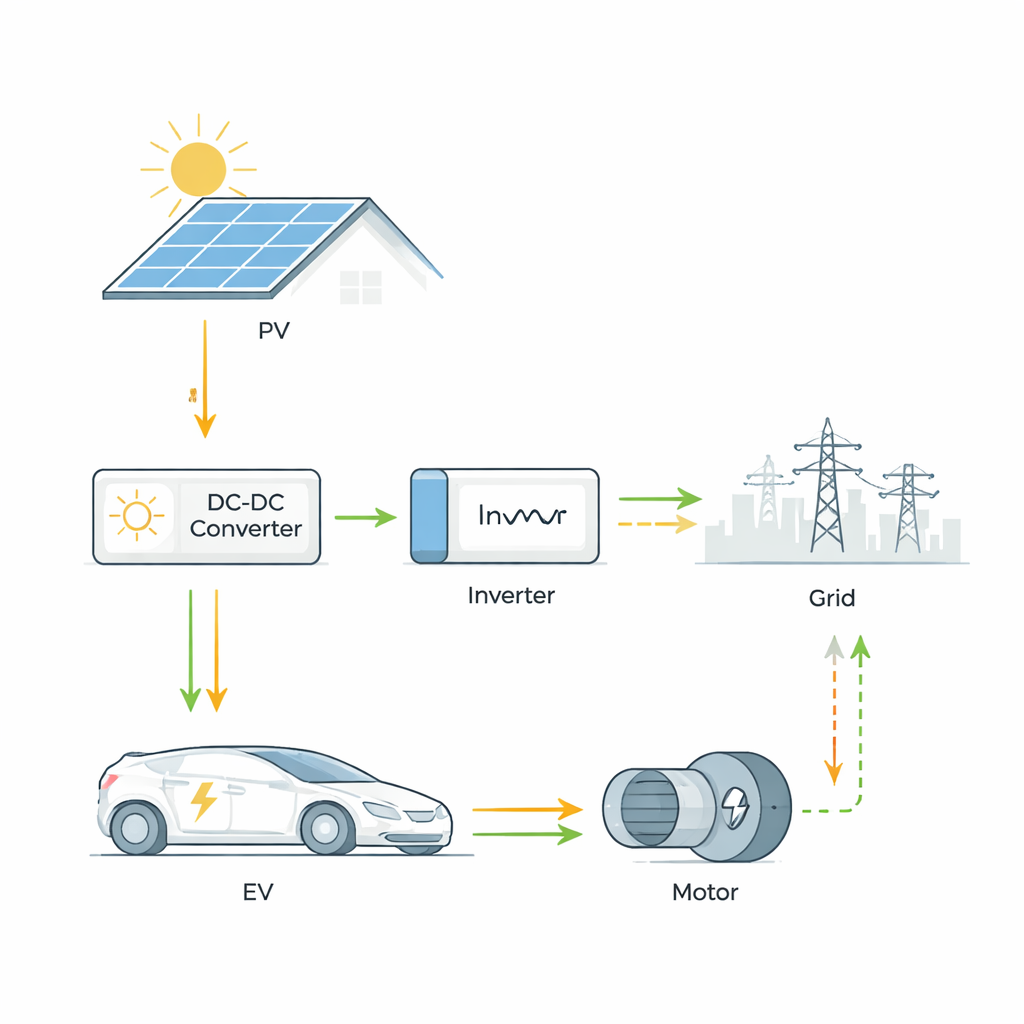
Solar panels are an appealing fuel source because they are clean, quiet, and increasingly affordable. Yet sunlight is fickle: passing clouds, changing temperatures, and shadows from buildings constantly nudge a panel away from its best operating point. At the same time, an EV motor demands steady, high-voltage power to deliver smooth acceleration and safe, predictable handling. Traditional electronic converters that step the low solar-panel voltage up to the higher levels needed by an EV often struggle under these changing conditions, suffering from limited voltage gain, wasted energy as heat, and complicated control systems. The result can be lost solar energy, extra strain on components, and a car that is more dependent on the grid than it needs to be.
A New Power “Lifter” Between Sun and Motor
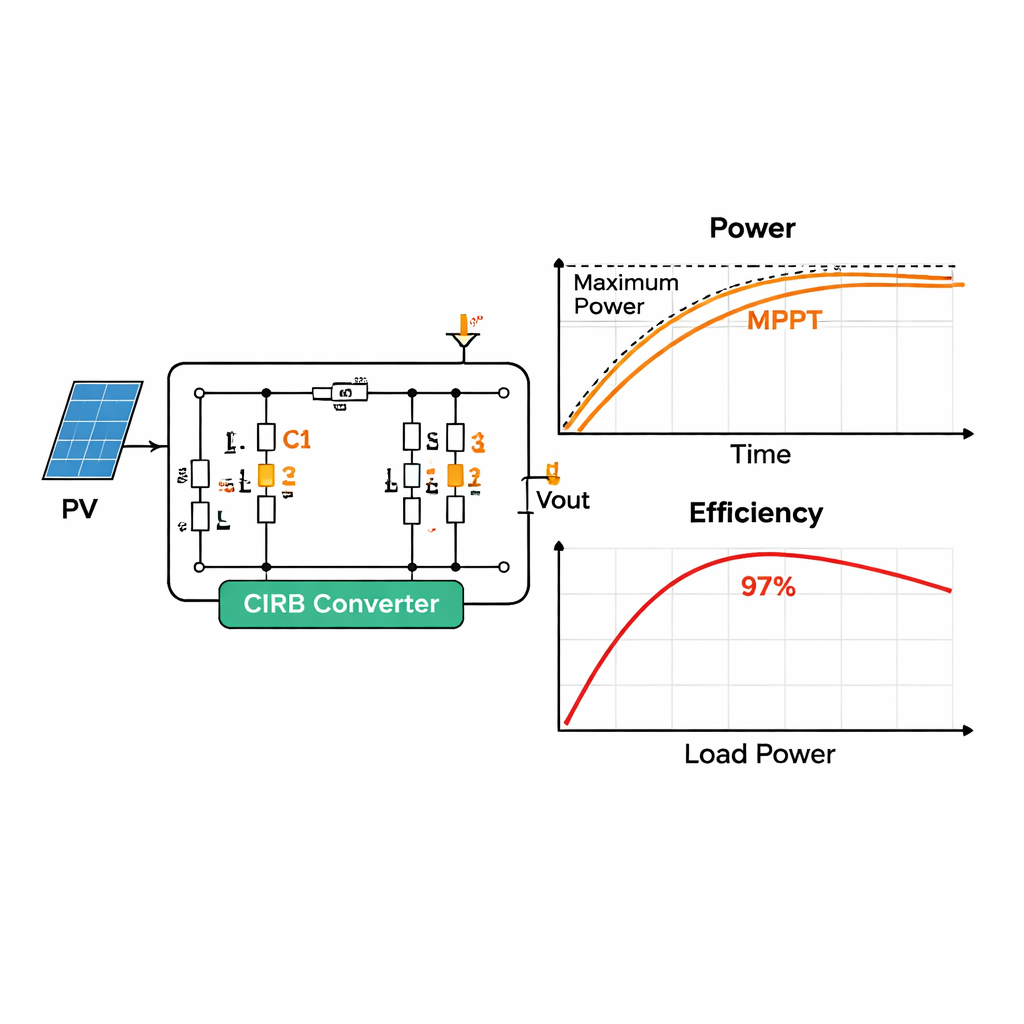
To close this gap, the researchers propose a new DC–DC converter design called a Coupled Inductor ReLift Boost (CIRB) converter. In simple terms, this converter acts like a compact, finely tuned step stool that lifts the relatively low voltage from the solar panels up to the much higher voltage required by the vehicle’s motor drive. Instead of relying on bulky transformers or multiple cascaded stages, it uses two magnetically linked coils and a clever arrangement of capacitors and switches. This structure spreads electrical stress across components, reduces current ripple, and achieves a strong “quadratic” boost in voltage with just a few parts. Simulations and hardware tests show that the converter can raise around 110 volts from the panels to about 600 volts at its output while keeping energy losses low and avoiding damaging voltage spikes.
Smart Tracking of the Best Sunlight Point
Knowing how to wire the hardware is only half the story; the system must also decide exactly how hard to “push” the converter at each moment to draw maximum power from the panels. This task, known as maximum power point tracking, is made difficult by rapidly changing weather. The authors design a two-layer artificial neural network that first estimates sunlight intensity and panel temperature from measured voltage and current, and then predicts the ideal operating voltage for the panels. To keep this digital brain sharp, they tune its internal settings with an optimization method inspired by the flight patterns of sooty terns, a seabird that balances long-distance exploration with precise, spiraling attacks on prey. This combination quickly steers the panels to their sweet spot, achieving a tracking accuracy of about 99.89% while reacting fast to changes in irradiance.
Keeping the Car and the Grid in Sync
Beyond improving solar harvesting, the study integrates the converter into a full power pathway that includes a high-performance permanent magnet motor, an inverter to generate three-phase AC, and a grid connection. A conventional PI controller keeps the motor spinning at its desired speed—around 1000 revolutions per minute in tests—despite the ups and downs of solar power. When sunlight is plentiful, extra energy can be sent back to the grid; when clouds or night cut the solar supply, the system automatically pulls energy from the grid to maintain a steady 600‑volt DC link. Careful filtering and control keep the grid current clean, with total harmonic distortion close to 1%, meeting common power-quality standards and reducing electrical noise.
What This Means for Future Electric Vehicles
Taken together, the new converter and control scheme make solar-assisted EVs more practical. The CIRB converter reaches an efficiency of about 96.96%, while providing higher voltage gain than many recent alternatives and using fewer components. The smart tracking system captures nearly all available solar power with little delay, and the grid interface ensures that the vehicle can keep running smoothly even when the sun does not cooperate. Although the design still faces challenges such as careful magnetic design at higher power levels and the need for good training data for the neural networks, it points toward EVs that rely more on rooftop or canopy solar arrays and interact more gracefully with the electric grid.
Citation: Kanakaraj, M., Arul Prasanna, M. & Gerald Christopher Raj, I. Performance optimization of solar-energized electric vehicles using coupled inductor Relift boost converter. Sci Rep 16, 6959 (2026). https://doi.org/10.1038/s41598-026-38342-9
Keywords: solar electric vehicles, power electronics, photovoltaic converters, maximum power point tracking, smart grid integration