Clear Sky Science · en
Mitigating drought stress in bitter gourd (Momordica charantia L.) through foliar application of potassium, zinc, calcium, and silicon
Why thirsty crops matter to all of us
As droughts intensify around the world, farmers are struggling to grow enough food and medicinal plants using less water. Bitter gourd, a vegetable prized in traditional medicine for its blood sugar–lowering and immune-boosting properties, is especially sensitive to dry conditions. This study explores a practical question with global relevance: can simple nutrient sprays on leaves help bitter gourd stay healthy and productive when water is scarce?
The challenge of growing a healing vegetable
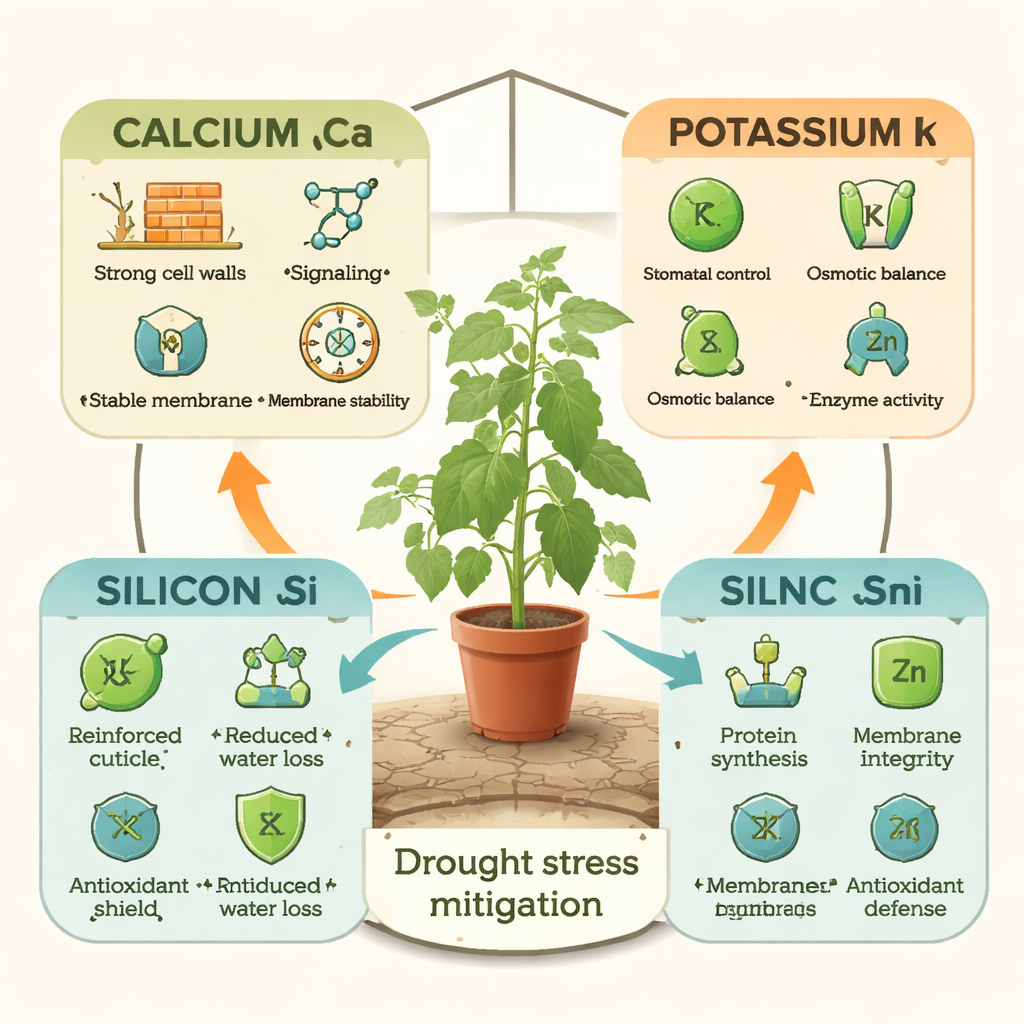
Bitter gourd, also known as bitter melon, is cultivated across Asia, Africa, and the Americas for both food and healing. It is rich in vitamins, antioxidants, and natural compounds that support blood sugar control, heart health, and immunity. Yet in arid and semi‑arid regions such as much of Iran, water shortages sharply limit how much of this crop farmers can harvest. Drought hurts plants in many ways at once: leaves lose water, cell membranes are damaged, green pigments for photosynthesis break down, and harmful oxygen‑based molecules begin to accumulate. The authors set out to test whether spraying key mineral nutrients directly onto the leaves could shore up the plant’s defenses against these multiple stresses.
Testing leaf sprays in a controlled greenhouse
The researchers grew bitter gourd plants in a greenhouse and imposed three watering levels: well‑watered soil, moderate drought, and severe drought. On top of this, they sprayed the leaves with one of four nutrients—calcium, potassium, silicon, or zinc—or just water as a control. Over the season from seedling to harvest, they tracked how the plants grew, how green and hydrated the leaves remained, how strongly photosynthesis functioned, and how much fruit was produced. They also measured a suite of internal indicators, such as sugars, the stress‑related amino acid proline, antioxidant compounds, and the levels of key elements in roots and shoots.
How nutrients help plants hold water and stay green
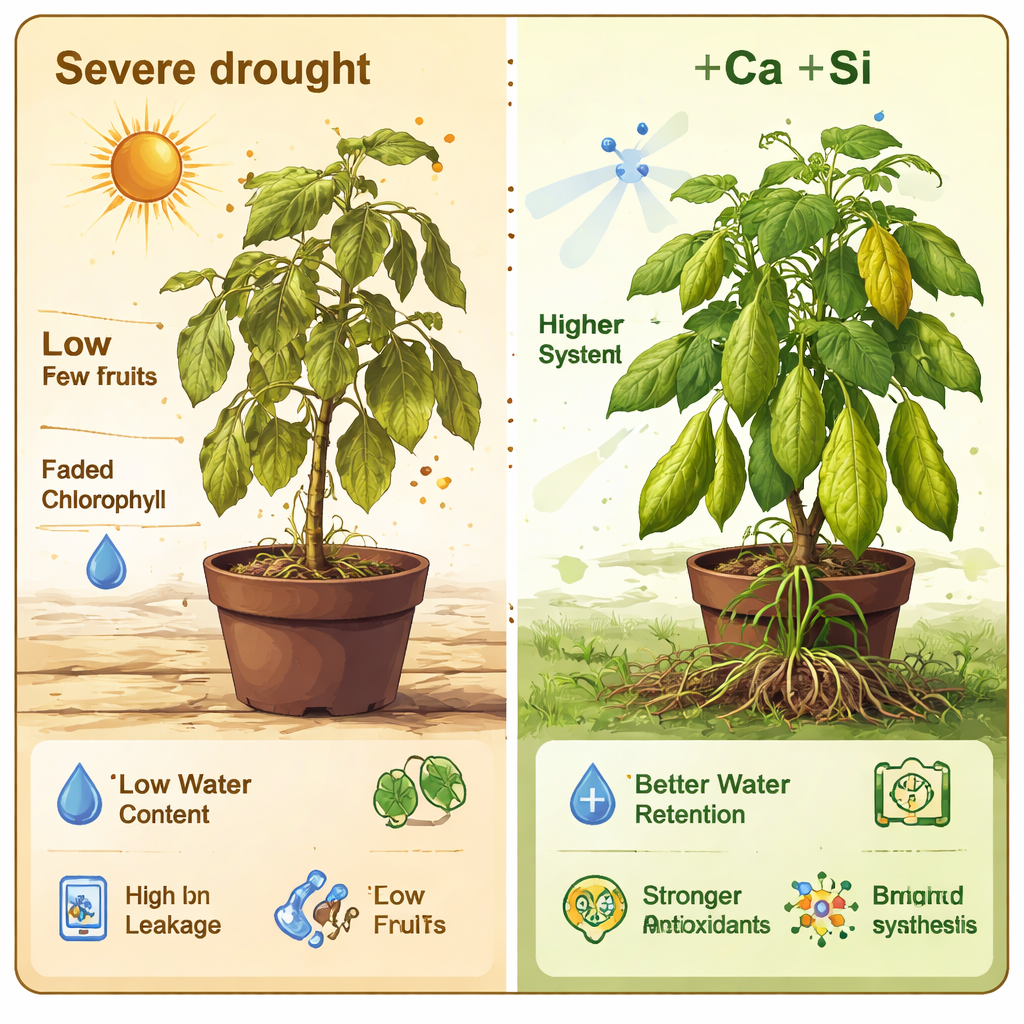
Drought normally makes plant cells leaky and dry. In unsprayed bitter gourd, reduced soil moisture led to more ions spilling out of damaged membranes and to lower relative water content in leaves. Spraying calcium and silicon sharply reduced this leakage and helped leaves retain water, with silicon working best when water was abundant and calcium excelling under moderate drought. Green pigments, essential for capturing light, usually degrade under stress. Here, silicon and zinc best preserved the main chlorophyll pigment, while calcium and silicon boosted protective yellow‑orange carotenoids. Potassium and calcium supported the performance of the photosynthetic machinery itself, helping the plant keep turning light into usable energy even as water grew scarce.
Internal chemistry shifts that cushion drought
Inside the leaves, the nutrient sprays reshaped the plant’s chemistry in ways that made it more drought‑hardy. Under dry conditions, plants naturally stockpile soluble sugars and proline to help hold water inside cells. Potassium and silicon most strongly increased these compounds, improving osmotic balance. At the same time, calcium and silicon stimulated the build‑up of phenolic compounds and boosted antioxidant activity, giving the plants more capacity to neutralize damaging reactive oxygen species. Different nutrients favored different protective enzymes: calcium was particularly good at sustaining peroxidase activity, while silicon and potassium enhanced catalase. Together, these changes meant less oxidative damage, more stable proteins, and healthier tissues under stress.
From healthier leaves to higher yields
Ultimately, what matters to farmers is growth and yield. As expected, drought reduced leaf area, root and shoot biomass, and the number of fruits per plant. Yet calcium, followed by potassium and silicon, partly offset these losses. Calcium‑sprayed plants kept larger leaves, heavier shoots and roots, and bore the most fruits across watering levels, particularly under moderate drought. Potassium and silicon also helped maintain root dry weight and fruit set, while zinc offered only modest benefits. Measurements of nutrient content showed that calcium and potassium sprays improved the uptake and retention of calcium, magnesium, and potassium in both roots and shoots, with silicon helping maintain these levels when drought was most severe.
What this means for farmers and consumers
In simple terms, the study shows that foliar nutrients act like a low‑cost “shield” that helps bitter gourd cope with dry spells. Calcium emerged as the most broadly useful element, stabilizing cell structures, supporting growth, and preserving yield, especially when drought was moderate. Silicon was particularly valuable under severe water shortage, helping plants conserve water, protect their green pigments, and ramp up antioxidant defenses. Potassium mainly supported water balance and sugar storage, while zinc played a smaller supporting role. For growers in water‑limited regions, targeted sprays of calcium under moderate drought and silicon under harsher conditions could make the difference between a poor and a reasonably successful harvest of this important medicinal vegetable.
Citation: Hatamian, Z., Roosta, H.R., Raghami, M.R. et al. Mitigating drought stress in bitter gourd (Momordica charantia L.) through foliar application of potassium, zinc, calcium, and silicon. Sci Rep 16, 7054 (2026). https://doi.org/10.1038/s41598-026-38336-7
Keywords: drought tolerance, bitter gourd, foliar nutrients, calcium and silicon, water-stressed crops