Clear Sky Science · en
Accelerometer-based assessment of occupational standing time and its association with venous disorders – results of a cross-sectional field study
Why time on your feet at work matters
Many people who work in shops, hospitals, warehouses, and factories spend hours on their feet and worry that this might damage the veins in their legs. Varicose veins and related vein problems are not just a cosmetic issue; they can cause pain, swelling, and, in severe cases, skin damage and ulcers. This study set out to test a simple but important question using modern wearable sensors: does the amount of time you stand at work really increase your risk of developing varicose veins and unhealthy blood flow in your leg veins?
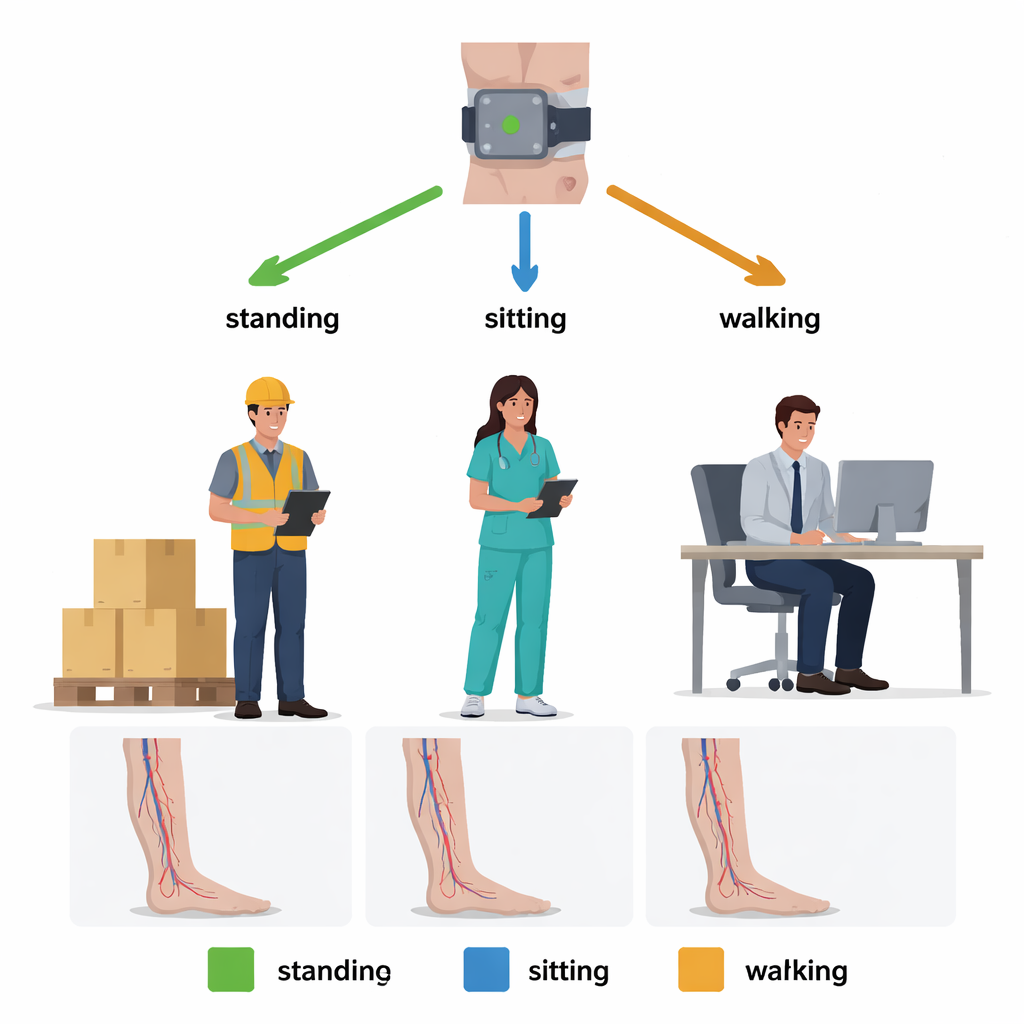
What vein problems look like in everyday life
Varicose veins occur when the veins near the surface of the leg become widened and twisted because tiny one-way valves inside them no longer work properly. Instead of moving smoothly back to the heart, blood can pool in the lower legs, leading to bulging veins, heaviness, and swelling. Doctors classify how advanced a person’s vein disease is using a staging system called CEAP, which ranges from no visible problems to severe skin changes and open sores. Another way to assess vein health is by ultrasound, which can detect how long blood flows backward, a sign called reflux. If reflux lasts unusually long, it is considered pathological and may signal a higher risk of long‑term damage.
How the researchers measured workday standing
To move beyond rough self-reports like “I stand a lot,” the team equipped 198 full-time employees from logistics, retail, manufacturing, healthcare, research, and service jobs with a small accelerometer worn on the front of the thigh. This device automatically distinguished sitting, standing, and walking every second over a typical 24‑hour period, allowing the researchers to calculate exactly how many hours each person spent in each posture during working time. Workers were grouped into three categories: those who stood two hours or less per day, those who stood between two and four hours, and those who stood more than four hours. The team also estimated each person’s lifetime standing exposure in their current occupation by combining sensor data with a detailed work history questionnaire.
Checking leg veins with scans and interviews
On a second day, participants underwent a thorough leg examination, including visual grading of visible vein changes and an ultrasound scan of seven key veins in each leg. The scan measured how long blood flowed backward after a brief squeeze of the calf, allowing the team to mark each vein segment as normal or showing pathological reflux. In addition, participants completed questionnaires about age, sex, weight, smoking, pregnancies, physical activity, and family history of vein disease. This made it possible to separate the effect of standing from other well-known risk factors, such as getting older or having close relatives with varicose veins.
What the data revealed about standing, age, and veins
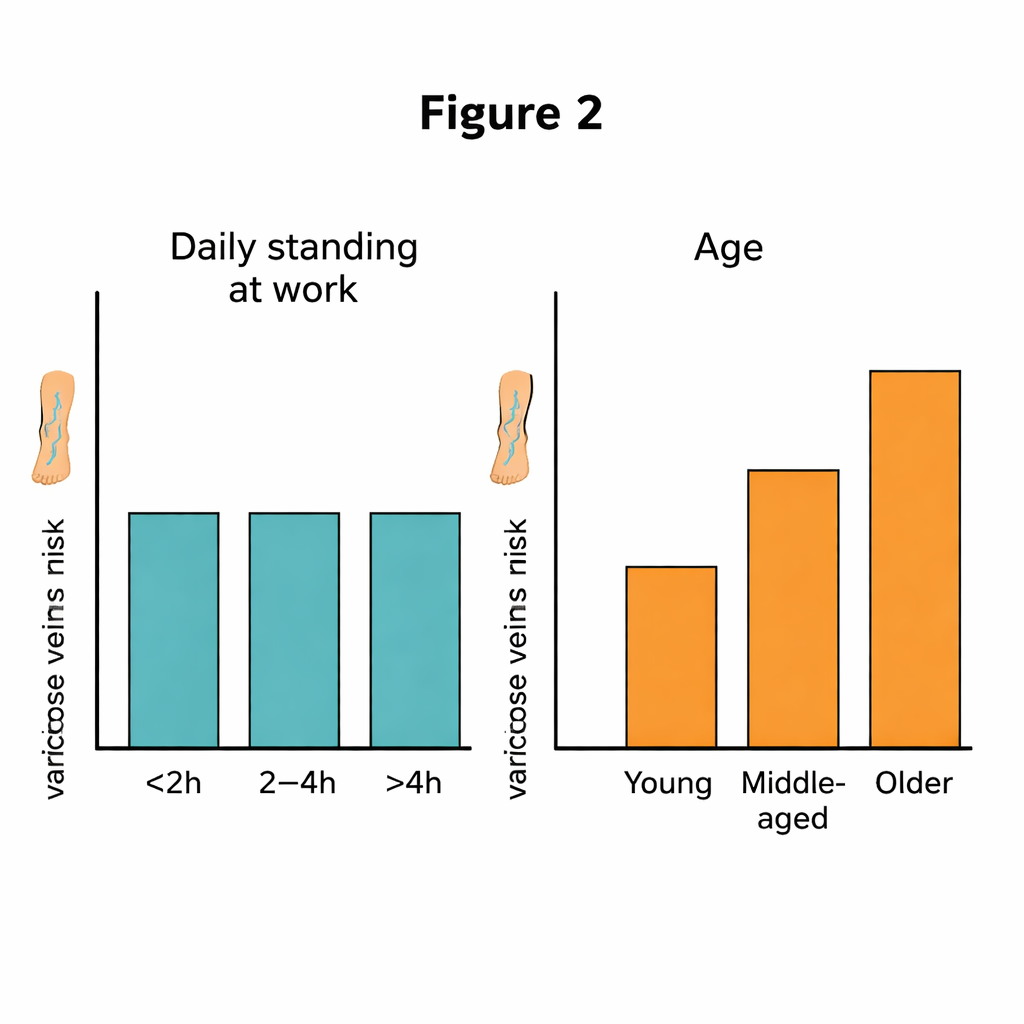
Roughly one in five workers in this study had varicose veins, and a little over one third showed pathological reflux in at least one leg vein, rates that are similar to those reported in large population studies. However, when the researchers compared the three standing groups, they did not find a clear or statistically reliable link between longer daily standing and having varicose veins or reflux. Even when they looked at long‑term cumulative standing over many years in the same job, the association with varicose veins remained weak. In contrast, age and family history emerged as strong and consistent predictors: older workers and those with affected parents were much more likely to show visible varicose veins. For reflux, overall standing time over the years played a role only in combination with age, and smoking was also linked to worse outcomes. Interestingly, workers who stood the longest often also walked more and sat less, which may help protect their veins by keeping the calf muscles active.
What this means for people who stand a lot at work
For people worried that every extra hour on their feet at work is directly ruining their veins, this study offers a more nuanced message. In this mixed group of occupations, simply counting daily standing hours did not clearly predict who had varicose veins or poor blood flow on ultrasound. Instead, growing older, having a family tendency to vein problems, and smoking were more important. The authors suggest that how you move—alternating between sitting, standing, and especially walking—may matter more than standing time alone. Future research using wearables could help refine practical advice, but for now, maintaining general fitness, avoiding smoking, and staying as mobile as possible during the workday seem to be key steps for keeping leg veins healthier.
Citation: Soeder, J., Volk, C., Ulmer, L. et al. Accelerometer-based assessment of occupational standing time and its association with venous disorders – results of a cross-sectional field study. Sci Rep 16, 7477 (2026). https://doi.org/10.1038/s41598-026-38327-8
Keywords: varicose veins, occupational standing, wearable sensors, leg vein health, workplace ergonomics