Clear Sky Science · en
Exosomes derived from bone marrow mesenchymal stem cells facilitate repair of radiation-Induced skin injury by attenuating inflammation and apoptosis
Why damaged skin after radiation needs new answers
Many cancer patients who receive radiotherapy develop painful skin problems that can linger long after treatment ends. Redness, peeling, open sores, and even stubborn ulcers are common, and doctors currently have few targeted ways to help the skin truly recover. This study explores a promising biological therapy: tiny healing packets released by stem cells in bone marrow, and how they might calm radiation‑damaged skin and help it rebuild itself.
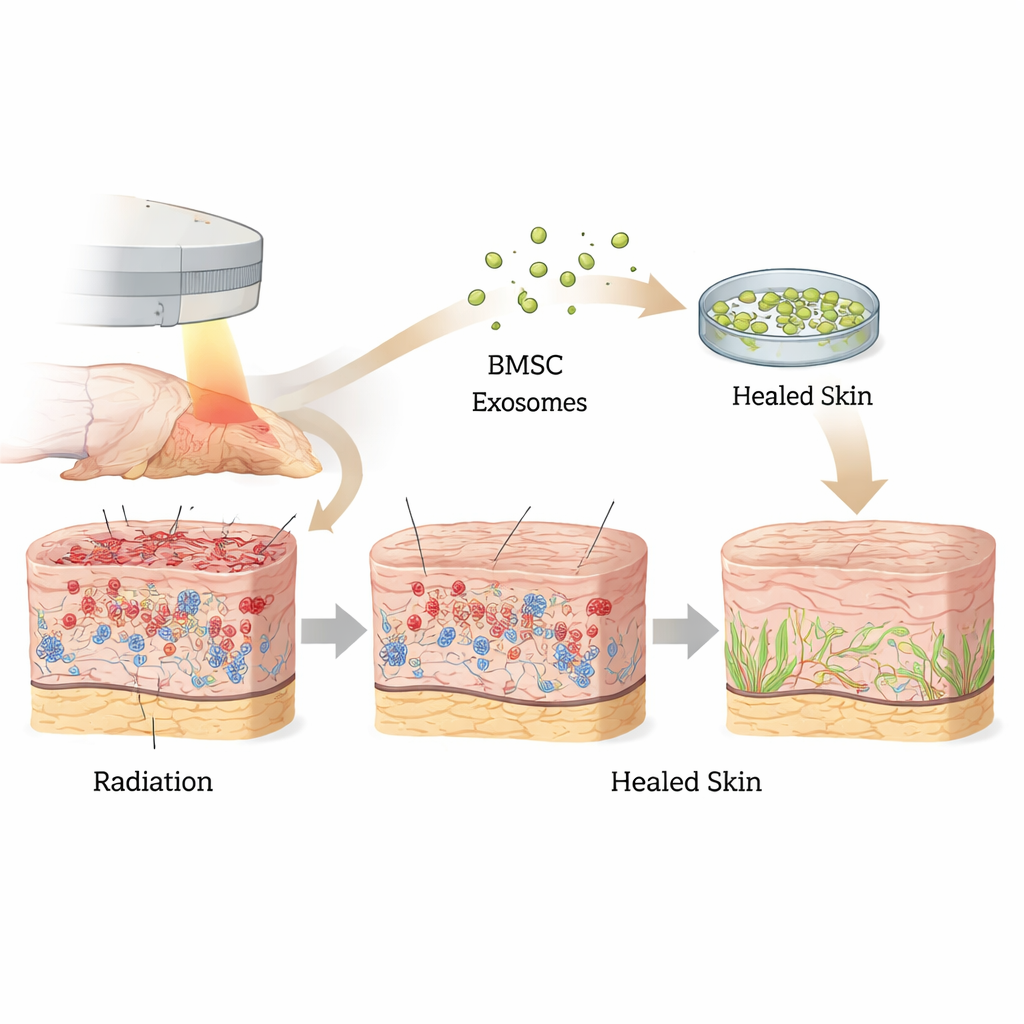
Tiny messengers from repair‑oriented cells
Our bone marrow houses mesenchymal stem cells, a type of adult stem cell that helps maintain and repair many tissues. Rather than working only by turning into new cells, these stem cells constantly release nanosized bubbles called exosomes. Each exosome is a membrane‑bound package loaded with proteins and genetic material that can change the behavior of cells it touches. Because they are cell‑free and relatively stable, exosomes are being explored as safer, more controllable alternatives to stem‑cell transplants for tissue repair.
Building a realistic model of radiation‑damaged skin
To see whether these exosomes could aid healing after radiotherapy, the researchers created a rat model of radiation‑induced skin injury. A focused, high dose of ionizing radiation was applied to the skin of the hind limb to mimic severe treatment‑related damage. Over the next several days, the affected skin developed intense redness, ulcers, and oozing fluid—hallmarks of serious radiodermatitis. Starting ten days after irradiation, some rats received tiny under‑the‑skin injections of bone marrow stem‑cell exosomes near the injured area, while others received only saline. The team then closely tracked how the wounds changed over three weeks.
Visible and microscopic signs of better healing
Rats treated with exosomes showed faster and more complete closure of their skin wounds compared with untreated animals. The overall wound area shrank more quickly, and a standard scoring system showed that the severity of radiation injury steadily dropped in the exosome group. Microscopic examination of the skin provided further clues. In untreated animals, the outer skin layer was broken, hair follicles and other structures were lost, and collagen fibers—the structural cables that give skin strength—were sparse and disorganized. With exosome treatment, the outer layer began to reform, inflammatory cells were reduced, and collagen became denser and more orderly, looking more like normal skin.
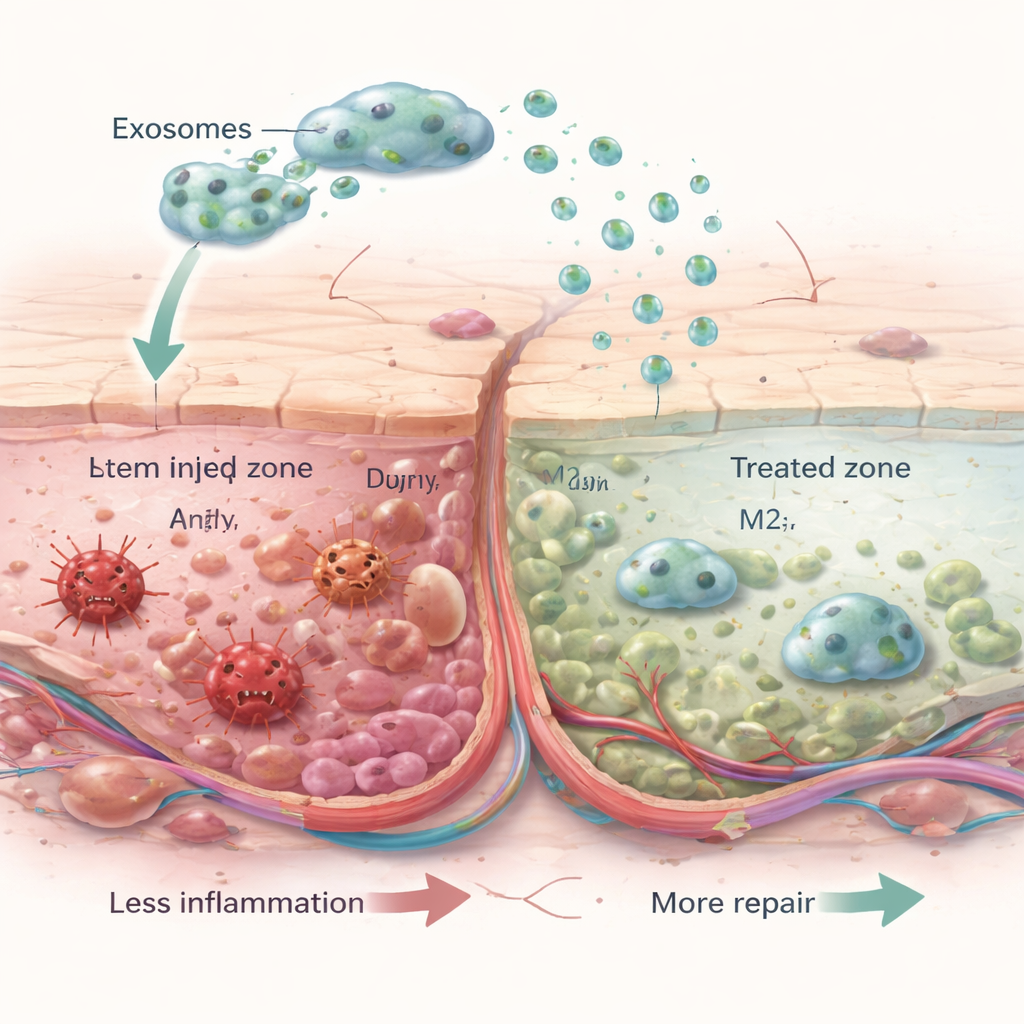
Calming inflammation, growing vessels, and saving cells
The study also examined what was happening inside the tissue’s immune and blood‑vessel systems. Radiation usually triggers a long‑lasting swarm of aggressive immune cells that pump out inflammatory signals and prevent repair. Exosome‑treated skin had fewer of these pro‑inflammatory cells and more of a gentler, clean‑up and rebuild type of immune cell. Inflammatory molecules such as TNF‑α and IL‑1β dropped, while the anti‑inflammatory signal IL‑10 rose. At the same time, markers of new and more mature blood vessels increased, suggesting that exosomes helped restore tiny vessels that bring oxygen and nutrients to the wound. Finally, tests for programmed cell death showed that fewer skin cells were dying in the treated group, and key survival proteins in a major growth pathway (often called Akt) were more active.
What this could mean for people receiving radiotherapy
Together, these findings suggest that bone marrow stem‑cell exosomes act like smart repair messages for radiation‑damaged skin. They appear to shift the local environment away from chronic inflammation and relentless cell death toward calm, rebuilding, and improved blood supply. While this work was done in rats and much remains to be learned about the exact molecules involved and how best to deliver them, it points to a future in which a patient’s own or donated stem‑cell exosomes could be used to prevent or treat severe radiation skin injuries in a targeted, cell‑free way.
Citation: Wen, Y., Song, Y., Pan, S. et al. Exosomes derived from bone marrow mesenchymal stem cells facilitate repair of radiation-Induced skin injury by attenuating inflammation and apoptosis. Sci Rep 16, 6918 (2026). https://doi.org/10.1038/s41598-026-38306-z
Keywords: radiation skin injury, mesenchymal stem cells, exosomes, wound healing, inflammation