Clear Sky Science · en
Effects of whey protein isolate olive oil pre emulsification on quality and storage stability of buffalo milk cheddar cheese
Why a New Kind of Cheese Matters
Cheese lovers and health-conscious shoppers don’t always want the same thing: creamy, melty, tasty cheese is often rich in saturated fat and short on health-promoting compounds. This study explores a way to make a familiar favorite—processed Cheddar cheese from buffalo milk—a little smarter. By blending in a delicate mixture of olive oil and whey protein, the researchers set out to boost the cheese’s nutritional value, protect it from spoilage, and keep (or even improve) the flavor and texture people enjoy.

A Simple Idea: Mix Healthy Oil into Everyday Cheese
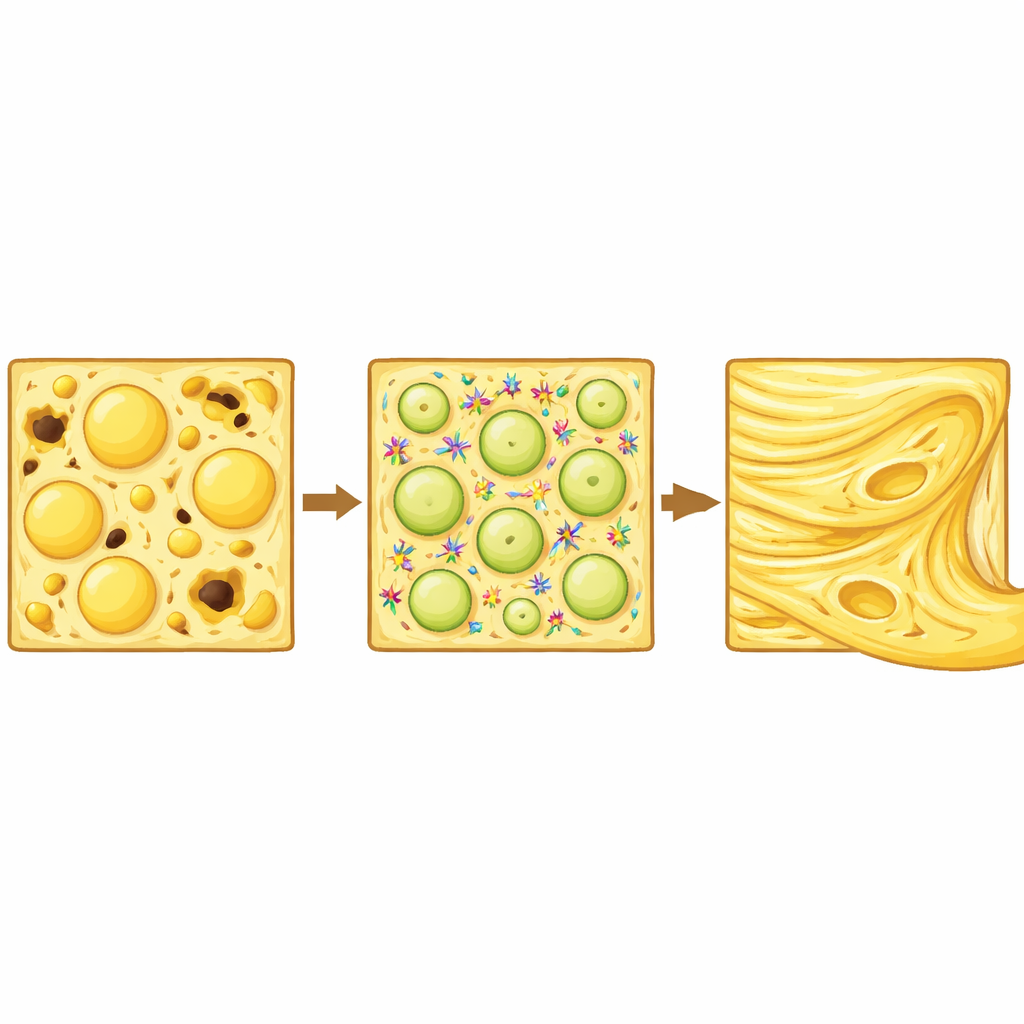
Processed cheese is made by melting natural cheese with salts, added fats, and water to form a smooth, uniform product that slices, spreads, and melts easily. Traditionally, the fat in these products comes mainly from dairy, and they contain few natural protective plant compounds. In this work, the team prepared processed Cheddar cheese using buffalo milk Cheddar as the base and replaced part of the fat phase with tiny droplets of extra-virgin olive oil wrapped in whey protein (a high-quality milk protein). They tested several versions: cheese with no emulsion and cheeses where the olive oil–protein emulsion made up 5%, 10%, or 15% of the mix.
What Was Measured in the Cheese
To see how this change affected the product, the researchers looked at both numbers and human impressions. They measured basic composition—moisture, fat, protein, salt-related minerals, acidity, and pH—and tracked how these changed over 60 days in cold storage. They also examined the presence of plant-based antioxidant compounds (phenolics and flavonoids from olive oil), the cheese’s ability to neutralize damaging free radicals, and chemical markers of fat damage over time. In parallel, they evaluated how the cheese behaved when heated (meltability), how firm and springy it was using specialized texture instruments, and how a trained sensory panel rated its flavor and mouthfeel.
Healthier Compounds Without Sacrificing Structure
Adding the olive oil–whey protein emulsion clearly enriched the cheese with beneficial plant compounds. Phenolic and flavonoid levels were significantly higher in the enriched cheeses than in the control, and their free-radical–scavenging capacity rose accordingly. Although these antioxidant levels slowly declined during refrigerated storage, cheeses with more emulsion consistently kept an advantage. At the same time, the basic make-up of the cheeses stayed within normal ranges: moisture and acidity changed very little over 60 days, and only modest shifts in fat, protein, and mineral content were observed. Importantly, the presence of olive oil helped slow down fat oxidation, as shown by lower values of a common spoilage marker, meaning the cheese was less prone to developing rancid off-flavors.
Texture, Melt, and Color in Everyday Use
The structural and sensory properties of the cheeses were just as important as their chemistry. The olive oil–protein droplets were designed to disperse evenly in the cheese body, which in turn influenced firmness, cohesiveness, and chewiness. Overall, adding the emulsion slightly reduced hardness at first but led to a more stable, cohesive structure over storage. Cheeses with higher emulsion levels melted more readily and evenly, a desirable trait for cooking. Color shifted somewhat—enriched cheeses were a bit less bright and yellow than the control—reflecting the different fat source. A trained panel judged creaminess, bitterness, sourness, sweetness, saltiness, and any rancid notes, as well as texture impressions like crumbliness and graininess. Cheeses containing a moderate level of emulsion, especially around 5–10%, struck the best balance, earning higher scores for overall flavor and pleasant texture than either the control or the highest-oil version.
What This Means for Cheese on the Shelf
In plain terms, the study shows that carefully blending olive oil and whey protein into processed Cheddar cheese can make it richer in protective plant compounds, more resistant to fat damage during storage, and at least as enjoyable—or even more so—to eat. A 10% emulsion level, in particular, offered an appealing combination of nutrition, meltability, structure, and taste. These findings suggest that manufacturers could use such oil–protein emulsions to develop cleaner-label, more functional cheese spreads and analogues that still satisfy the desire for familiar flavor and performance while adding subtle health-related benefits.
Citation: Rafique, S., Murtaza, M.A., Mahmood, S. et al. Effects of whey protein isolate olive oil pre emulsification on quality and storage stability of buffalo milk cheddar cheese. Sci Rep 16, 9492 (2026). https://doi.org/10.1038/s41598-026-38304-1
Keywords: processed cheese, olive oil, whey protein, antioxidant stability, cheese texture