Clear Sky Science · en
Investigation of VOC emissions in synthetic resin and plastic manufacturing through speciation at fenceline locations
Why factory air at the fence matters
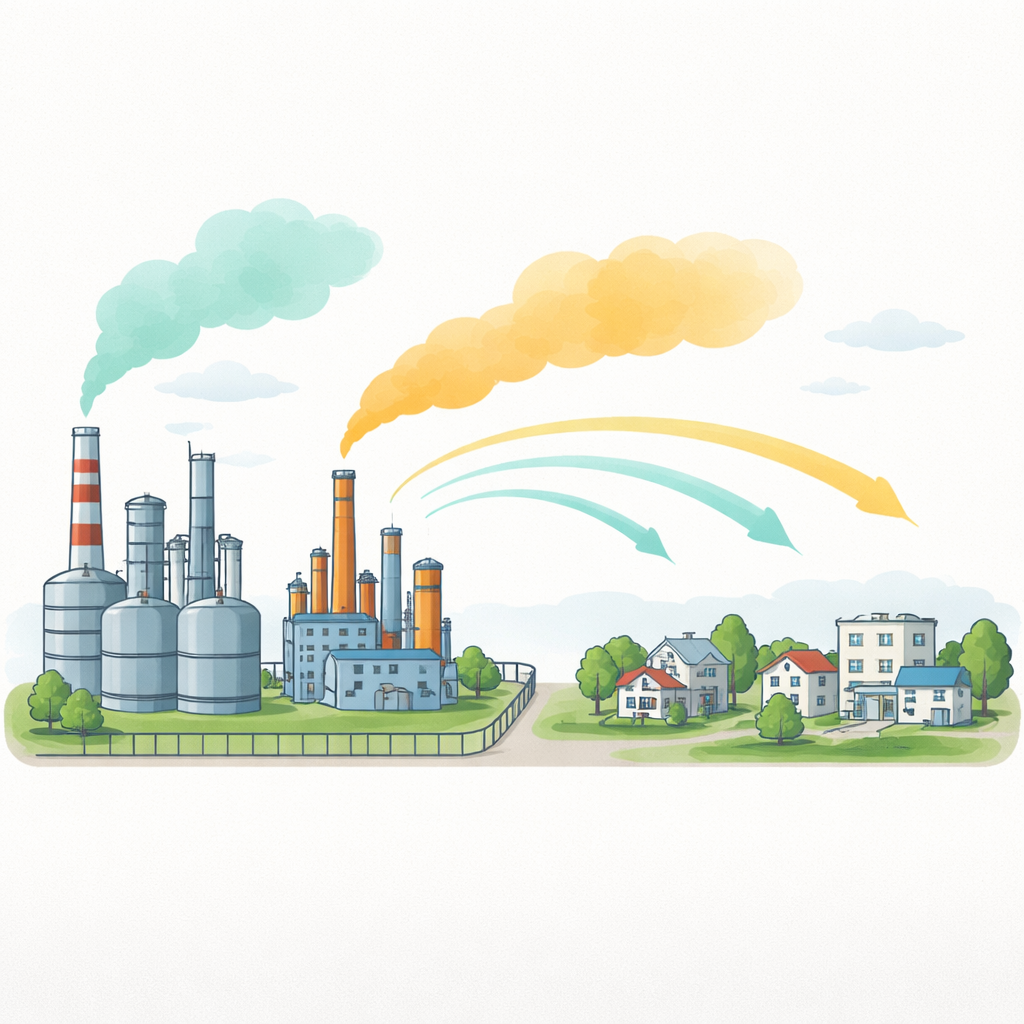
Factories that make plastics and synthetic resins quietly release gases into the air as they produce everyday materials, from food packaging to electronics casings. Some of these gases, called volatile organic compounds, or VOCs, can help create smog and fine particles that harm our lungs and hearts. This study asks a practical question: by measuring what drifts through the air right along a factory’s fence, can we tell which specific gases most need to be controlled to protect nearby communities and improve regional air quality?
Checking the air where factories meet neighborhoods
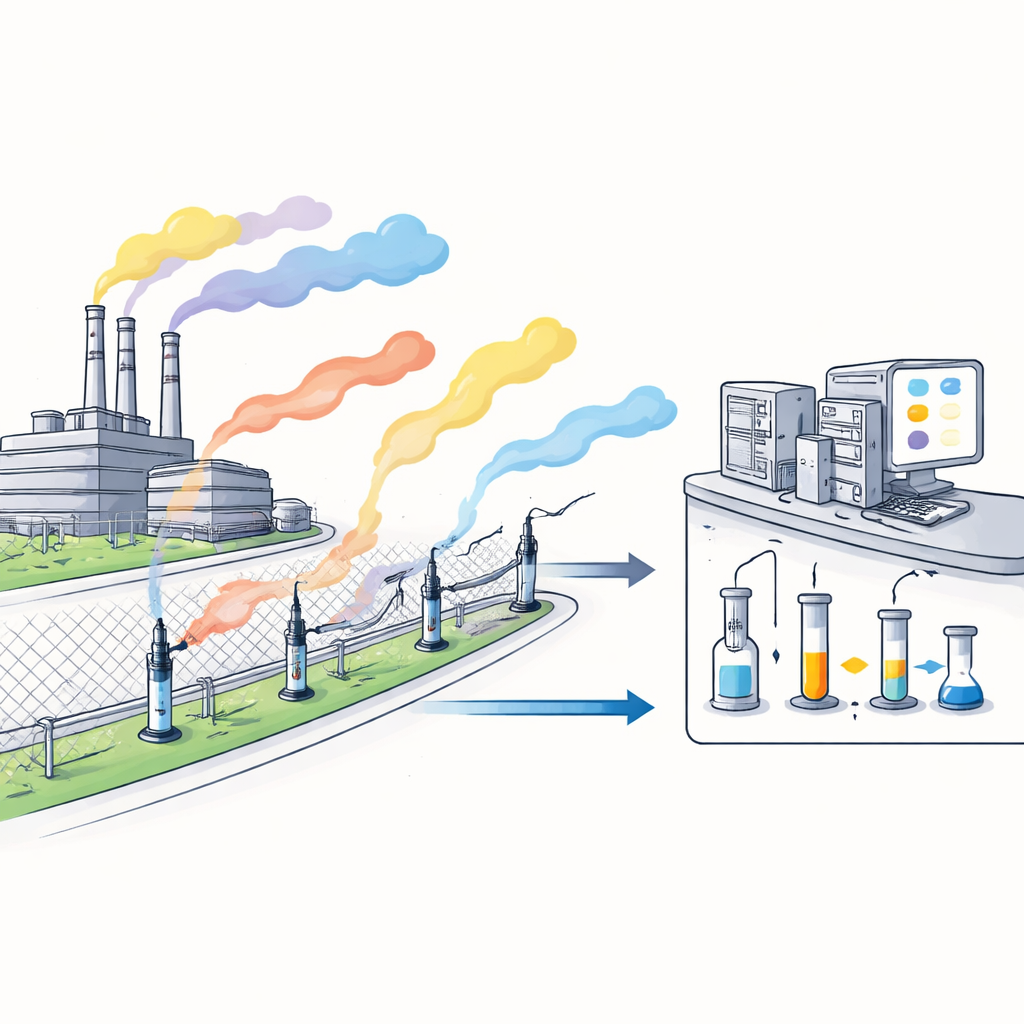
The researchers focused on two large synthetic resin and plastic manufacturing plants in southeastern South Korea. Each site sits just a few kilometers from residential areas, making it important to understand what kind of fumes may cross the boundary into the community. Instead of only counting total pollution from stacks or company reports, the team used “fenceline monitoring” – they set out collectors all around the outer edge of each factory, following a standard U.S. Environmental Protection Agency layout that samples air every 20 degrees around the site. This approach captures what people outside the fence could actually be breathing.
Two ways of catching invisible gases
To watch the air over different time scales, the team used both passive and active sampling. Passive samplers are small tubes that quietly absorb gases for two weeks at a time, providing a long-term average picture of pollution. Active samplers, in contrast, use small pumps to pull air through special cartridges over an hour, several times a day, revealing short-term spikes linked to specific production steps or weather. In the lab, the absorbed gases were released by heating and then separated and weighed using sensitive instruments, allowing the scientists to identify and quantify dozens of individual chemicals down to very low levels. Formaldehyde, a particularly reactive and hard‑to‑capture compound, was measured only with the active method to ensure accuracy.
What the team found at the plastic plants
At the first facility, which makes styrene‑based resins, the long‑term samplers showed that styrene, toluene, and ethylbenzene dominated the VOC mixture at the fence. Short‑term pumped samples, taken when a key resin line was running, revealed much higher shares of raw ingredients such as 1,3‑butadiene and acrylonitrile. At the second facility, which produces epoxy and phenolic resins, toluene and xylene were consistently important, while formaldehyde stood out in active samples. Interestingly, benzene—a well‑known cancer‑causing chemical—appeared at levels similar to regional background air, even though one plant handled it in drums. That suggests that, in this type of industry, benzene at the fence is largely shaped by citywide pollution rather than by the resin plants themselves.
From smog potential to priority chemicals
Not all gases are equally important for smog. The team used a measure called Photochemical Ozone Creation Potential (POCP), which ranks how strongly a compound helps form ground‑level ozone when sunlight and nitrogen oxides are present. Although styrene made up a large fraction of emissions around one factory, it has a relatively low smog‑forming strength. In contrast, common solvents like toluene and xylene, and related compounds such as ethylbenzene, pack a bigger punch per molecule. When the researchers combined how much of each gas they found with its smog‑forming potential, toluene and xylene clearly emerged as major drivers of ozone formation at both facilities. Seasonal shifts in temperature and humidity also mattered: hotter, more humid summer periods were linked to higher overall VOC levels at the fence.
What this means for cleaner air
The study concludes that smarter control of plastic and resin factories should go beyond counting total VOCs. Instead, regulators and companies should focus on a short list of “priority VOCs” that either pose high health risks or strongly promote ozone and fine particle formation—especially formaldehyde, 1,3‑butadiene, styrene, acrylonitrile, toluene, xylene, and ethylbenzene. Formaldehyde requires active, high‑time‑resolution monitoring, while the others can be tracked through a mix of passive and active methods to capture both long‑term patterns and short surges. By tailoring emission‑reduction efforts to these key chemicals rather than treating all VOCs alike, industrial areas can more effectively cut smog and fine particle pollution while still supporting the production of essential plastic materials.
Citation: Lee, H.E., Cho, S., Jung, W. et al. Investigation of VOC emissions in synthetic resin and plastic manufacturing through speciation at fenceline locations. Sci Rep 16, 8447 (2026). https://doi.org/10.1038/s41598-026-38303-2
Keywords: volatile organic compounds, plastic manufacturing, fenceline monitoring, ozone formation, industrial air quality