Clear Sky Science · en
Estimating opium use prevalence at the national and provincial levels in Iran: a modelling study
Why this matters for everyday life
Opium is often thought of as an old-fashioned drug, but in Iran it remains a major part of daily life for many people—and it has now been classified as a cause of several cancers. This study asks a simple but crucial question: how many adults in different parts of Iran are currently using opium, and who is most at risk? By combining many separate health studies with national statistics, the researchers build a detailed picture of where opium use is concentrated and which social conditions help fuel it. Their findings point directly to where prevention and cancer-control efforts could do the most good.
Looking across the whole country
The authors brought together data from six large health studies that had asked adults about their current opium use and, in some cases, checked answers against urine tests. These studies covered 17 of Iran’s 31 provinces and focused on people aged 30 and older, the age range where long-term health effects, including cancer, begin to surface. For the missing provinces, there were no good direct surveys. Instead of guessing, the team turned to a modelling approach, combining what was known from the 17 provinces with a rich set of national statistics on age, income, education, unemployment and drug enforcement activity.
Turning scattered data into a clear map
First, the researchers carefully calculated how common current opium use was in each of the 17 studied provinces, adjusting for differences between city and village residents, age groups, and men and women. They then built separate statistical models for men and women to explain why some provinces had higher or lower rates. The models included factors such as average age, human development scores, welfare and poverty measures, unemployment, how urbanised the province was, and how much opium was seized there each year. After testing the models using a strict “leave-one-out” method—repeatedly hiding one province and seeing how well the model predicted it—they applied the models to all 31 provinces to estimate province-level and national prevalence.
What the numbers reveal
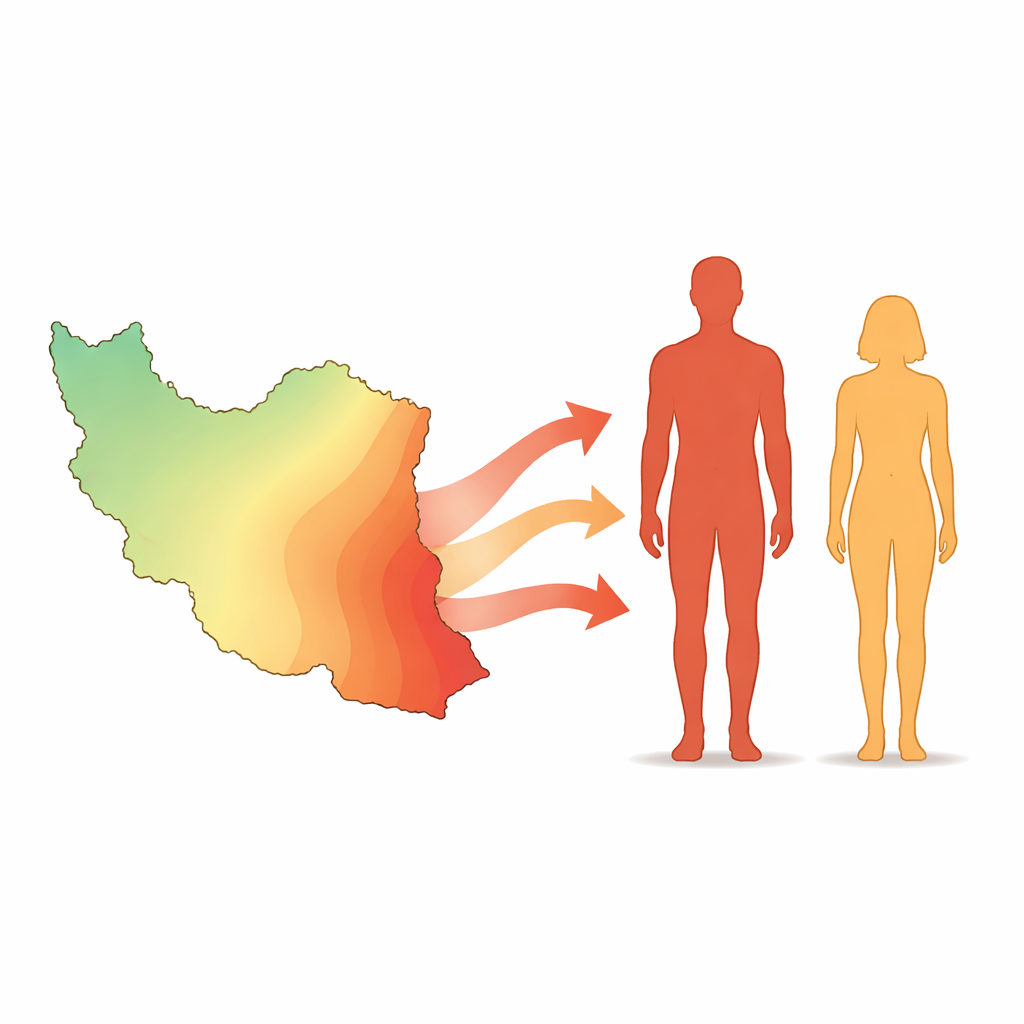
For Iranians aged over 30, the model suggests that about 5.9%—roughly one in seventeen—are current opium users. The burden is highly uneven: among men the estimated rate is 10.4%, while among women it is 1.46%. Some eastern and southeastern provinces stand out with much higher prevalence. Sistan and Baluchestan and Lorestan were estimated to have about one in four men using opium, and provinces such as Golestan, Qom and Kerman also had markedly elevated levels. In contrast, several northwestern and central provinces, including Tehran, Zanjan, Ilam and Markazi, showed much lower rates in both sexes. Despite the gender gap in overall levels, the geographic pattern—high in the east, low in the northwest—was strikingly similar for men and women.
How place and hardship shape use
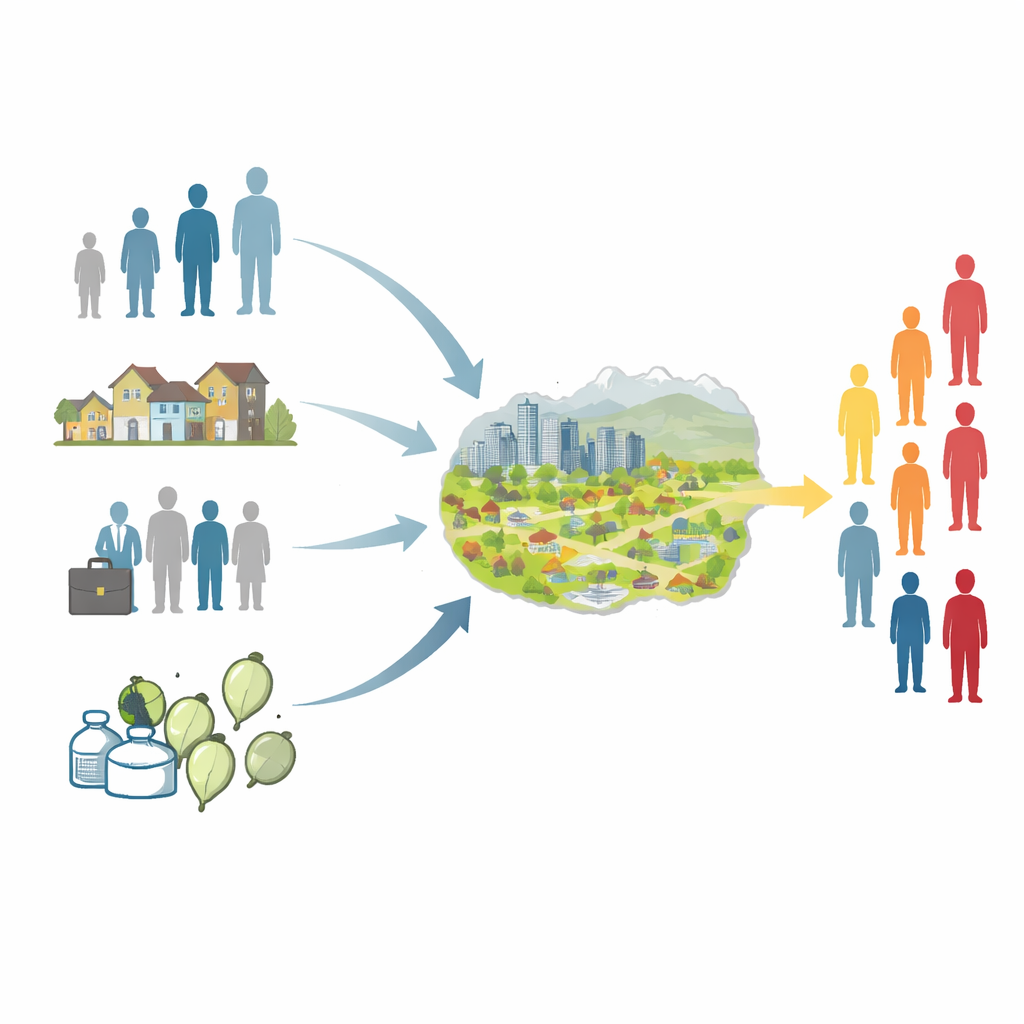
The pattern is closely tied to social conditions. Provinces with older populations, lower standards of living, higher unemployment, and larger urban centres tended to have more opium use. For men, poorer welfare scores and higher unemployment strongly predicted greater use, and provinces where more drugs were seized also had higher prevalence, suggesting easier access along trafficking routes. For women, lower human development scores and unemployment were key predictors, again pointing to poverty and limited opportunity. The eastern border regions, which sit along major trafficking corridors from Afghanistan—the world’s biggest opium producer—combine socioeconomic deprivation with high drug availability, creating a fertile ground for widespread use.
What this means for health and policy
The study concludes that opium use in Iran is far more common than national household surveys have suggested, likely because many users underreport a stigmatised and illegal behaviour. Since opium has been confirmed as a cause of several cancers, this underestimation matters: it hides a preventable source of serious disease, especially in high-use eastern provinces. The authors argue that efforts to reduce opium use should be woven into national cancer control plans. That means not only policing trafficking, but also improving public awareness of opium’s health risks and tackling the economic and social hardships—such as poverty, unemployment and poor access to care—that make opium an appealing, if dangerous, escape.
Citation: Nemati, S., Hatami Goloujeh, M., Poustchi, H. et al. Estimating opium use prevalence at the national and provincial levels in Iran: a modelling study. Sci Rep 16, 8430 (2026). https://doi.org/10.1038/s41598-026-38294-0
Keywords: opium use, Iran, drug epidemiology, cancer risk, socioeconomic factors