Clear Sky Science · en
Cell wall remodeling and inositol metabolism coexpression modules associated with nut size in Carya illinoinensis cvs. ‘Mahan’ and ‘Tiny tim’
Why pecan lovers should care about nut size
Pecans are more than a holiday ingredient—they are a multimillion‑dollar crop whose value depends heavily on how big each nut grows. Modern varieties can produce nuts several times heavier than their wild relatives, yet the biological reasons for this size difference have remained a mystery. This study follows pecan fruits from tiny ovaries in spring to mature nuts in autumn, comparing a large‑nut variety called ‘Mahan’ with a small‑nut type, ‘Tiny Tim’. By watching which genes switch on and off over time, the researchers begin to uncover how cells build, fill, and shape the nuts we eventually crack open.
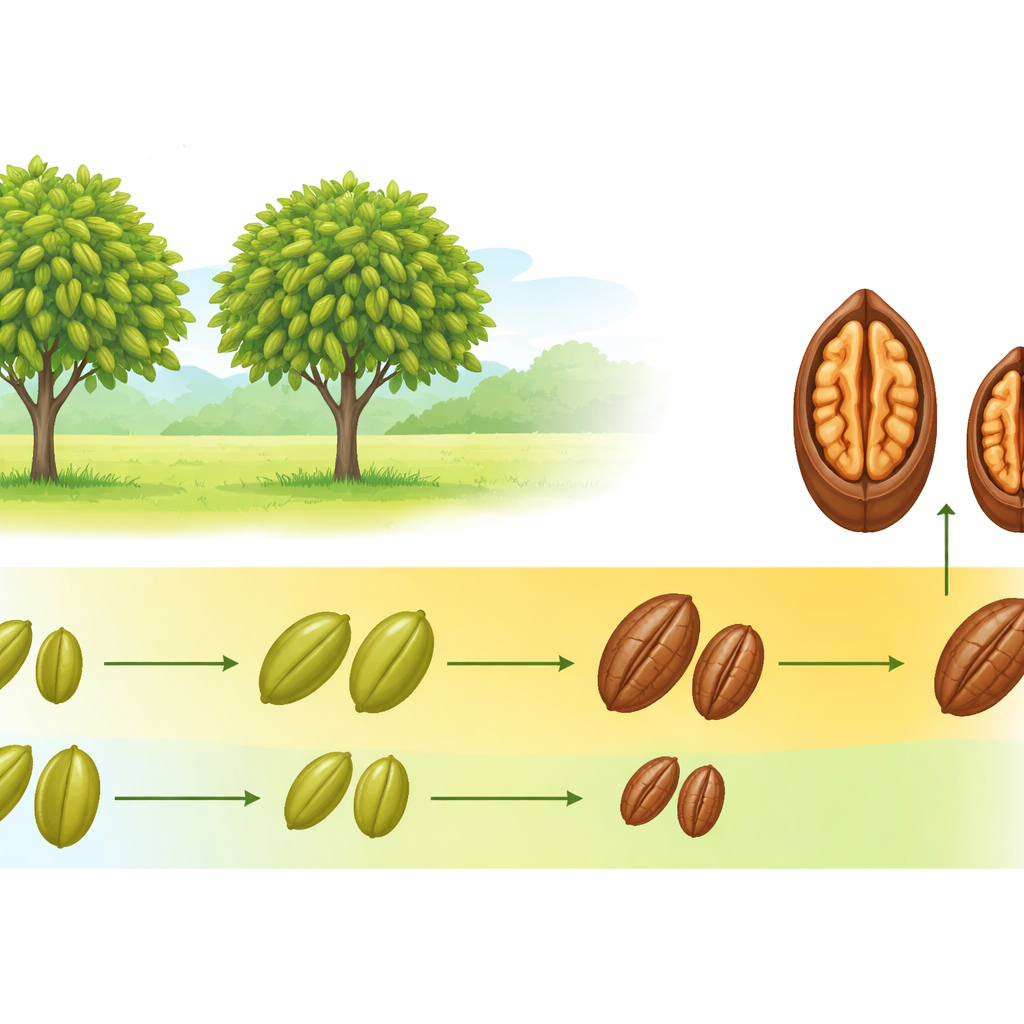
Watching nuts grow through a season
The team collected developing fruits every two weeks from May to October from two trees of each variety in a U.S. Department of Agriculture collection. They extracted RNA—the molecule that records which genes are active—from pooled fruits at each date and sequenced it, generating a detailed snapshot of gene activity over the season. Using a method called co‑expression network analysis, they grouped tens of thousands of genes into “modules” that tended to turn on and off together. They then asked how each module related to time of year and to nut type, looking for sets of genes that might control growth, stress responses, or final nut size.
Early growth: building new cells fast
In both nut types, the early season was dominated by genes involved in making new cells and basic cellular machinery. Large modules were rich in genes for the cell cycle, protein production, and general biosynthesis, matching the period when fruits expand rapidly from the flower ovary to near‑final size. Signals from the plant hormone auxin stood out, with several key auxin‑related genes sitting at the center of early‑season modules. These patterns show that, at first, both ‘Mahan’ and ‘Tiny Tim’ rely on intense cell division and construction work to launch fruit development.
Middle months: thickening walls and handling heat
As summer progressed, the focus shifted from making new cells to enlarging and strengthening them. Mid‑season gene modules were enriched for building and remodeling cell walls and manufacturing complex sugars that give tissues their firmness. Other modules were tied to nutrient transport into the developing kernel and to heat‑shock responses that help the tree cope with high temperatures common in July and August. Some of these transport genes have been linked in other crops to issues such as fruit cracking, hinting that the timing of wall hardening and solute movement in pecans may influence both yield losses and nut quality when weather swings between dry and wet.
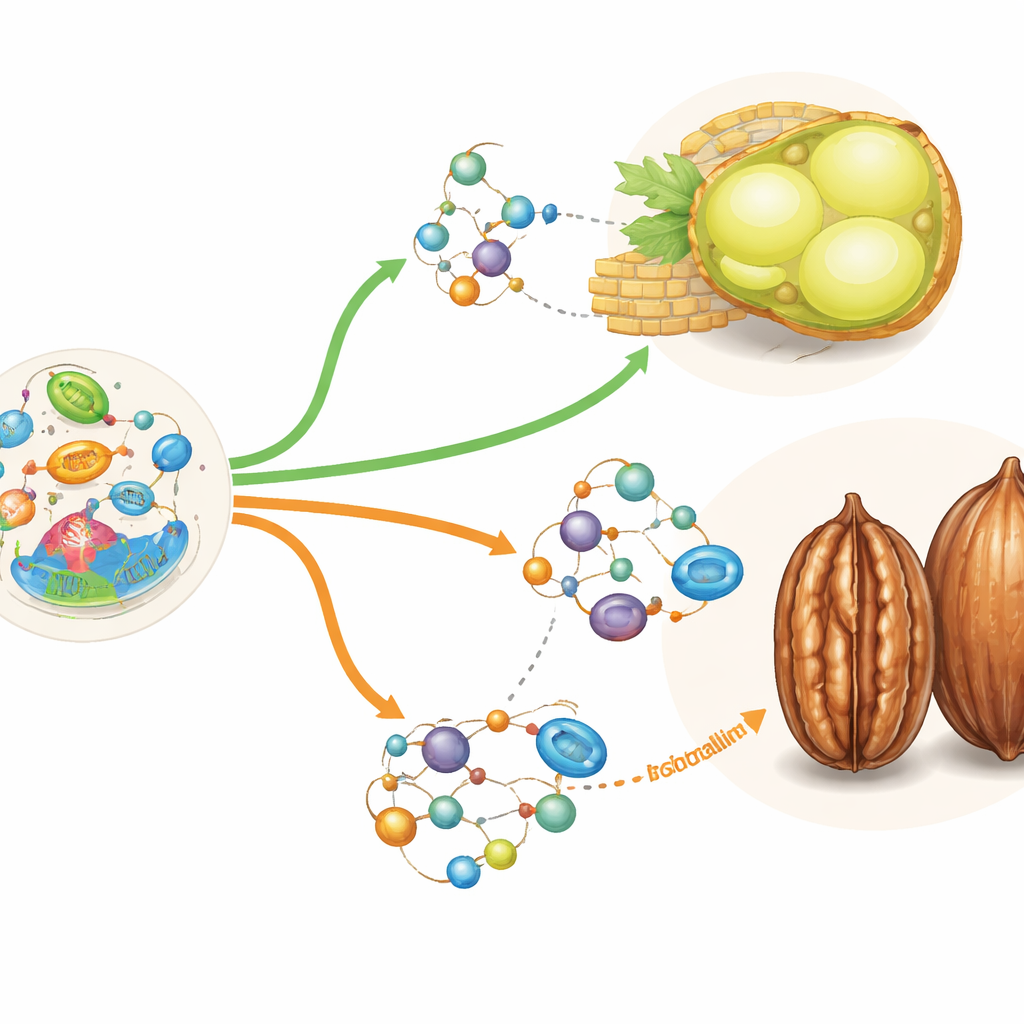
Final stage: packing in oils and proteins
Late in the season, the nut’s inner tissue solidifies and fills with storage reserves—mostly oil, along with protein. Gene modules most active in September and October were loaded with genes for fat synthesis, organic acid metabolism, and storage proteins, echoing earlier work that found high oil‑related activity at this stage. Additional modules pointed to the plant hormone ethylene, a classic signal of ripening and aging in fruits, as a likely trigger for final maturation and shell readiness for harvest. These late‑season patterns were broadly similar in both large and small nuts.
What may set big and small nuts apart
Only a minority of gene modules were strongly tied to nut variety rather than to season. Many of these reflected differences in disease and stress responses and are probably unrelated to nut size. However, a few ‘Mahan’‑specific early modules were enriched for genes involved in cell wall construction and re‑shaping, as well as in inositol metabolism—a signaling and structural pathway known to affect how plant cells expand. In contrast, ‘Tiny Tim’ showed modules associated with protein breakdown and stronger responses to the hormone abscisic acid, which in other plants can restrict organ growth, along with certain stress‑related processes. Together, these contrasts suggest that large nuts may benefit from more active wall remodeling and inositol‑driven expansion, while small nuts may be constrained by signals that favor restraint and resource recycling.
Take‑home message for growers and consumers
This season‑long study is the first to track gene activity in pecan fruits from different varieties in such detail. It reveals that nut growth follows a clear sequence: early cell building, mid‑season wall strengthening and stress management, and late‑season filling with oils and proteins. Within this shared pattern, a small set of genes linked to cell wall remodeling, inositol‑based signaling, hormone response, and protein breakdown emerge as promising players in determining how big pecan nuts can become. Understanding and eventually manipulating these pathways could help breeders develop new cultivars that combine desirable nut size with resilience to heat, disease, and other growing‑season challenges.
Citation: Labbancz, J., Chatwin, W. & Dhingra, A. Cell wall remodeling and inositol metabolism coexpression modules associated with nut size in Carya illinoinensis cvs. ‘Mahan’ and ‘Tiny tim’. Sci Rep 16, 8103 (2026). https://doi.org/10.1038/s41598-026-38292-2
Keywords: pecan nut size, fruit development, cell wall remodeling, gene expression, crop breeding