Clear Sky Science · en
Evaluating the sustainability and productivity of conventional, organic, and regenerative agriculture in maize-soybean rotations: a modelling LCA study
Why this matters for your dinner plate
Feeding billions of people without wrecking the planet is one of this century’s biggest puzzles. Corn and soybeans quietly sit at the heart of that story: they feed livestock, supply cooking oils and sweeteners, and even fuel cars. This study asks a deceptively simple question with big consequences for our food system: when we grow these crops using conventional, organic, or regenerative methods, which approach is really gentler on the environment—and does that answer change when we care about how much food we get in return?
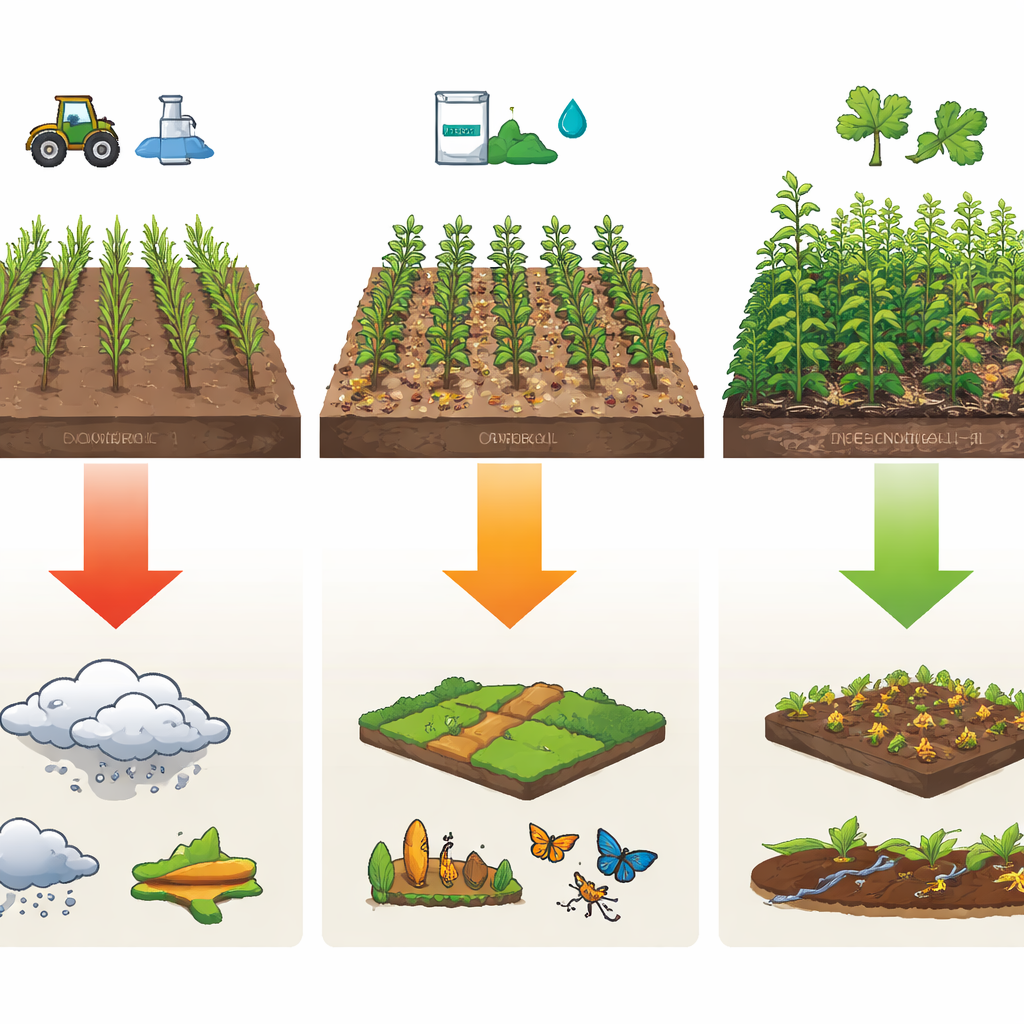
Three ways to grow the same field
The researchers compared three farming styles for a rotating corn–soybean field. Conventional farming leans on deep plowing, synthetic fertilizers, and chemical pesticides to chase high yields. Organic farming bans synthetic inputs but often relies on heavy doses of animal manure and repeated mechanical tillage. Regenerative farming, in this study, centers on no-till practices and cover crops that keep soil covered and living roots in the ground. Using a formal “life cycle” approach, the team tallied everything from fuel burned by tractors to the production of fertilizers and irrigation water, tracking how each system affected climate, human health, ecosystems, and resource use.
Less harm per field, but not always per harvest
When the unit of comparison was a single hectare of land, regenerative farming consistently came out ahead. For both corn and soy, fields managed regeneratively had the lowest overall environmental damage scores and lower climate-warming emissions than conventional and organic plots. Practices like skipping intensive plowing and relying more on organic fertilizers cut fuel use and reduced pollution linked to soil disturbance. Organic systems sometimes reduced climate impact compared with conventional fields, but their heavy use of bulky manure, higher land demand, and repeated tillage often pushed up other burdens such as land use and certain toxic effects.
What happens when you count each tonne of grain
The picture shifted once the team asked a more efficiency-focused question: how much impact do you get per tonne of harvested grain? Here, the high yields of conventional farming gave it a surprising edge. For corn, conventional fields often produced the lowest overall damage per tonne in many categories, because the environmental costs were spread over more grain. Regenerative corn still kept a climate advantage per tonne, emitting less greenhouse gas than conventional or organic methods, but its lead in other categories narrowed or even reversed. For soybeans, however, regenerative farming was the clear winner both per hectare and per tonne, delivering the lowest impacts for climate, ecosystems, and resource use at the same time.
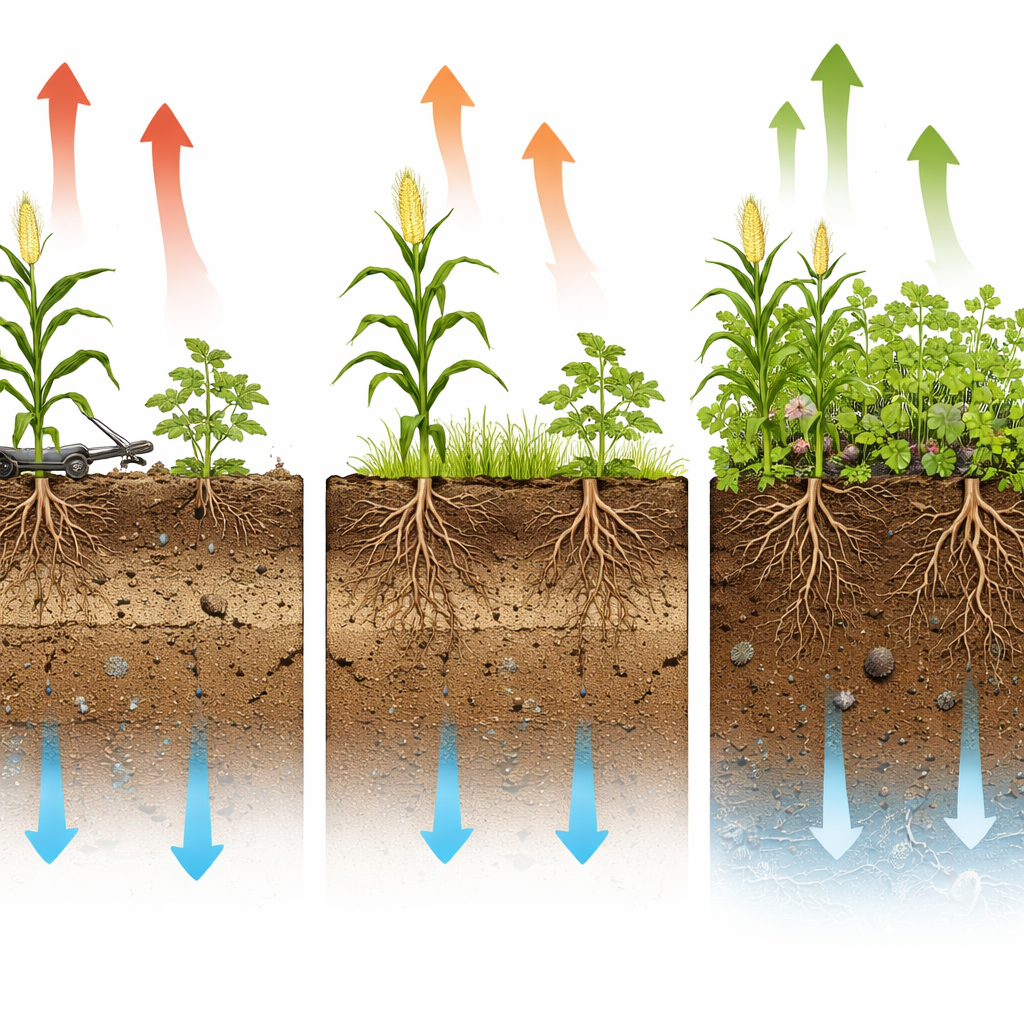
The hidden role of soil, water, and energy
Digging into the details, the study found that most emissions and damage come from the “growth and maintenance” phase of the crops—when plants are actively growing and need irrigation, pest control, and nutrients. Deep plowing, synthetic fertilizers, and chemical pesticides in conventional systems drove up fuel use and pollution. Organic fields avoided synthetic inputs but paid an environmental price for producing, transporting, and spreading large amounts of manure, and for working the soil more often. Regenerative fields cut tractor passes, reduced tillage-related fuel use, and used water more efficiently, especially in soybeans. Across all systems, yield turned out to be a powerful lever: slightly lower harvests could erase or even overturn the environmental gains made by more eco-friendly practices.
Finding balance between impact and abundance
The study concludes that there is no single “best” way to farm corn and soy. Regenerative methods clearly reduce the total environmental burden per unit of land and offer strong climate benefits, but their current yield penalty can make them look less efficient when judged per tonne of grain—especially against high-yield conventional fields. For policymakers, this means the goal should not be simply to pick one system over another, but to blend the strengths of each: combining yield-boosting know-how with soil-building regenerative practices. If future research and on-the-ground trials can raise regenerative yields without sacrificing its ecological gains, our food system could move closer to a future where we protect both harvests and the health of the planet.
Citation: Alberto, C., Iacopo, B., Tommaso, M. et al. Evaluating the sustainability and productivity of conventional, organic, and regenerative agriculture in maize-soybean rotations: a modelling LCA study. Sci Rep 16, 8189 (2026). https://doi.org/10.1038/s41598-026-38291-3
Keywords: regenerative agriculture, maize soybean rotation, life cycle assessment, sustainable farming, greenhouse gas emissions