Clear Sky Science · en
Ceramide as a key regulatory factor in the impact of dietary inflammatory index on plaque stability
How Everyday Food Choices Shape Heart Risk
Heart attacks often seem to strike out of the blue, yet they are usually the end result of years of quiet changes inside our arteries. This study looks at how the overall “inflammatory” nature of what we eat may help determine whether cholesterol-rich deposits in coronary arteries stay harmlessly stable or become fragile and prone to rupture, triggering a heart attack. By following chemical traces in the blood, the researchers zero in on a particular family of fat molecules, called ceramides, as key middlemen between diet, inflammation, and plaque danger.
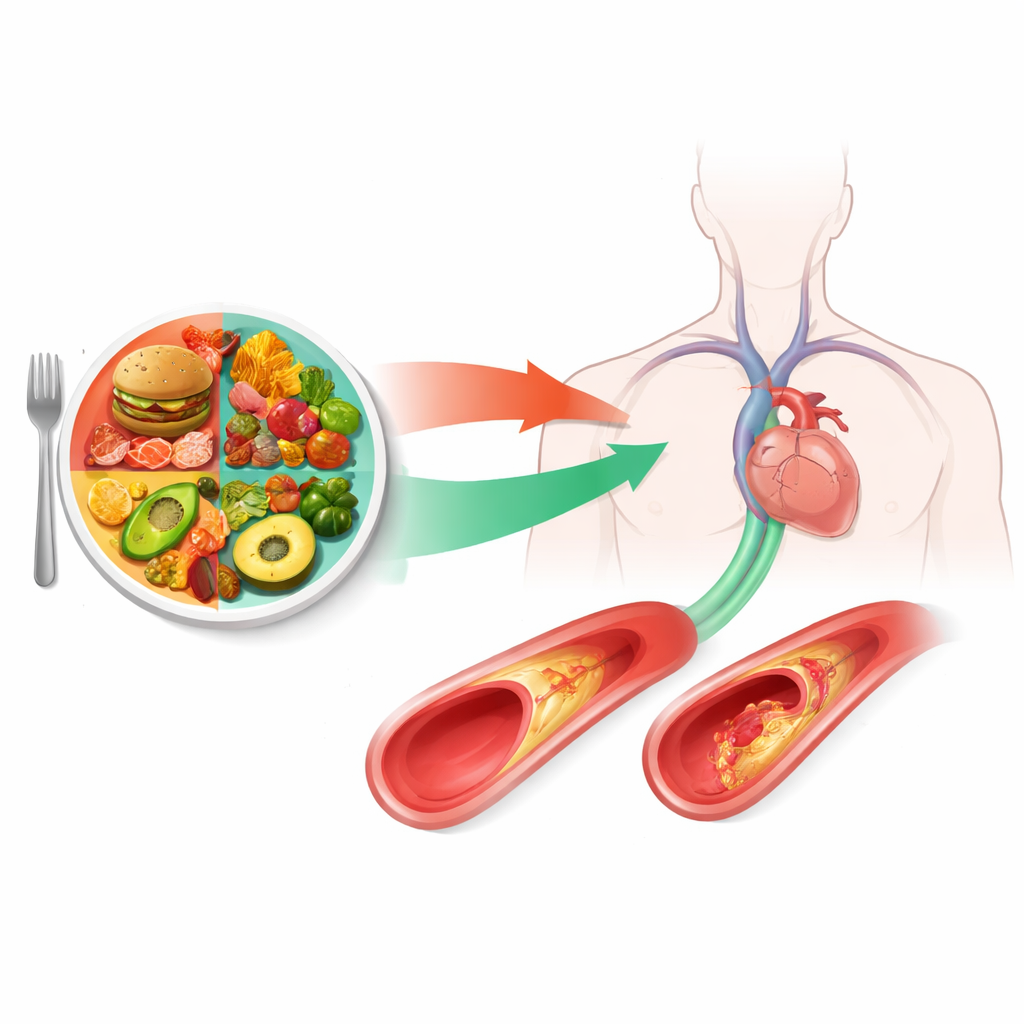
From Dinner Plate to Artery Wall
Rather than focusing on single nutrients, the team used a score called the Dietary Inflammatory Index to rate each person’s usual diet as more pro-inflammatory or more anti-inflammatory. They enrolled 216 people with coronary heart disease and, using careful matching for age, sex, and diagnosis, divided them into two groups with clearly different dietary inflammatory scores. All participants underwent high‑resolution imaging of their coronary arteries to judge how stable or unstable their plaques were, and provided blood samples for detailed chemical analysis of fats and immune‑related signaling proteins.
Hunting for Telltale Fat Molecules
To move beyond standard cholesterol tests, the researchers applied a broad lipidomics approach, which can detect over a thousand distinct fat‑related molecules in the blood. Comparing people with more inflammatory diets to those with less, they identified 22 lipid molecules that differed strongly between the two groups. Many of these fell within the sphingolipid family, and nine were specific ceramide species that were consistently more abundant in people whose diets scored as more inflammatory. These nine ceramides were accurate enough at separating the two diet groups that they could serve as blood‑based markers of an individual’s dietary inflammatory load.
Linking Ceramides, Inflammation, and Fragile Plaques
The team then asked how these lipid signals related to what was happening inside the coronary arteries. Using advanced artery imaging, they classified plaques by features such as thin fibrous caps, large pools of soft fat, cholesterol crystals, and actual rupture—traits known to herald dangerous events. They found that higher levels of the identified ceramides were closely tied to more unstable plaque patterns. At the same time, people with unstable plaques had higher levels of several inflammatory proteins in their blood, including interleukins and interferon‑gamma, suggesting an active immune response surrounding these fragile deposits.
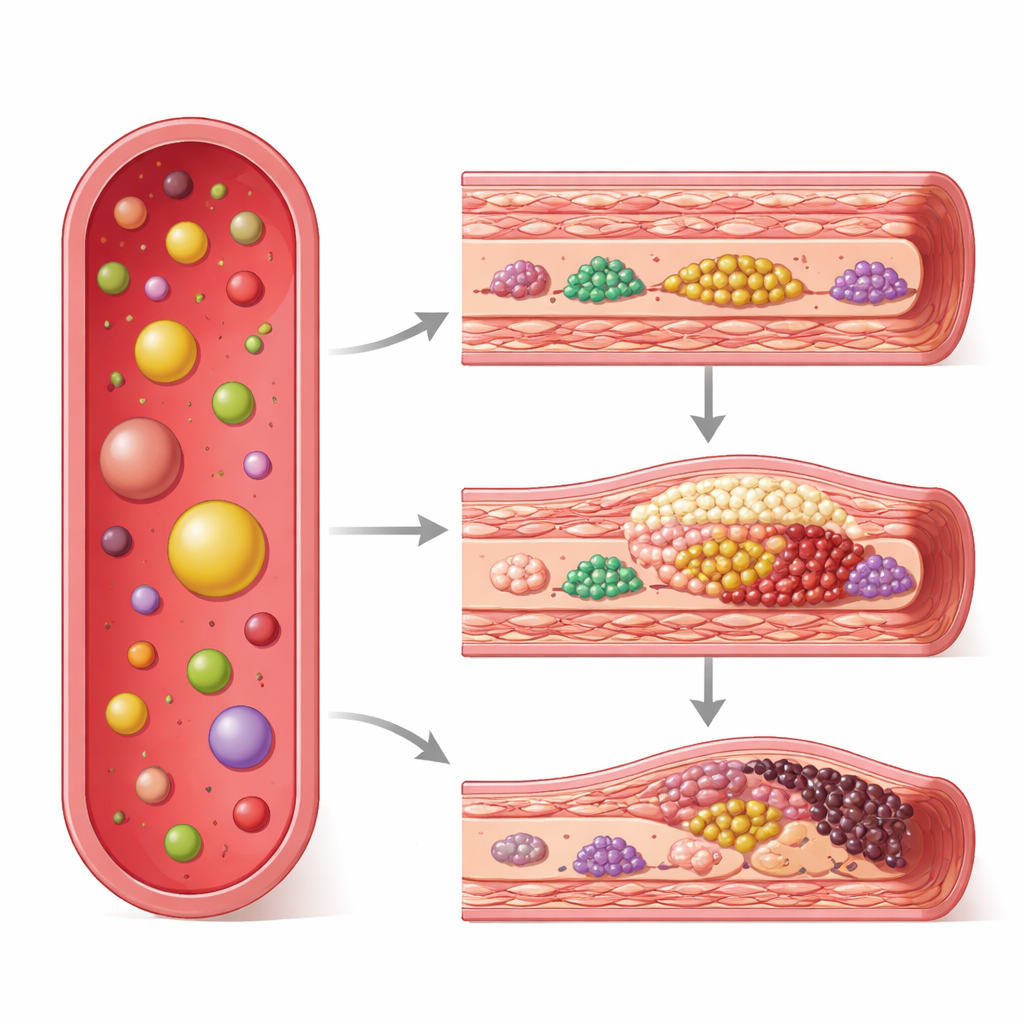
Mapping the Chain of Cause and Effect
Because many of these factors are interconnected, the researchers used a statistical technique called a Bayesian network to trace the most likely directions of influence among diet scores, ceramides, inflammatory proteins, and plaque traits. The resulting map suggested that a more inflammatory diet tends to raise specific ceramide species, which in turn promote the release of inflammatory proteins. Those proteins are then linked with plaque features associated with rupture risk, such as thin caps and disrupted surfaces. In other words, ceramides appear to sit at the crossroads between what people eat, how inflamed their bodies become, and how stable their coronary plaques remain.
What This Means for Protecting the Heart
For non‑specialists, the key message is that heart risk is not just about how much cholesterol is in the blood, but also about the chemical “tone” of the diet and how it shapes hidden inflammation in artery walls. This study points to specific ceramide molecules as promising warning signals that could, one day, help doctors identify which patients with coronary disease are most at risk of a sudden plaque rupture. It also reinforces the idea that broadly anti‑inflammatory eating patterns—richer in fiber, healthy fats, and antioxidants—may calm these pathways, lower harmful ceramides, and help keep vulnerable plaques from tipping into life‑threatening events.
Citation: Zhao, Z., Wang, R., Wang, Y. et al. Ceramide as a key regulatory factor in the impact of dietary inflammatory index on plaque stability. Sci Rep 16, 8135 (2026). https://doi.org/10.1038/s41598-026-38283-3
Keywords: dietary inflammation, ceramides, plaque stability, coronary heart disease, lipidomics