Clear Sky Science · en
Randomized trial of smartphone application and bed sensor for atrial fibrillation detection in high-risk patients
Keeping an Eye on Hidden Heart Rhythm Problems
Atrial fibrillation, or AF, is a common heart rhythm problem that can quietly raise the risk of stroke without causing obvious symptoms. Many people walk around with undiagnosed AF, especially after major heart procedures. This study tested whether simple, everyday technology—a smartphone app and a thin sensor placed under the mattress—could spot hidden rhythm problems earlier than standard medical follow-up, and what trade-offs come with such constant digital monitoring.
Everyday Gadgets Turned Into Heart Watchdogs
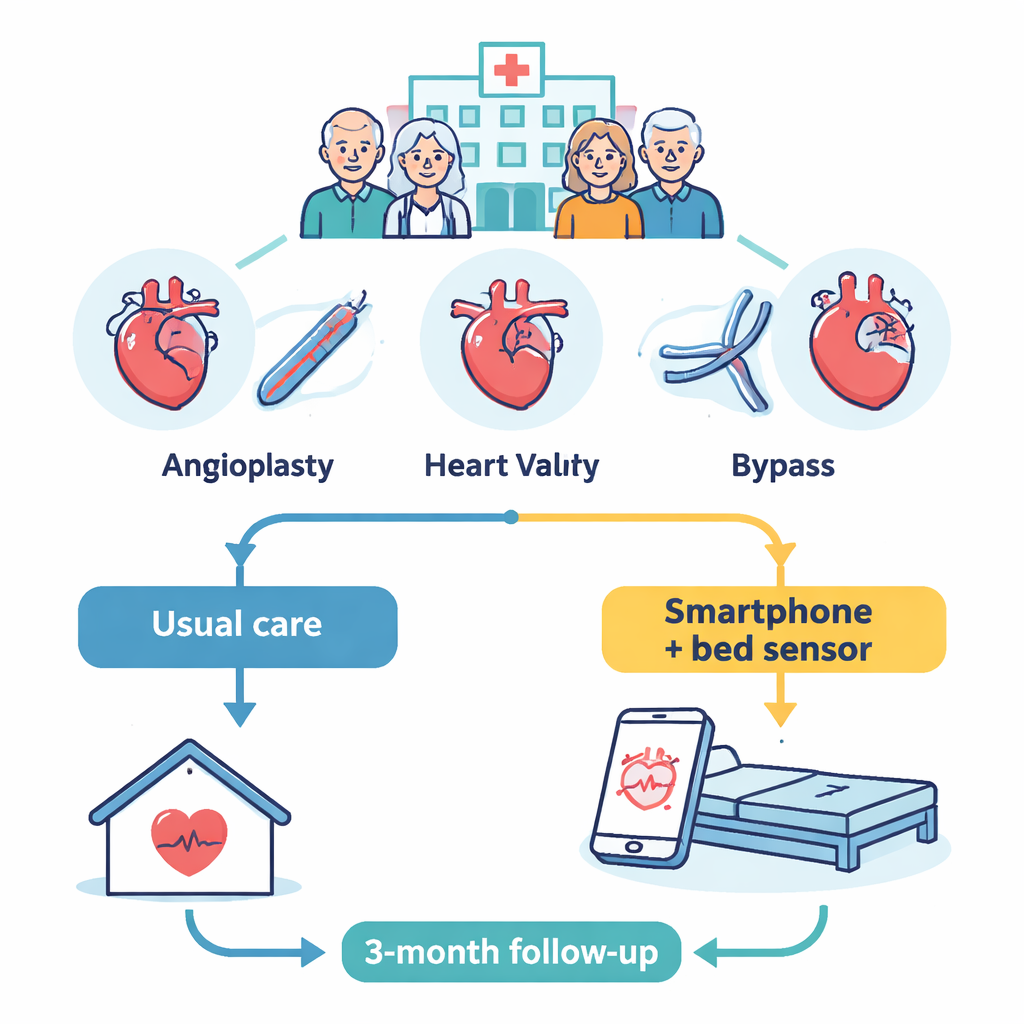
The CARE-DETECT trial followed 150 older adults who had recently undergone heart procedures such as stent placement, valve replacement, or bypass surgery. All were at high risk for stroke and AF but had no prior AF diagnosis. Half the patients received usual care, which included routine hospital monitoring and follow-up visits. The other half were given a smartphone app that recorded heart signals twice a day plus a bed sensor that silently measured tiny body movements at night, both designed to flag irregular heart rhythms. When either device raised concern, doctors confirmed the heart rhythm using standard electrocardiograms (ECG) and, when needed, several days of portable ECG recording.
More Hidden AF Found, But at a Cost
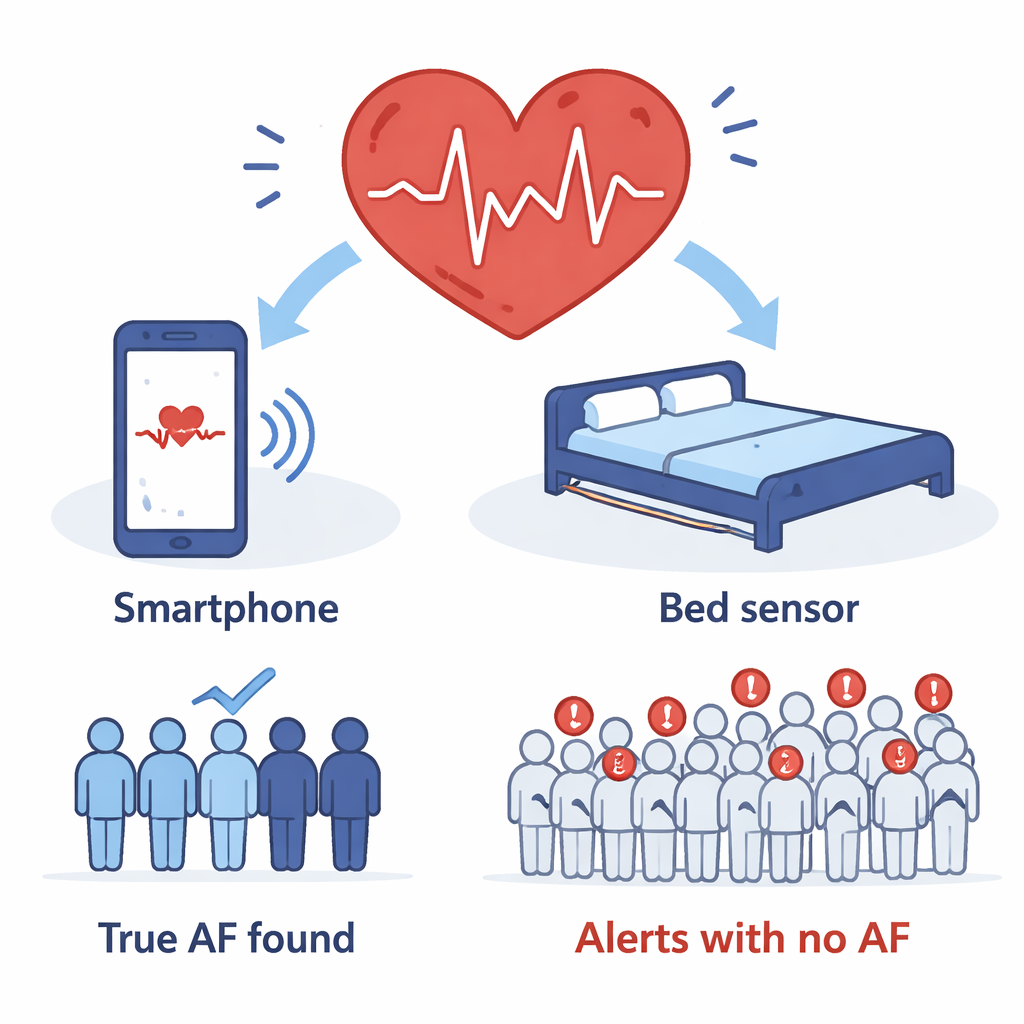
Over three months, the technology-assisted group had AF detected in about 8 out of every 100 patients, while none of the patients in the usual-care group were diagnosed in that time frame. In other words, screening with digital tools uncovered cases that routine care missed, and most episodes appeared weeks after leaving the hospital. This suggests that the period after a heart procedure is a vulnerable window when brief, otherwise invisible rhythm disturbances can emerge—and that targeted screening at this moment can be more efficient than broad population checks.
Too Many False Alarms for Everyday Practice
The same devices that helped find extra AF cases also generated a flood of alarms that turned out not to be AF. Nearly half of the technology-group patients who completed follow-up received at least one alert, but only a small fraction actually had AF when checked with ECG. Most alerts were caused by harmless rhythm variations, extra heartbeats, or other irregular but non-dangerous patterns. Each alert triggered additional clinic visits, ECGs, and multi-day heart recordings, creating substantial workload for staff and inconvenience for patients. Some people found the ongoing monitoring and device handling burdensome enough that they withdrew from the study altogether.
Balancing Stroke Prevention, Bleeding Risk, and Patient Burden
Finding more AF is only half the story. Doctors must also decide when to start lifelong blood-thinning medication to prevent stroke, which can increase bleeding risk. Current research suggests that very short, device-detected rhythm disturbances may not always justify long-term treatment, and the exact threshold remains uncertain. In this trial, every AF diagnosis had to be confirmed with standard ECG, likely focusing treatment decisions on patients with more substantial rhythm problems—but also making each alert expensive in terms of time and resources.
What This Means for Patients and Future Technology
For people at high risk of stroke who have just undergone a heart procedure, digital tools that quietly watch the heart at home can indeed reveal hidden AF episodes that routine care might miss. Yet in their current form, the smartphone app and bed sensor used here produced far too many false alarms to be practical for everyday clinical use. The study’s message for the general public is twofold: first, targeted AF screening in carefully chosen high-risk groups looks promising; second, future devices must become far better at distinguishing truly dangerous rhythms from harmless noise so that patients and health systems are not overwhelmed by needless alerts.
Citation: Lehto, J., Nuotio, J., Relander, A. et al. Randomized trial of smartphone application and bed sensor for atrial fibrillation detection in high-risk patients. Sci Rep 16, 7088 (2026). https://doi.org/10.1038/s41598-026-38273-5
Keywords: atrial fibrillation, heart rhythm monitoring, digital health, stroke prevention, cardiac surgery follow-up