Clear Sky Science · en
Antibiotic therapy failure and clinical outcomes in scrub typhus patients from Guangzhou city, southern China
Why this fever-carrying mite disease matters
Scrub typhus is not a household name, yet it quietly sickens hundreds of thousands of people across Asia every year. Caused by a tiny mite-borne germ, it can usually be tamed with common antibiotics. But what happens when those drugs stop working as expected? This study from Guangzhou, a major city in southern China, dug into hospital records from over two thousand patients to see how often scrub typhus treatments failed, which drugs were most affected, and what that meant for people’s health and recovery.
Taking a closer look at a neglected infection
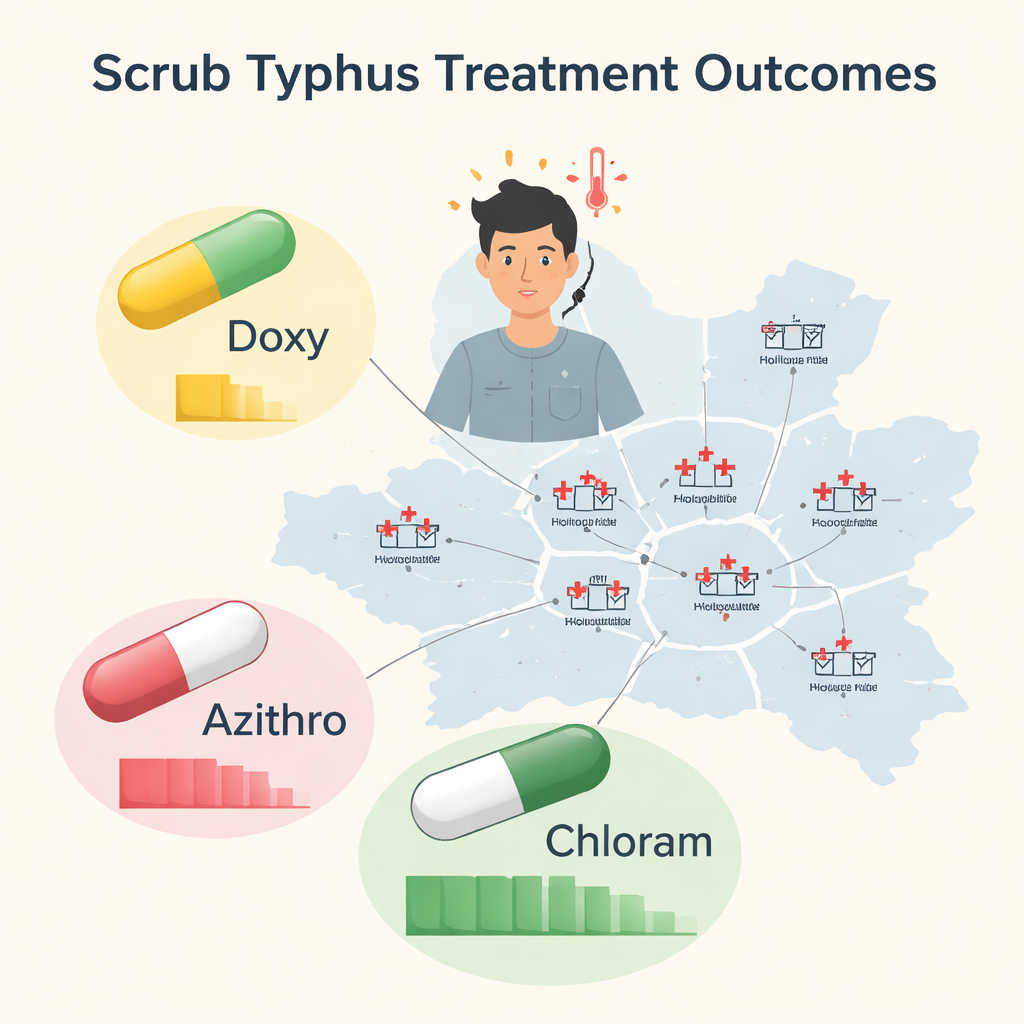
The researchers examined medical charts from 65 hospitals in Guangzhou, covering the years 2012 to 2018. They focused on patients who had scrub typhus but were not in critical condition when they were first admitted. All had been treated with just one of three standard antibiotics: doxycycline, azithromycin, or chloramphenicol. The team defined “therapy failure” in practical bedside terms: if a patient’s fever would not break, their condition worsened, or their doctor judged the initial drug was not helping, the antibiotic was switched and the case counted as a failure.
When treatment does not go according to plan
Out of 2,029 patients, most responded to their first antibiotic, but about one in ten needed a change in treatment. Those in the failure group did not necessarily die more often or have dramatically worse final outcomes, yet their illness placed a heavier burden on both them and the health system. They stayed in the hospital longer (a median of eight days compared with seven), took antibiotics for more days, ran fevers for longer than five days more often, and had more problems with their liver. In other words, when the first drug did not work well, the path to recovery became slower, more complicated, and more resource‑intensive.
Not all antibiotics stumble in the same way
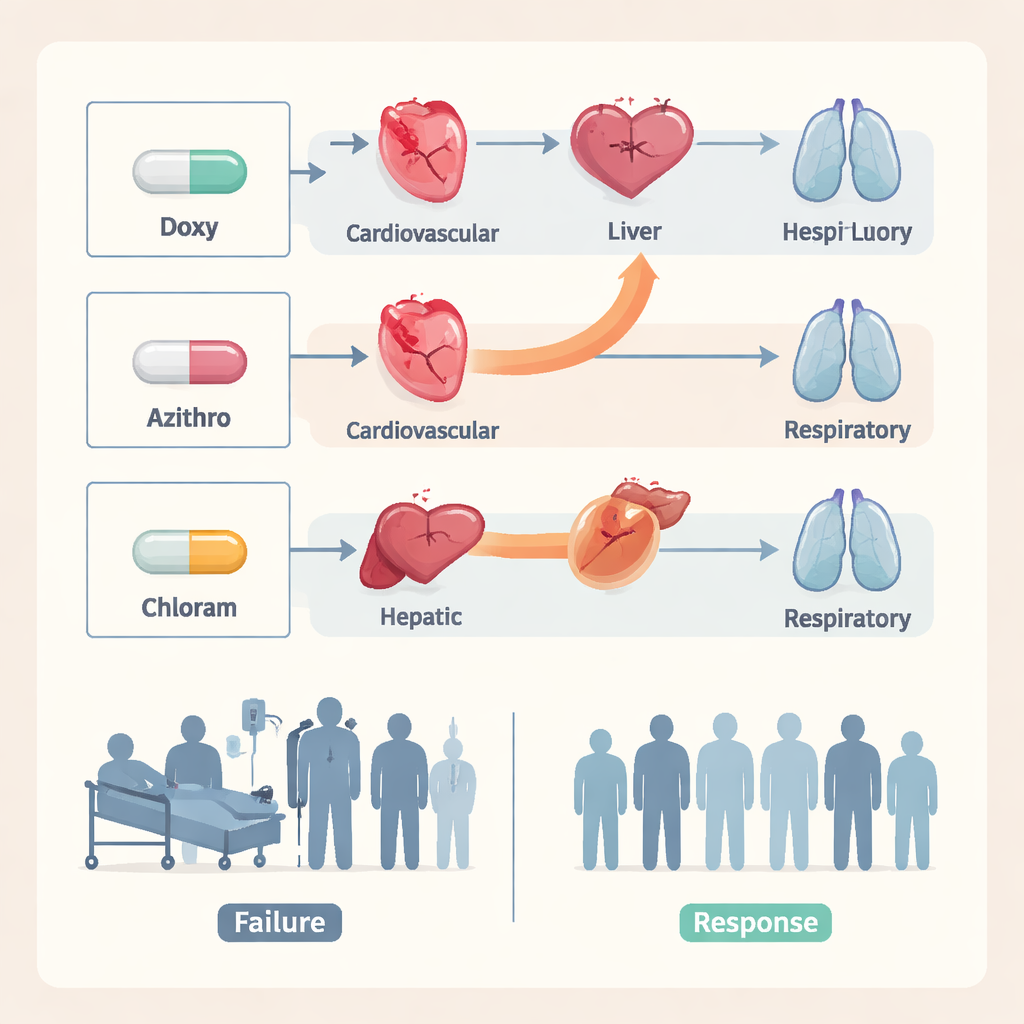
The three drugs did not perform equally. Doxycycline, the workhorse antibiotic for many infections, had the lowest failure rate: only about 4 percent of patients needed to switch. Azithromycin fared worse, with roughly one in five patients failing to respond. Chloramphenicol did worst of all, with nearly one in three patients needing a different treatment. Beyond these numbers, the pattern of trouble differed by drug. Patients whose azithromycin treatment failed were more likely to run into heart and circulation problems, while those whose chloramphenicol treatment failed more often developed serious liver issues. These drug‑specific patterns suggest that the same disease can unfold differently depending on which antibiotic falters.
Timing and warning signs during hospital care
The study also highlighted how quickly clinicians recognized when a drug was not working. When doxycycline or azithromycin failed, doctors typically switched medications within one to two days. In contrast, chloramphenicol failures were often detected only after about five days of treatment, giving the infection more time to cause harm. The authors argue that the first two to three days after starting antibiotics are a crucial window: careful tracking of fever, breathing, liver tests, and circulation can reveal early warning signs and guide timely changes in therapy. They also note that while newer options like rifampin might help in stubborn cases, these alternatives carry their own risks, especially for patients whose livers are already strained.
What this means for patients and doctors
For people living in regions where scrub typhus is common, this study’s message is both reassuring and cautionary. Effective antibiotics still exist, and most patients recover. However, treatment is not one‑size‑fits‑all, and some standard drugs fail more often and in different ways than others. By choosing initial antibiotics carefully, watching closely for early signs that a drug is not working, and being ready to switch when needed, doctors can shorten hospital stays, reduce complications, and improve recovery for patients struck by this overlooked but serious mite‑borne disease.
Citation: Long, J., He, Y., Li, K. et al. Antibiotic therapy failure and clinical outcomes in scrub typhus patients from Guangzhou city, southern China. Sci Rep 16, 7555 (2026). https://doi.org/10.1038/s41598-026-38264-6
Keywords: scrub typhus, antibiotic failure, doxycycline, azithromycin, chloramphenicol