Clear Sky Science · en
Effects of debunking interventions on endorsement of alternative medicine: a randomized controlled experiment in Peru
Why this egg ritual matters for your health
In many parts of Peru and Latin America, people turn to an “egg cleanse” ritual to ward off bad energy and treat illness. For some, it sits alongside regular doctor visits; for others, it can delay or replace proven medical care. This study asks a very practical question: when people already like and use such remedies, can a careful conversation with a health professional actually shift their reasons for using them—and does it matter how that conversation is framed?
Ancient ritual meets modern research
The egg cleanse involves rubbing a fresh chicken egg over a person’s body so it can “absorb” negative forces. The contents of the egg are then read, much like tea leaves, to diagnose spiritual or physical problems. Although widely used and affordable, egg cleanse has never been shown to cure disease. At the same time, Peru is culturally diverse, and traditional practices are deeply tied to identity and faith, which makes blunt criticism risky: handled badly, it can provoke anger and drive people further away from medical advice.
Two ways to challenge a belief
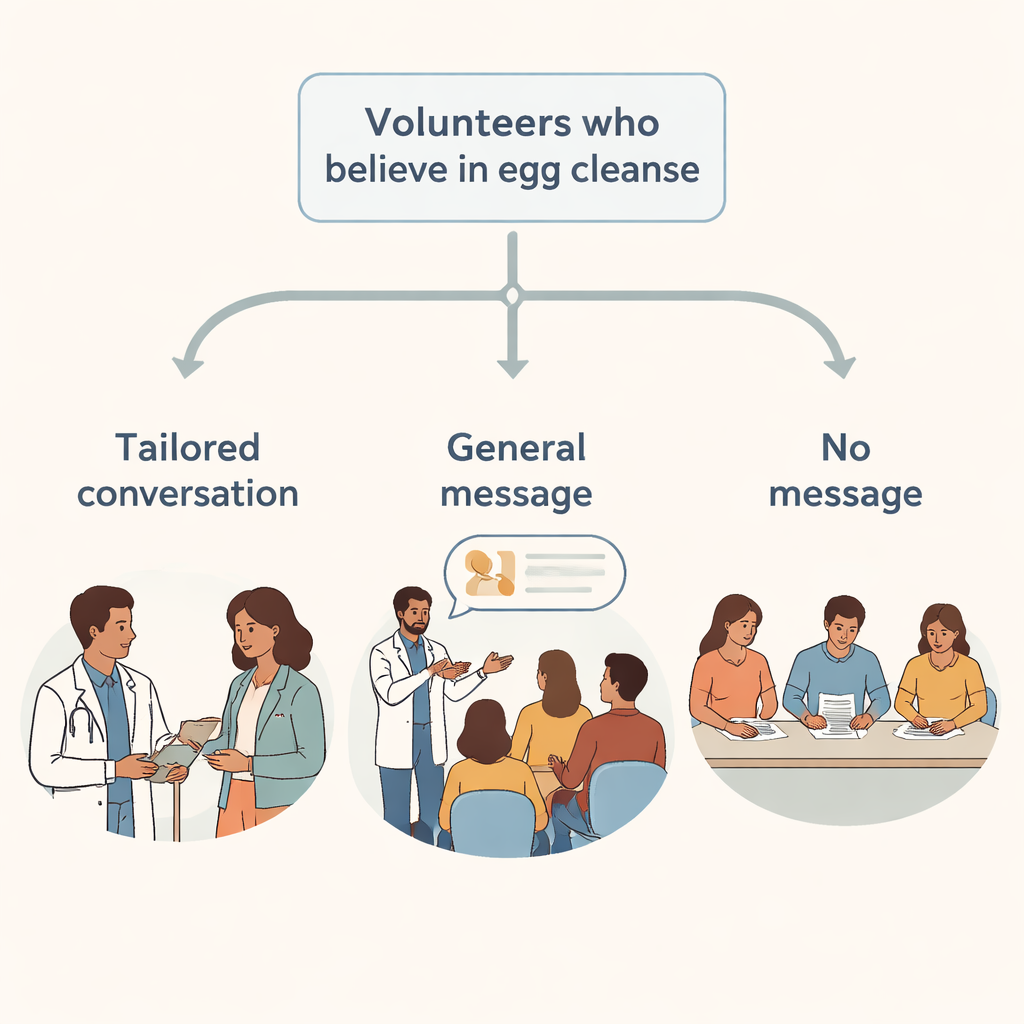
The researchers recontacted 167 adults across Peru who already believed the egg cleanse works. First, participants reported how strongly they believed in its effectiveness, whether they planned to use it in the future, and whether they preferred it over standard medical treatment. They also rated several common reasons for using alternative medicine, such as seeing it as natural and safe, trusting personal stories, or valuing tradition and spirituality. Participants were then randomly placed into one of three groups: one received no message at all, while the other two read written messages from a fictional doctor, “Dr. Pérez.” In the “tailored” group, Dr. Pérez first acknowledged each person’s specific motives and concerns, then gently explained why the egg cleanse is not supported by evidence and can be risky if it replaces real treatment. In the “non‑tailored” group, everyone read the same general warning about the lack of proof, safety controls, and professional oversight.
What changed—and what did not
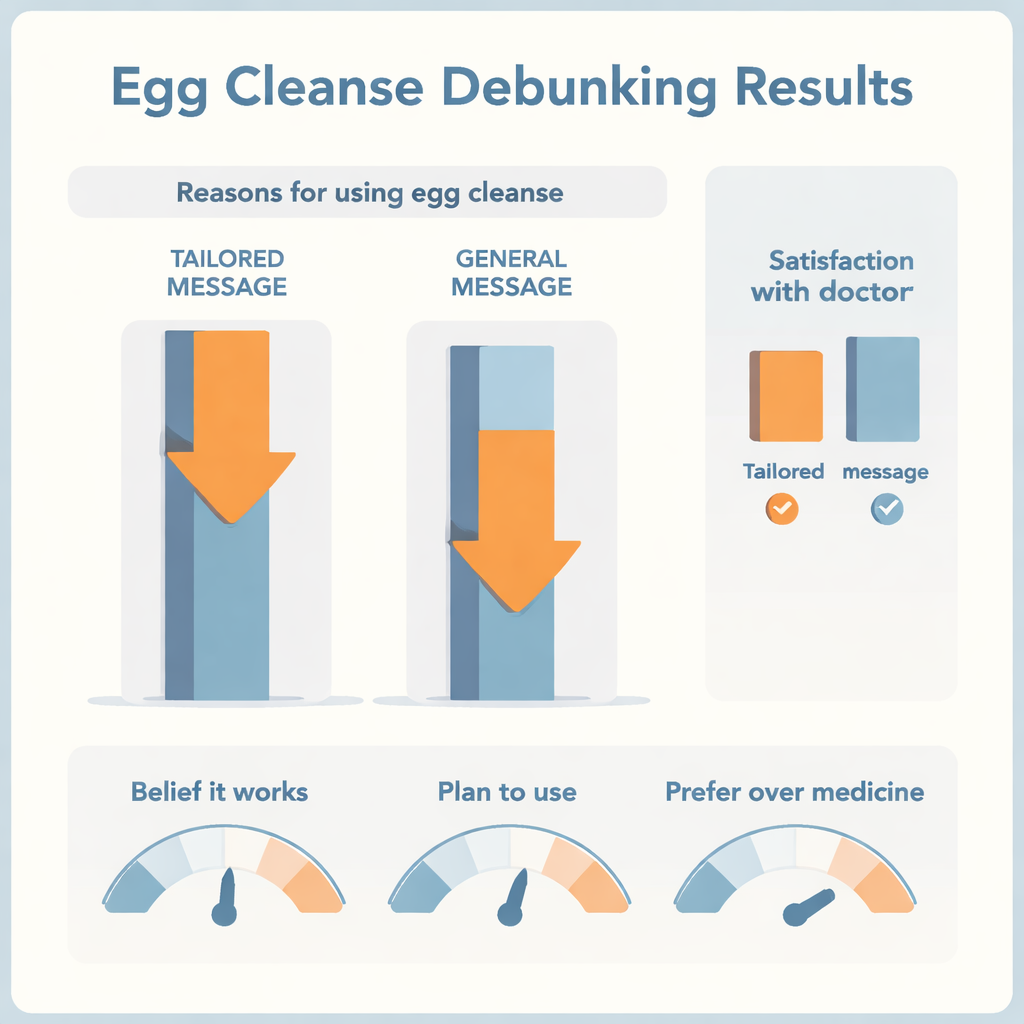
Afterward, everyone answered the same questions again. On the big, head‑on attitudes—how effective they thought egg cleanse is, whether they would use it again, or whether they preferred it to conventional medicine—there was little clear change between the three groups. Strong preferences proved stubborn, at least after a single online message. But when the team looked at the reasons participants gave for using egg cleanse, a different pattern appeared. Both kinds of messages led people to dial down their endorsement of the various justifications, such as “it is safer,” “it fits my spirituality,” or “I’ve heard many success stories,” while those in the no‑message group stayed about the same. In other words, people’s stories about why they favored the ritual softened, even if their overall stance did not flip.
How people felt about the doctor
The way the message was delivered strongly affected how participants felt about the fictional physician. Those who received the tailored, empathetic message reported greater agreement with the doctor, found her explanations clearer and more convincing, and said they trusted her more and would be more willing to keep talking. Simply put, taking time to listen and connect with someone’s values did not magically erase their belief in egg cleanse, but it did make the conversation feel more respectful and satisfying.
What this means for everyday care
For patients and health workers alike, the study offers a hopeful but realistic picture. A single, short exchange—whether personalized or generic—is unlikely to erase deeply held faith in traditional remedies. Yet both styles of explanation can chip away at the reasons people give for using unproven treatments, and an empathetic, tailored approach clearly leaves patients feeling more heard and more trusting. Over time, such trust may open the door to deeper, repeated conversations that help people balance cultural traditions with safe, effective medical care.
Citation: Fasce, A., Rosales-Trabuco, J., Barberia, I. et al. Effects of debunking interventions on endorsement of alternative medicine: a randomized controlled experiment in Peru. Sci Rep 16, 4995 (2026). https://doi.org/10.1038/s41598-026-38260-w
Keywords: alternative medicine, health misinformation, debunking, Peru, patient–doctor communication