Clear Sky Science · en
Evolution of pore structure in coal during underground thermal treatment: an experimental investigation
Turning Coal from Climate Problem to Climate Tool
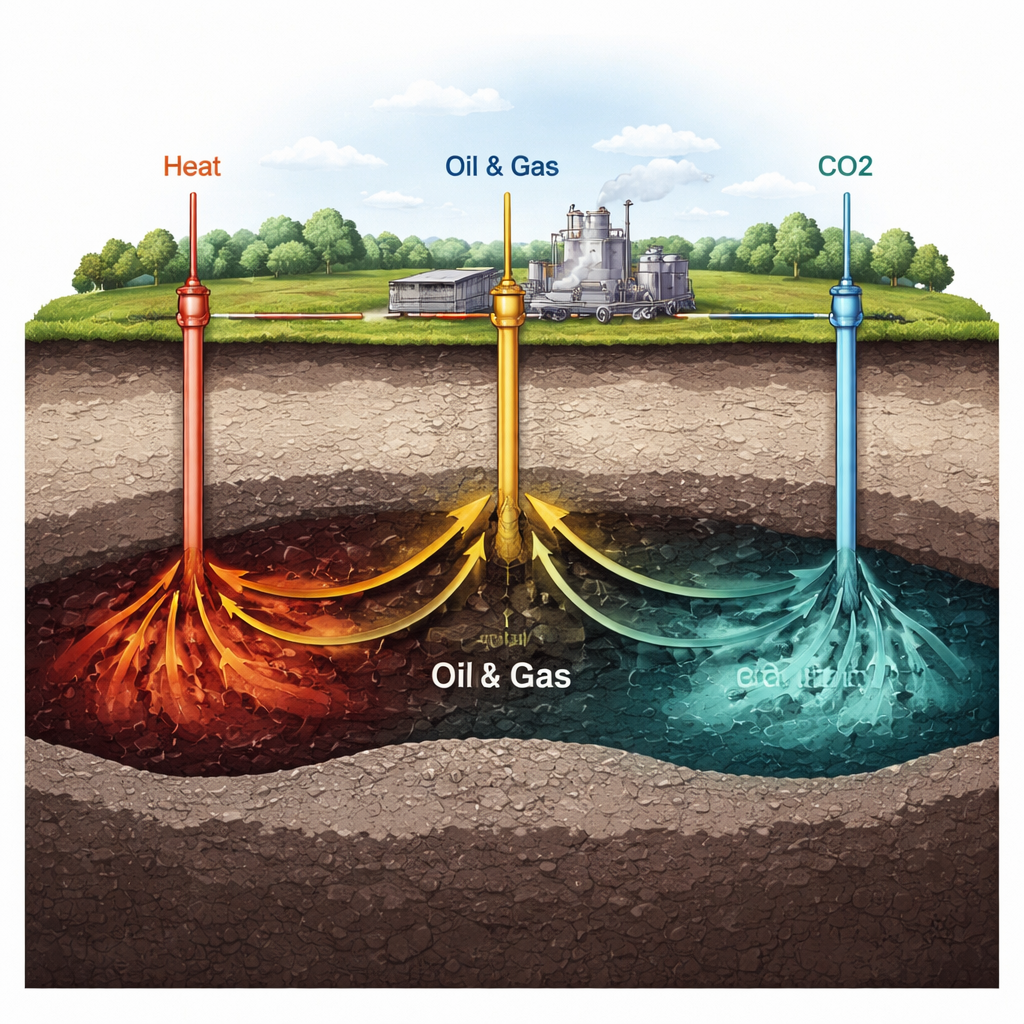
Coal is usually seen as a major driver of climate change, but this research explores a way to turn deep, unmined coal seams into a cleaner energy source and a long-term home for carbon dioxide (CO2). By gently heating coal underground instead of burning it at the surface, we can produce useful fuels while leaving behind a carbon-rich, sponge‑like material that may safely lock away CO2. This study asks a simple but crucial question: as coal is heated in place, how does its inner “pore” structure change, and how well could it store CO2 afterward?
Heating Coal without Digging It Up
The approach, called underground coal thermal treatment, slowly warms coal seams in an oxygen‑free environment at temperatures up to 600 °C. Instead of mining the coal, engineers would inject heat through wells, collect the gases and liquids that are driven off, and then reuse the same wells to inject CO2 back into the now‑treated seam. The leftover solid, known as pyrolytic char, behaves a bit like a rigid, carbon‑based sponge full of pores of different sizes. Those pores determine how much fuel can be produced during heating and how much CO2 the rock can hold afterward, so understanding their evolution is central to designing a safe, low‑carbon process.
Looking Inside Coal’s Hidden Maze
To peer into this hidden pore network, the authors took low‑rank coal from Inner Mongolia and heated samples very slowly to eight target temperatures between 30 °C and 600 °C under helium gas. They then used three complementary lab techniques: CO2 adsorption to probe the tiniest pores (less than 2 nanometers across), nitrogen adsorption to characterize mid‑sized pores, and mercury intrusion to map larger pores and cracks. Together these methods allowed them to track changes in total pore volume, internal surface area, and the complexity of the pore network as the coal passed through different heating stages.
From Shrinking Space to Growing Sponge
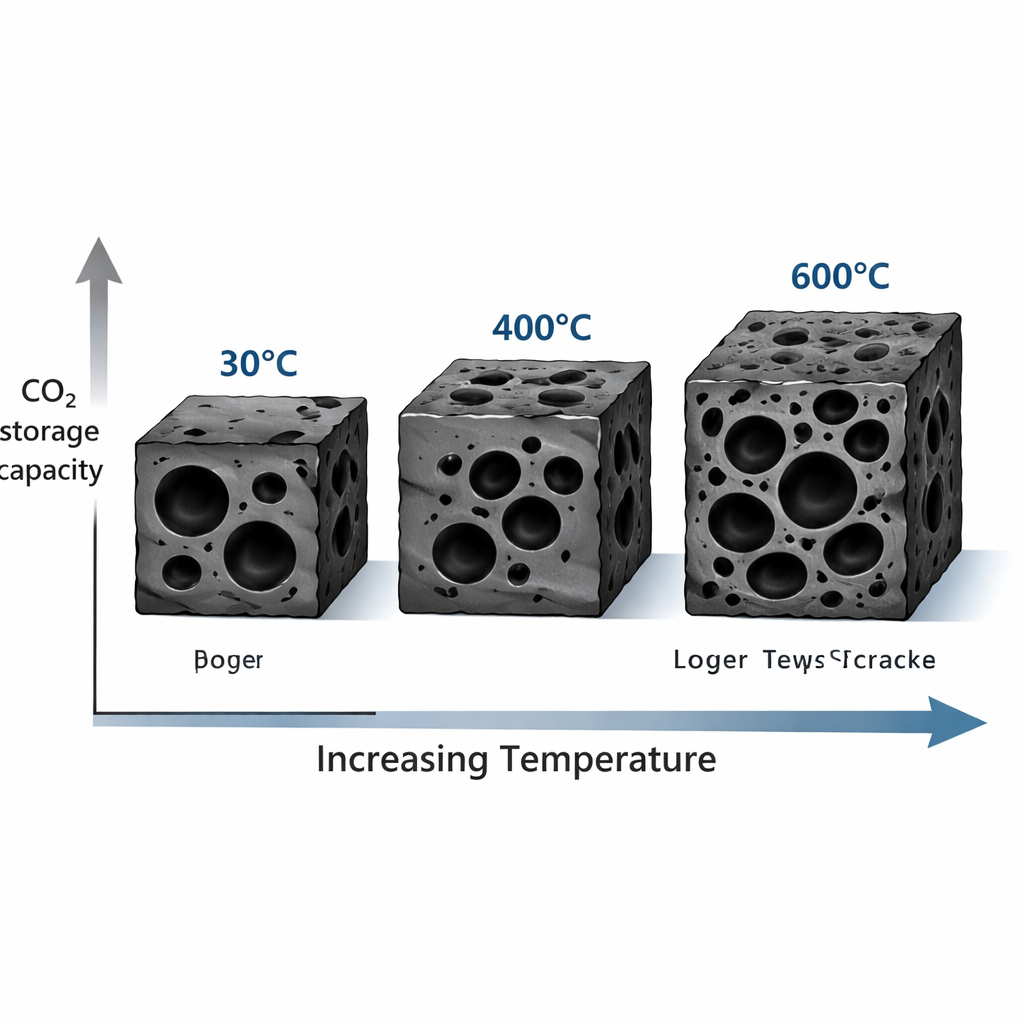
The results show that coal does not simply “open up” as it is heated; instead, its internal space goes through distinct phases. At first, as temperature climbs from room temperature to about 350 °C, overall pore volume actually drops even though internal surface area rises slightly. Liquids formed during early heating seep into larger pores and partially clog them, while a modest number of new tiny pores appear. Between roughly 350 °C and 450 °C, this trend reverses: gases and broken‑down liquids escape, creating new voids and expanding both large and small pores. Above about 450 °C, and especially by 600 °C, the coal develops many more of the smallest pores along with a resurgence of large pores, so that both total volume and surface area increase markedly and the pore network becomes better connected.
Three Key Stages in Coal’s Transformation
By linking these measurements with a standard indicator of coal maturity, the researchers identified three stages in the underground heating process. In the first stage (low maturity), space is lost as liquids fill mid‑sized and large pores. In the second stage (medium maturity), rapid breakdown of organic matter and gas release carve out new channels, sharply boosting pore volume and connectivity. In the final, gas‑generation stage at higher maturity, continued gas release and structural rearrangement generate a dense population of tiny pores alongside expanding large pores. Tiny pores provide most of the internal surface area where CO2 molecules can stick, while larger pores act as highways that help CO2 move into and through the rock.
What This Means for Storing Carbon Underground
In everyday terms, careful underground heating turns a relatively compact piece of coal into a more intricate, multi‑level sponge. The study finds that operating at higher treatment temperatures within the tested range greatly increases the number of microscopic nooks where CO2 can be held and improves the pathways that let the gas spread through the seam. That combination could allow underground coal thermal treatment to deliver useful fuels while also leaving behind a subsurface filter capable of storing CO2 for the long term, helping shift coal from a pure climate burden toward part of a broader carbon‑management strategy.
Citation: Yang, S., Li, S., Hou, W. et al. Evolution of pore structure in coal during underground thermal treatment: an experimental investigation. Sci Rep 16, 7424 (2026). https://doi.org/10.1038/s41598-026-38256-6
Keywords: underground coal thermal treatment, CO2 storage, coal pores, clean coal technology, carbon sequestration