Clear Sky Science · en
Turmeric essential oil infused pectin blended sodium alginate polymer as sustainable food packaging material
From Kitchen Waste to Helpful Wrap
Plastic wraps and bags keep our food fresh, but they linger in landfills and oceans for decades. This study explores a different kind of food packaging made from plant leftovers such as citrus peels and turmeric leaves. The researchers created a thin, flexible film that not only breaks down naturally in soil but can also slow down mold growth on everyday foods like bread, hinting at a future where the wrap protecting your sandwich might itself be edible or compostable.
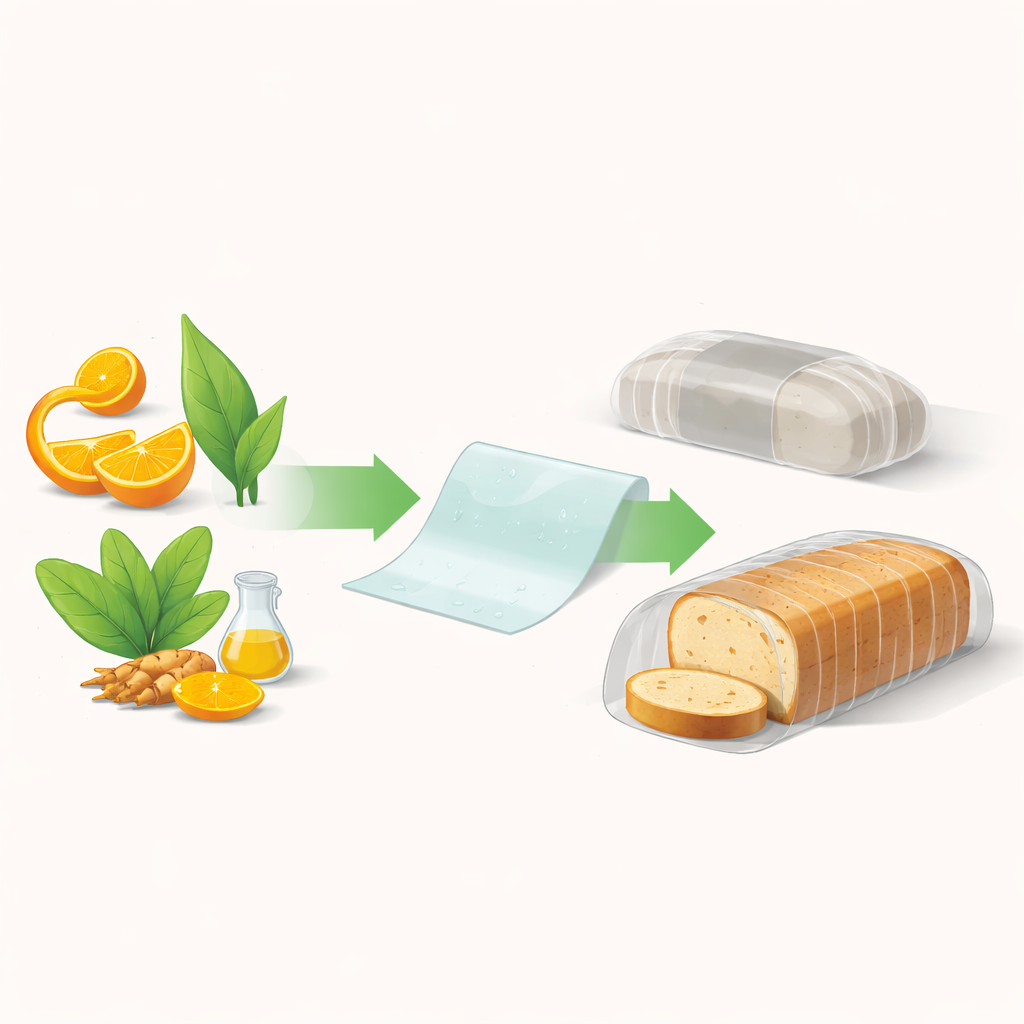
Plant-Based Ingredients with a Twist
The team built their packaging around two common plant sugars, pectin and sodium alginate. Pectin comes largely from citrus fruit peels and is already used to set jams, while alginate comes from brown seaweeds and is popular as a thickener in foods and gels. Both are biopolymers, long chain-like molecules from living organisms that can form clear, flexible films. On their own, these materials are safe and biodegradable, but they can be too weak or too welcoming to moisture and microbes to stand in for tough petroleum plastics.
Adding Turmeric’s Protective Power
To give the film extra muscle, the researchers blended pectin and alginate in water, added a small amount of glycerol to make the film less brittle, and used calcium ions to crosslink the chains into a stable sheet. The key addition was turmeric essential oil, extracted not from the usual underground rhizome but from mature leaves that are normally discarded. Turmeric oil is known for its antioxidant and antimicrobial properties. When a tiny amount of this oil was mixed into the pectin–alginate blend, it became part of the film structure without making it greasy or fragile.
Strength, Water, and Heat Performance
The new films were put through a battery of tests to see if they could survive real-world handling. Measurements of stretching, tearing, and film thickness showed that the mixed pectin–alginate films were more flexible than each material alone, and that adding turmeric oil further increased how far the film could stretch before breaking. The stiffness, or modulus, of the oil-infused film actually rose compared with the plain blend, meaning it resisted deformation better while remaining bendable. Water contact tests showed that adding oil made the surface slightly less eager to absorb water, a plus for packaging moist foods. Heat tests revealed that the film’s thermal stability remained high, suggesting it would tolerate typical storage and handling temperatures without breaking down.
Breaking Down, Not Building Up
A major advantage of these films is what happens after use. Small squares of the different films were buried in soil and followed for six weeks. All of them gradually lost weight as soil bacteria and fungi digested the natural polymers. Pure pectin and pure alginate disappeared fastest, while the blended films, especially those containing turmeric oil, degraded a bit more slowly—likely because the oil’s antimicrobial nature slows microbe activity at first. Still, by the end of the study, the majority of each sample had broken down, indicating that the material would not persist like conventional plastic waste. Photographs of the soil samples showed the films visibly shrinking, fragmenting, and blending into the surrounding earth.
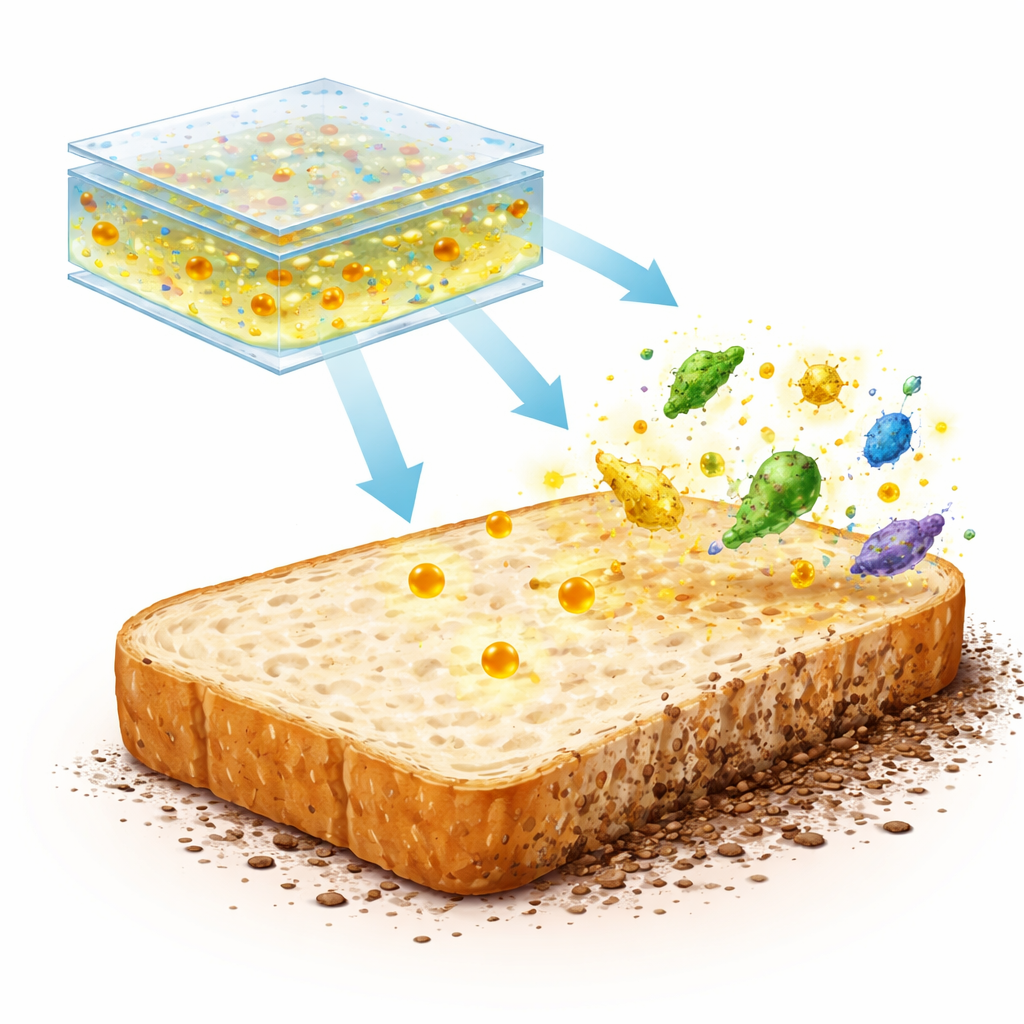
Keeping Bread Fresher for Longer
To test performance on actual food, the researchers packed small bread slices in three ways: no wrap, a standard plastic (LDPE) pouch, and the new pectin–alginate films with and without turmeric oil. Unwrapped bread began to mold by the seventh day, and bread in plastic showed clear fungal growth by the fourteenth day. In contrast, bread sealed in the plant-based films stayed free of visible mold for up to 21 days at room temperature. Even after 30 days, the bread wrapped in the turmeric-oil film had less mold than bread wrapped in the same film without oil. This suggests that the essential oil slowly migrates from the film surface to the bread, creating a mild protective barrier against spoilage organisms.
A Gentle Step Toward Greener Packaging
In simple terms, this work shows that it is possible to turn agricultural waste and seaweed extracts into a flexible, strong film that can protect bread longer than common plastic wrap while ultimately returning to the soil. By choosing turmeric oil from discarded leaves as the active ingredient, the researchers add value to a waste stream and reduce reliance on synthetic preservatives. While more testing is needed for different foods and storage conditions, these films point toward a future where food packaging can help fight both spoilage and plastic pollution.
Citation: Shambu, B.S., Rajeshwari, K.M., Bindya, S. et al. Turmeric essential oil infused pectin blended sodium alginate polymer as sustainable food packaging material. Sci Rep 16, 8107 (2026). https://doi.org/10.1038/s41598-026-38254-8
Keywords: biodegradable packaging, edible films, turmeric essential oil, food preservation, plastic alternatives