Clear Sky Science · en
Network and molecular insights into the antidiabetic potential of squalene in alloxan-induced diabetes
Why This Oil-Like Molecule Matters
Diabetes affects hundreds of millions of people and raises the risk of heart, kidney, eye, and nerve problems. Many treatments focus on controlling blood sugar but do not fully stop long‑term damage or side effects. This study asks a simple but important question: could squalene — a natural oil‑like compound found in foods such as olive oil and in shark liver oil — help protect the body against the harmful effects of type 1 diabetes by calming inflammation, reducing oxidative damage, and improving fat and sugar balance?
A Closer Look at Squalene
Squalene is best known as a building block for cholesterol and certain hormones, but it has also been linked to antioxidant and anti‑inflammatory effects. Earlier work hinted that it might help with blood fats and blood sugar, mostly in models closer to type 2 diabetes. The authors of this paper wanted to know whether squalene could also help in a setting that mimics type 1 diabetes, where the insulin‑producing cells in the pancreas are damaged. They used alloxan, a chemical that selectively harms these cells in rats, creating a condition of high blood sugar, weight loss, and organ stress similar to human type 1 diabetes.
Testing Squalene in Diabetic Rats
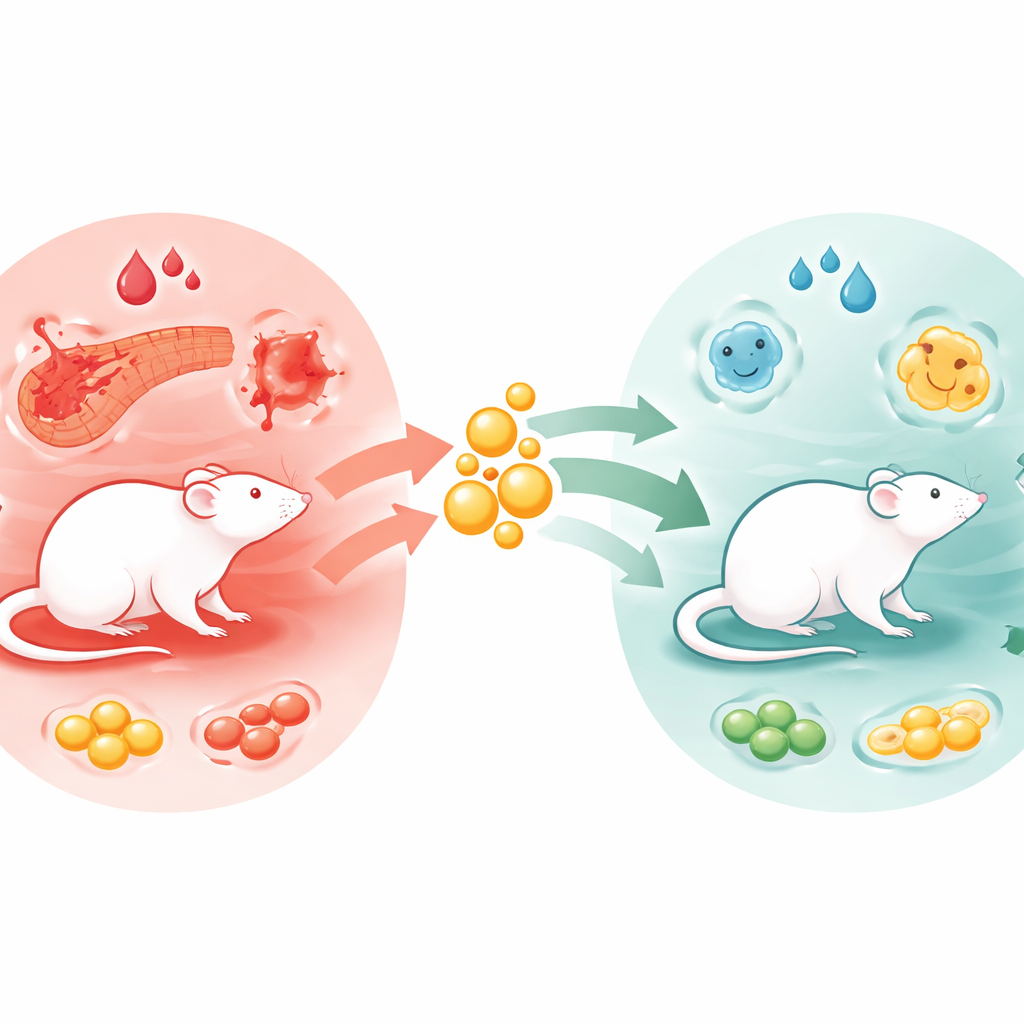
The researchers divided 24 rats into four groups: healthy controls, diabetic controls, and two diabetic groups treated with squalene by mouth at either a lower or higher dose for 30 days. They tracked body weight, fasting blood sugar, and HbA1c, a marker that reflects average blood sugar over several weeks. They also measured insulin, blood fats, kidney function, liver glycogen (the storage form of sugar), markers of oxidative stress, and key inflammatory molecules released by the immune system. Compared with diabetic animals that received no treatment, the squalene‑treated rats kept their weight better, had lower fasting blood sugar and HbA1c, and showed higher insulin levels, especially at the higher dose. These changes suggest that squalene did not just mask symptoms but helped restore some underlying control of blood sugar and pancreatic function.
Protecting Fats, Organs, and Cells
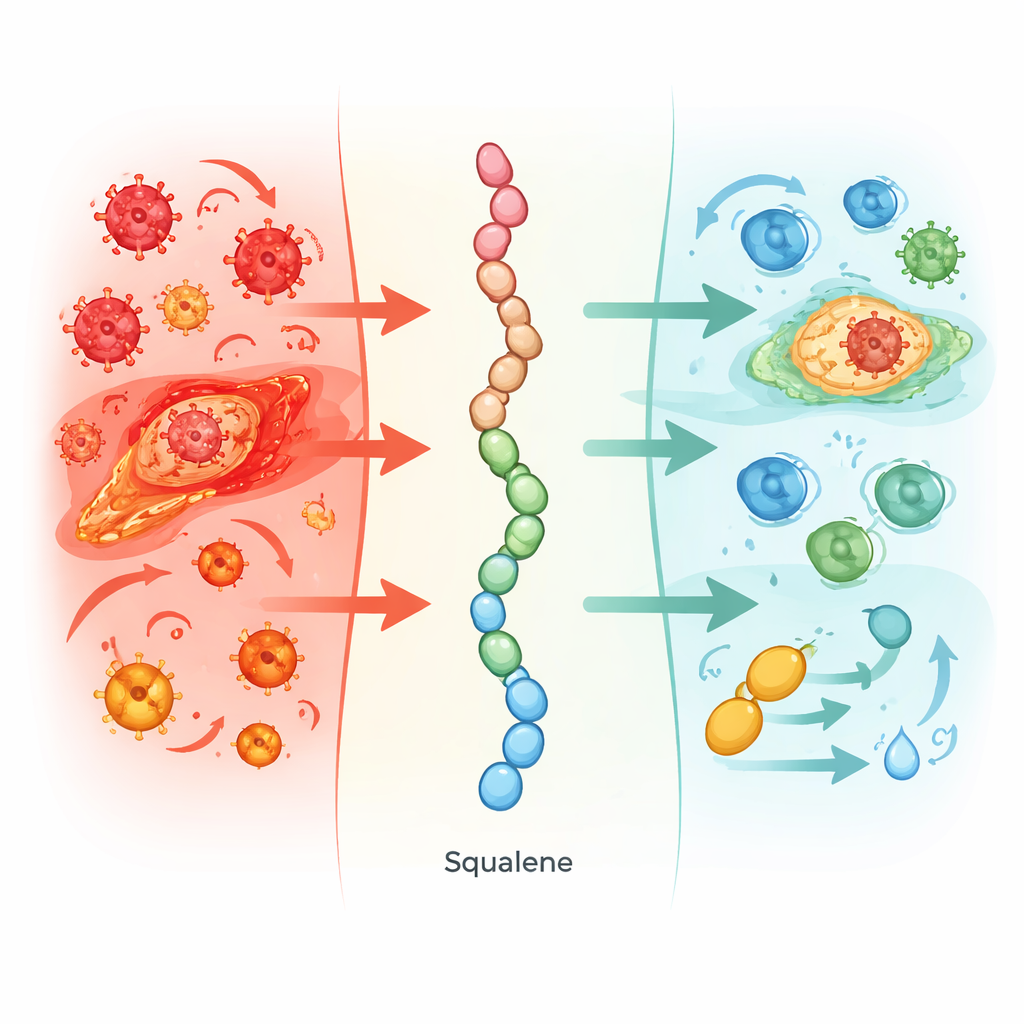
Diabetes often goes hand‑in‑hand with unhealthy blood fats and organ strain. In this study, untreated diabetic rats developed a typical pattern: higher total cholesterol and triglycerides and lower “good” HDL cholesterol, along with less glycogen stored in the liver and higher blood creatinine, a sign of kidney stress. Squalene reversed many of these changes in a dose‑dependent way. Blood fats shifted toward a healthier pattern, liver glycogen stores recovered, and creatinine levels dropped toward normal. Inside the liver, markers of oxidative stress fell, while the activity of the body’s own antioxidant defenses rose. At the same time, levels of inflammatory messengers such as IL‑1β, IL‑6, and TNF‑α were strongly reduced, suggesting that squalene helped quiet the chronic, low‑grade inflammation that drives long‑term diabetic complications.
Peering Into the Body’s Networks
To move beyond simple before‑and‑after measurements, the authors used computer‑based tools to map how squalene might interact with human proteins involved in type 1 diabetes. They identified a small set of targets that sit at the crossroads of immune signaling and cholesterol production. One key enzyme, squalene epoxidase (SQLE), controls a crucial step in making cholesterol and related fats. Another, the interleukin‑1 receptor (IL1R1), helps transmit inflammatory signals that contribute to the destruction of insulin‑producing cells. Using molecular docking simulations, the team showed that squalene fits snugly into important regions of both SQLE and IL1R1, forming many of the same contacts as known ligands or inhibitors. Network and pathway analyses supported a “dual‑action” picture: squalene appears able to influence both fat metabolism and immune cell traffic to the pancreas.
What This Could Mean for People
Altogether, the animal experiments and computer modeling tell a consistent story: squalene helped diabetic rats by lowering blood sugar, improving insulin, normalizing blood fats, protecting the kidneys and liver, reducing oxidative damage, and calming inflammation. The network and docking work suggest that it does this by nudging both metabolic and immune pathways back toward balance, rather than acting on a single target. While these results are promising, they come from a rodent model and from simulations, not from clinical trials. Still, they point to squalene as a natural compound worth exploring further as a supportive approach alongside standard diabetes treatments, with the long‑term goal of better protecting patients from the many complications of this disease.
Citation: Jaafar, F.R., Nassir, E.S., Oraibi, A.I. et al. Network and molecular insights into the antidiabetic potential of squalene in alloxan-induced diabetes. Sci Rep 16, 8806 (2026). https://doi.org/10.1038/s41598-026-38233-z
Keywords: type 1 diabetes, squalene, antioxidant, inflammation, lipid metabolism