Clear Sky Science · en
Bioactive plant compounds reduce ammonia production in enrichment culture of ruminal hyper-ammonia producing bacteria
Why this matters for farmers and the environment
Protein-rich feeds are expensive, and in cattle and buffalo much of that valuable protein is broken down in the stomach into waste products that end up polluting the air and water. This study explores whether natural compounds from common plants and herbs can help the animals use more of their protein while cutting down on pollution-causing waste, offering a possible win–win for farmers and the environment. 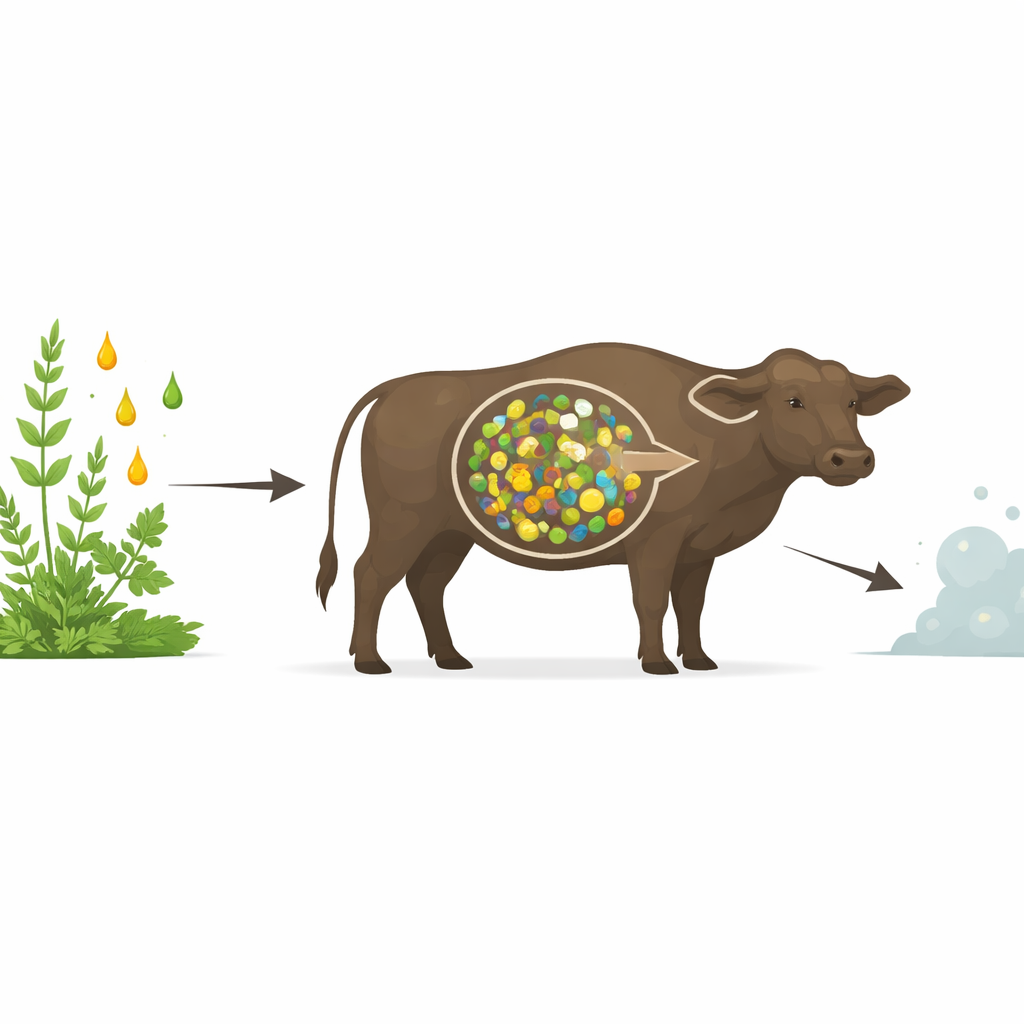
Too much protein turning into waste
In animals like buffalo, the first stomach chamber, called the rumen, hosts billions of microbes that help break down fibrous feeds. Some of these microbes are “hyper–ammonia-producing” bacteria that very rapidly convert feed protein into ammonia. The animal cannot use all of this ammonia, so much of it is turned into urea and excreted, contributing to nitrogen losses from farms and to gases that affect air quality and climate. Traditional methods to slow this breakdown have relied on heat treatments or antibiotics, which can be costly or restricted. This has led scientists to search for gentler, plant-based options that might target the most wasteful microbes without harming the animal or the rest of the rumen community.
Testing natural plant ingredients in the lab
The researchers collected rumen contents from fistulated buffaloes, meaning animals with a small, surgically created access point that allows safe sampling of stomach fluid. They then grew an “enrichment culture” rich in hyper–ammonia-producing bacteria under oxygen-free conditions similar to the rumen. Into these controlled test tubes, they added different plant-derived materials at several dose levels: essential oils from garlic, origanum (oregano), thymol (a compound from thyme), and eugenol (from clove), as well as a saponin from quillaja bark and water extracts from guava, cannabis, and chives. Over 12 and 24 hours, they measured how much ammonia was produced, how active protein-splitting enzymes (proteases) were, and how strongly the target bacteria grew. 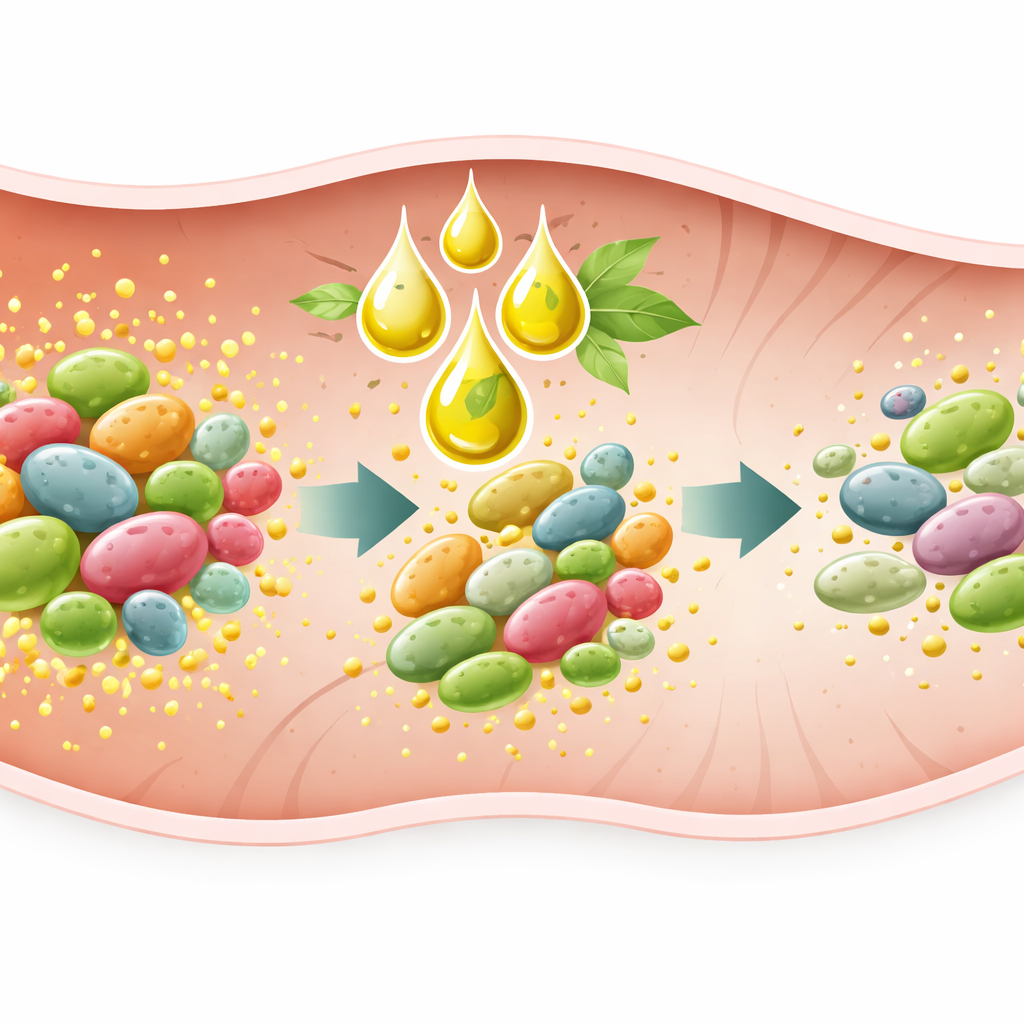
Which plant compounds made the biggest difference
Several of the plant-based additives reduced ammonia formation in these lab cultures, but they did not all work equally well or in the same way. Garlic oil and thymol lowered ammonia levels within the first 12 hours of incubation, and all tested additives in that first experiment reduced ammonia by 24 hours compared with untreated controls. However, changes in protease activity were modest: only higher doses of quillaja saponin noticeably lowered protease levels after 24 hours, and many treatments showed little or no effect on this enzyme activity. In a second experiment, origanum oil clearly stood out: at all doses, it sharply cut ammonia production at both time points and also strongly slowed the growth of the hyper–ammonia-producing bacteria. Eugenol from clove helped only at its highest dose and mainly at the earlier time point. Water extracts from guava, cannabis, and chives showed limited and inconsistent effects, hinting that either their active ingredients were too dilute or they broke down during incubation.
How plant oils may tame wasteful microbes
The study’s findings fit with other research showing that certain plant chemicals can disrupt bacterial cell membranes and energy flow. Components of origanum oil, such as carvacrol, are known to interfere with the bacterial surface, weakening the microbes and lowering their ability to generate ammonia from amino acids. Garlic oil contains sulfur-rich molecules that can also suppress specific rumen microbes and have been linked in other work to better protein use and even lower methane emissions. Yet, in this experiment, ammonia levels did not always match protease activity, likely because the culture medium already contained free amino acids, allowing bacteria to make ammonia without needing to secrete much extra protease. This helps explain why ammonia formation dropped in some treatments even when protease readings changed little.
From lab findings to real animals
Overall, the work shows that selected plant-derived compounds can slow down wasteful protein breakdown by rumen microbes, with origanum oil giving the clearest and most consistent reduction in both ammonia production and growth of the key bacteria. For a layperson, the main message is that carefully chosen herbal ingredients added to buffalo feed might help animals get more nutrition out of the same protein while releasing less nitrogen into the environment. The authors emphasize, however, that these promising lab results now need to be tested in live animals, tracking actual protein use and manure nitrogen losses, before such additives can be confidently recommended for routine farm use.
Citation: Chanu, Y.M., Paul, S.S., Dey, A. et al. Bioactive plant compounds reduce ammonia production in enrichment culture of ruminal hyper-ammonia producing bacteria. Sci Rep 16, 8210 (2026). https://doi.org/10.1038/s41598-026-38231-1
Keywords: rumen microbes, essential oils, buffalo nutrition, ammonia emissions, plant feed additives