Clear Sky Science · en
Enzyme-mediated synergistic bioremediation of PAH and heavy metal co-contaminated soil using nocardia species and Helianthus annuus
Why Dirty Soil Matters to Everyday Life
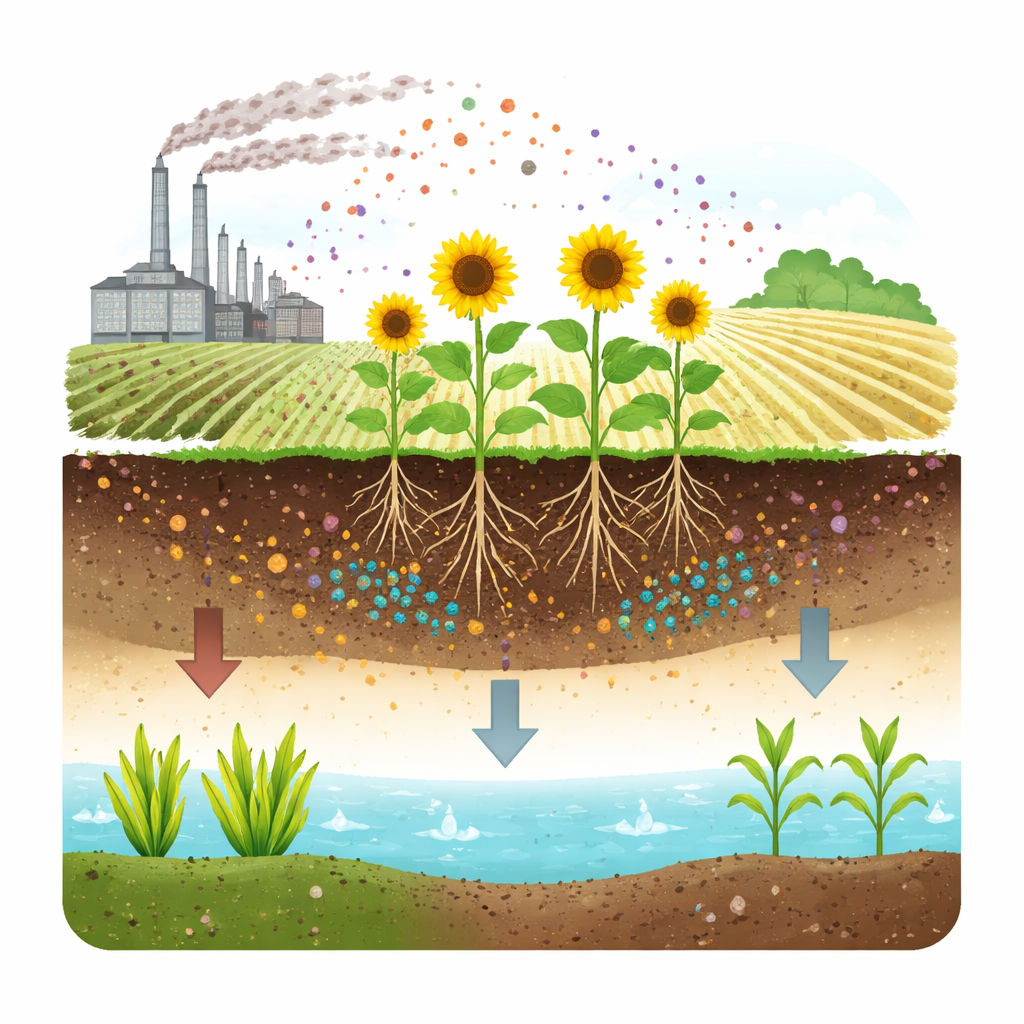
Many farms and towns sit on soils laced with two stubborn kinds of pollution: toxic metals like lead and mercury, and oily chemicals called polycyclic aromatic hydrocarbons that come from fuel, industry, and burning. These contaminants can slip into crops, water, and ultimately our food, threatening health and reducing harvests. This study explores a nature-based cleanup strategy that teams up a common crop—sunflower—with specialized soil bacteria to scrub these mixed pollutants from the ground in a gentle, sustainable way.
A Team-Up Between Plants and Microbes
The researchers worked in Fars Province in Iran, an agricultural region affected by industrial activity and wastewater. They collected 36 soil samples from oil refinery zones, farms, and areas influenced by hospital effluent. These soils contained worrying levels of heavy metals such as arsenic, mercury, cadmium, lead, and chromium, along with high amounts of persistent oily compounds. Instead of relying on costly, disruptive methods like digging out or burning the soil, the team focused on two biological tools: sunflowers, which are known to draw metals and some pollutants from soil, and Nocardia bacteria, a hardy group of microbes that can break down complex chemicals and bind toxic metals.
Finding Nature’s Hidden Helpers in Polluted Soils
Back in the lab, the scientists isolated bacteria from the collected soils and screened them to find which Nocardia strains could best tackle the pollutants. They identified 13 strains belonging to eight species, then tested how well each one removed both heavy metals and oily compounds from a controlled liquid medium. Several stood out: some strains excelled at breaking down the oily pollutants, while others were especially good at grabbing metals from their surroundings. The team then looked inside these microbes’ “toolkits,” measuring key enzymes that slice open ring-shaped pollutant molecules and convert dangerous metal forms into less harmful ones. This biochemical work confirmed that certain strains had unusually strong enzyme activity, explaining their cleaning power.
Putting the Living Cleanup Crew to the Test
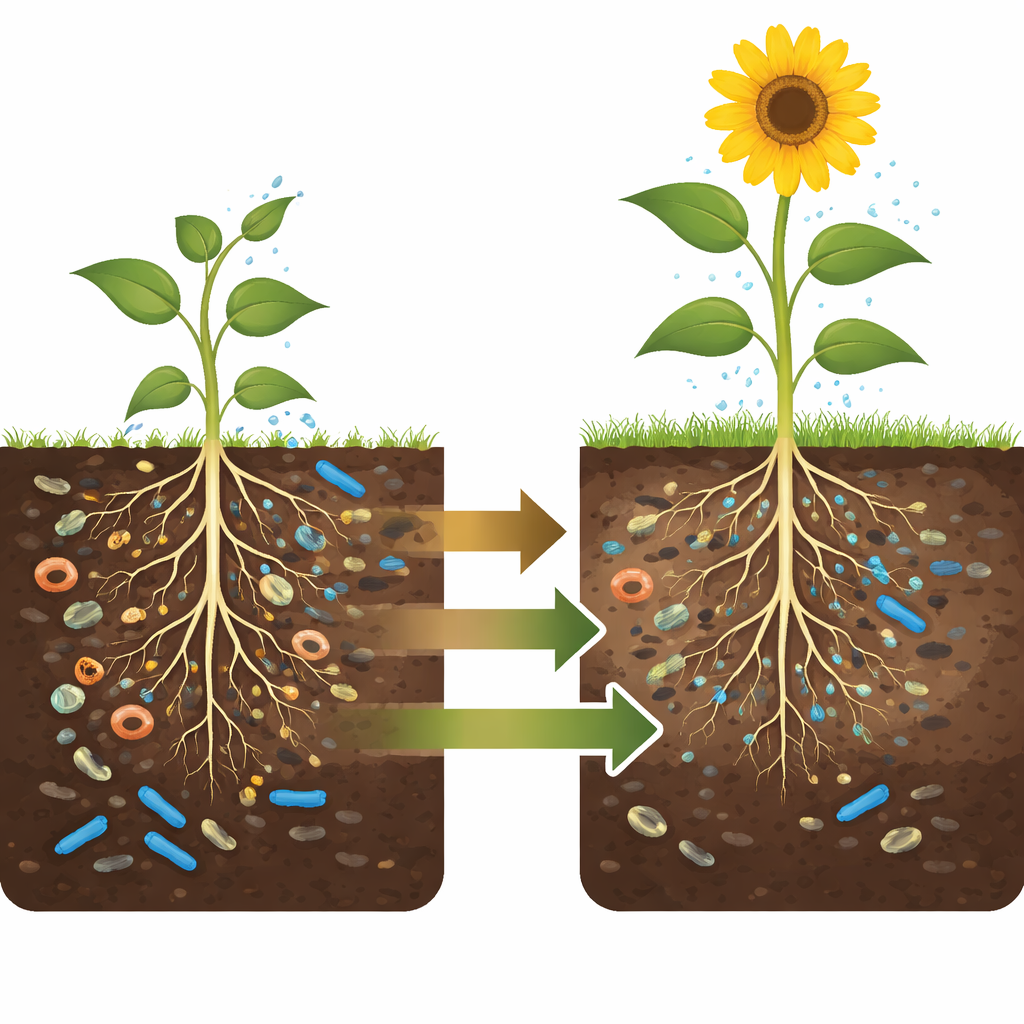
To see how this works in a more realistic setting, the researchers ran a 90-day greenhouse experiment using pots filled with clean soil spiked to low, medium, or high contamination levels. They compared five setups: polluted soil left alone; soil planted with sunflower only; soil treated with the best Nocardia strains only; soil treated with both sunflower and the bacterial mixture; and a sterile control with no living helpers. They monitored how much pollution remained, how the soil’s basic properties changed, and how well sunflowers grew. Across the board, the combined treatment—sunflowers plus Nocardia—was the clear winner, cutting oily pollutants by about 84–92% and heavy metals by about 70–79%, more than either plants or bacteria could do alone.
Healthier Soil and Safer Harvests
Beyond simply removing contaminants, the living treatment improved soil health. Organic matter, nitrogen, and nutrients rose, and microbial activity increased, all signs of a more fertile, living soil. Importantly, the researchers measured how much metal moved from soil into sunflower roots and up into shoots. In the combined treatment, metals tended to stay trapped in the roots or in the soil, rather than traveling into the above-ground parts that could enter the food chain. This root-level “lockdown” was stronger when Nocardia bacteria were present, thanks to their metal-binding proteins and metal-transforming enzymes, which help immobilize toxic elements close to where they enter the plant.
What This Means for Polluted Lands
In simple terms, the study shows that pairing the deep roots of sunflowers with the specialized chemistry of Nocardia bacteria can turn damaged, metal- and oil-contaminated soils into cleaner, more fertile ground. The sunflowers act as biological pumps and stabilizers, while the bacteria act as microscopic recyclers and metal traps. Together, they provide a low-cost, low-impact alternative to heavy engineering solutions, especially valuable in arid farming regions where soil is precious and resources are limited. With further testing in real fields, this green “plant–microbe partnership” could become a practical way to reclaim polluted farmland, reduce health risks, and protect food supplies.
Citation: Ghasemi, A., Abtahi, S.A., Jafarinia, M. et al. Enzyme-mediated synergistic bioremediation of PAH and heavy metal co-contaminated soil using nocardia species and Helianthus annuus. Sci Rep 16, 8786 (2026). https://doi.org/10.1038/s41598-026-38230-2
Keywords: bioremediation, sunflower, heavy metals, soil pollution, Nocardia bacteria