Clear Sky Science · en
Influence of coaching experience on in-game adaptability and decision-making among basketball coaches
Why Some Coaches Seem to See the Game Before It Happens
Anyone who watches basketball has seen it: a coach who calls the perfect timeout, makes a clever substitution, or shifts the defense just before the other team goes on a run. This study asks what separates those highly adaptable coaches from their less experienced peers. By peering into how coaches think, see, and react during games, the researchers show that experience doesn’t just add years on the sideline—it reshapes the way coaches read the court and make split-second choices.

Looking Inside the Coach’s Playbook
The researchers compared 24 male basketball coaches, splitting them into two groups: elite coaches with more than a decade at top competitive levels, and novice coaches with less than three years of experience. Instead of relying only on post-game surveys, they followed coaches across real games, recorded their behavior, and then tested them in controlled video scenarios. They also used eye-tracking glasses to see exactly where each coach looked while analyzing game footage, and interviewed them in depth afterward to unpack what they were thinking at key moments. This blend of statistics, video analysis, and personal reflection allowed the team to move beyond win–loss records and into the mental world of coaching.
How Experience Shapes In-Game Adjustments
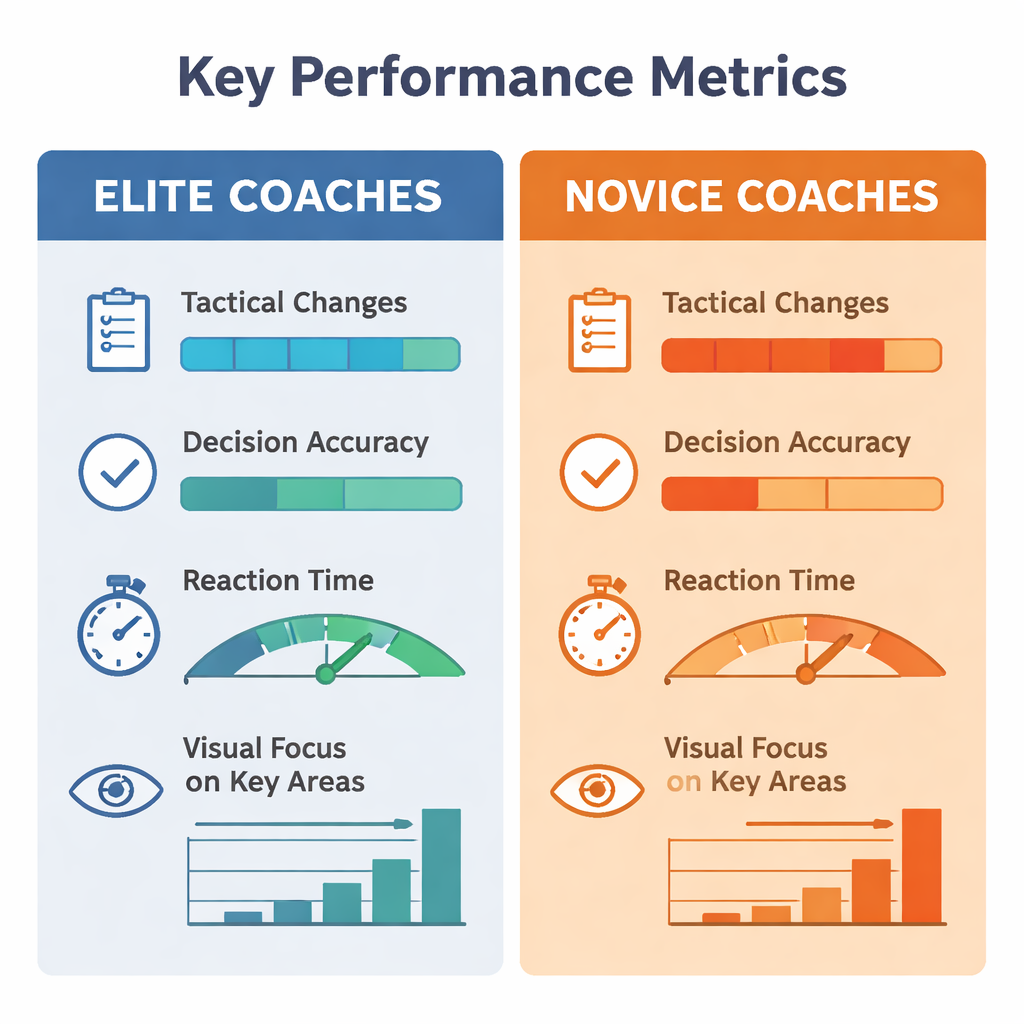
On the sidelines, elite coaches clearly behaved differently. They changed tactics more often, called more effective timeouts, and managed substitutions in ways that better fit the flow of the game. Their adjustments tended to come before trouble fully appeared—such as shifting a defensive scheme when they sensed the opponent was about to exploit a mismatch—rather than waiting until after a scoring run. In contrast, novice coaches usually reacted only once problems were obvious, such as after several successful three-pointers by the other team. Overall, the more experienced group showed a kind of tactical flexibility, updating their game plan quickly and precisely as conditions changed.
Thinking Faster and Seeing What Matters
When the same coaches were tested with standardized video clips that paused at crucial decision points, elite coaches again stood out. They chose better options more often and did so in less time, suggesting they could recognize familiar patterns and recall useful solutions without lengthy deliberation. Eye-tracking data backed this up: elite coaches took less time to fix their gaze on important parts of the action, such as key matchups or off-ball movement, and they spent more of their visual attention on those areas instead of scanning aimlessly. Novice coaches looked around more and stared longer at fewer useful spots, a sign that they were still figuring out what truly mattered in a crowded, fast-moving scene.
The Quiet Mental Skills Behind Smart Coaching
The interviews revealed that elite coaches did not simply “go with their gut” in a vague sense. Their instincts were grounded in well-organized mental checklists and rich experience. They described focusing on several factors at once—score, time, fatigue, momentum, and opponent tendencies—and using simple internal routines to keep track of them. Their timeout talks typically included a few concrete, detailed instructions that players could act on immediately. Novice coaches, on the other hand, often relied on general slogans like “move the ball” or “play harder,” and reported feeling overwhelmed when many things were happening at once. Experience, in other words, seemed to help them cut through noise and communicate the right message at the right time.
What This Means for Fans, Players, and Future Coaches
For a general basketball audience, the message is straightforward: great coaching is not just about fiery speeches or clever plays drawn on a whiteboard. This study shows that seasoned coaches literally see the game differently and make decisions in a more proactive, efficient way. Their advantage comes from years of building mental models about how games unfold, learning to spot early warning signs, and practicing how to respond under pressure. For developing coaches and training programs, the findings suggest that practicing pattern recognition, focused watching, and clear, specific communication may be just as important as learning new plays. In short, the “genius” on the sideline is often the product of trained perception and disciplined thinking rather than magic.
Citation: Ding, G., Liu, F., Yang, F. et al. Influence of coaching experience on in-game adaptability and decision-making among basketball coaches. Sci Rep 16, 6831 (2026). https://doi.org/10.1038/s41598-026-38226-y
Keywords: basketball coaching, decision making, in-game strategy, sports expertise, eye tracking