Clear Sky Science · en
A framework for enhancing pharmaceutical integrity and patient safety: novel mobile health solution integrating smart packaging and computer vision
Why safer medicines matter to everyone
When you buy medicine from a local pharmacy, you probably assume it is both genuine and safe to use. Yet a worrying share of tablets in circulation around the world are fake, poor quality, or past their expiry date. These hidden dangers can turn life-saving treatments into serious threats. This study presents a practical, technology-based way to help ordinary people, pharmacists, and manufacturers work together to keep harmful counterfeit drugs out of homes—and to stop expired pills from quietly piling up in family medicine boxes.
The hidden problem in home medicine drawers
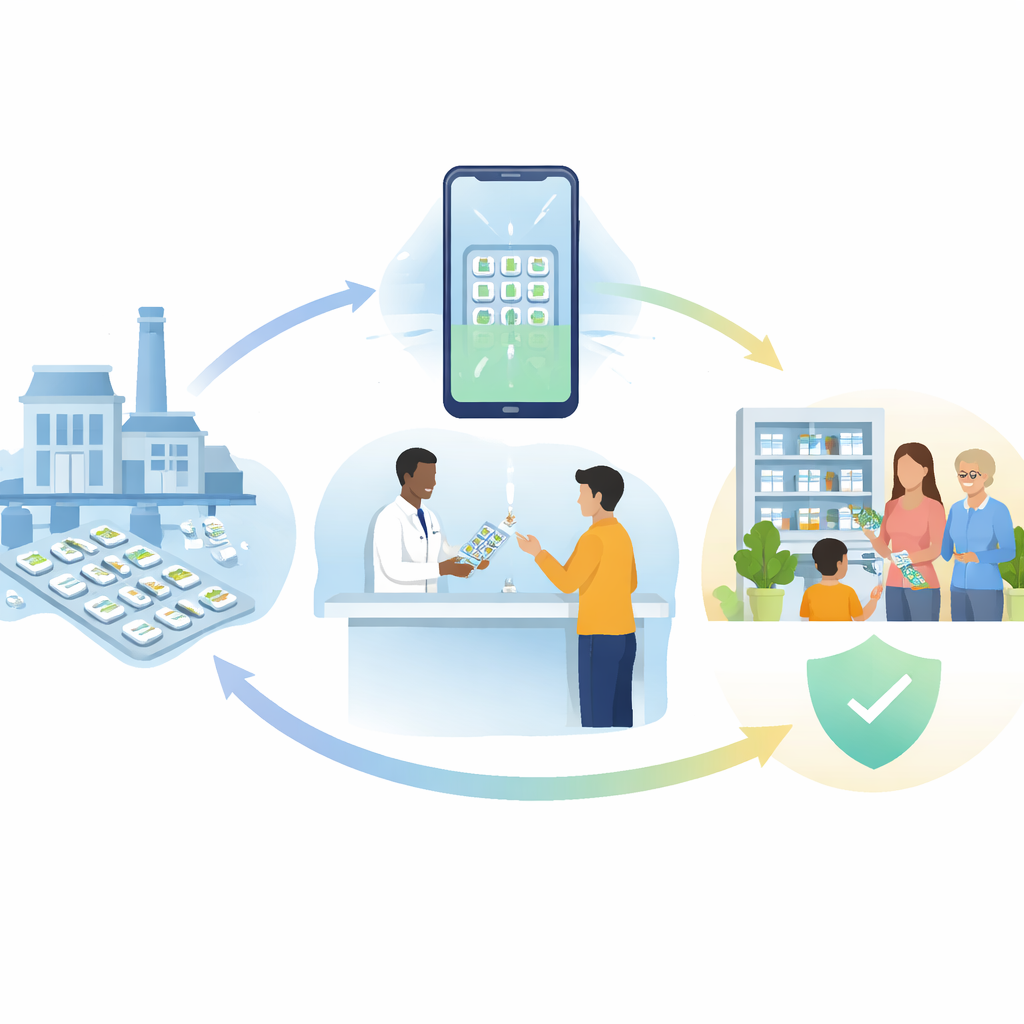
The authors begin by showing just how widespread informal “home pharmacies” have become. In a survey of 450 people across India, almost everyone kept medicines at home, not just simple painkillers but strong prescription drugs for blood pressure, diabetes, and infections. Most people said they checked expiry dates, but many still admitted they had taken—or might have taken—expired medicines. Once tablets are removed from their original packaging, or strips are cut into smaller pieces at the pharmacy, key details like the drug name and expiry date can be lost or too small to read. At the same time, people mostly rely on trust in their local pharmacist and a quick glance at the box to judge whether a medicine is genuine, even though fake products can closely copy the look of real ones.
A smarter way to follow each strip of tablets
To tackle these weaknesses, the research team designed a new, nationwide mobile health system that tags every strip of tablets with its own unique digital identity. Manufacturers register each strip in a secure online database and print a special pattern, similar to the QR codes seen on tickets or menus, on the packaging. When a pharmacist sells a medicine strip, they scan this pattern using a small camera-based device or a phone. The system checks, in real time, whether the strip exists in the official database, whether it has already been sold, and whether it is still within its expiry date. If anything does not match, the strip is flagged as suspicious. If all is well, the pharmacist links that strip’s digital record to the customer’s phone number, creating a clear trail from factory to household.
Teaching computers to count pills and watch expiry dates
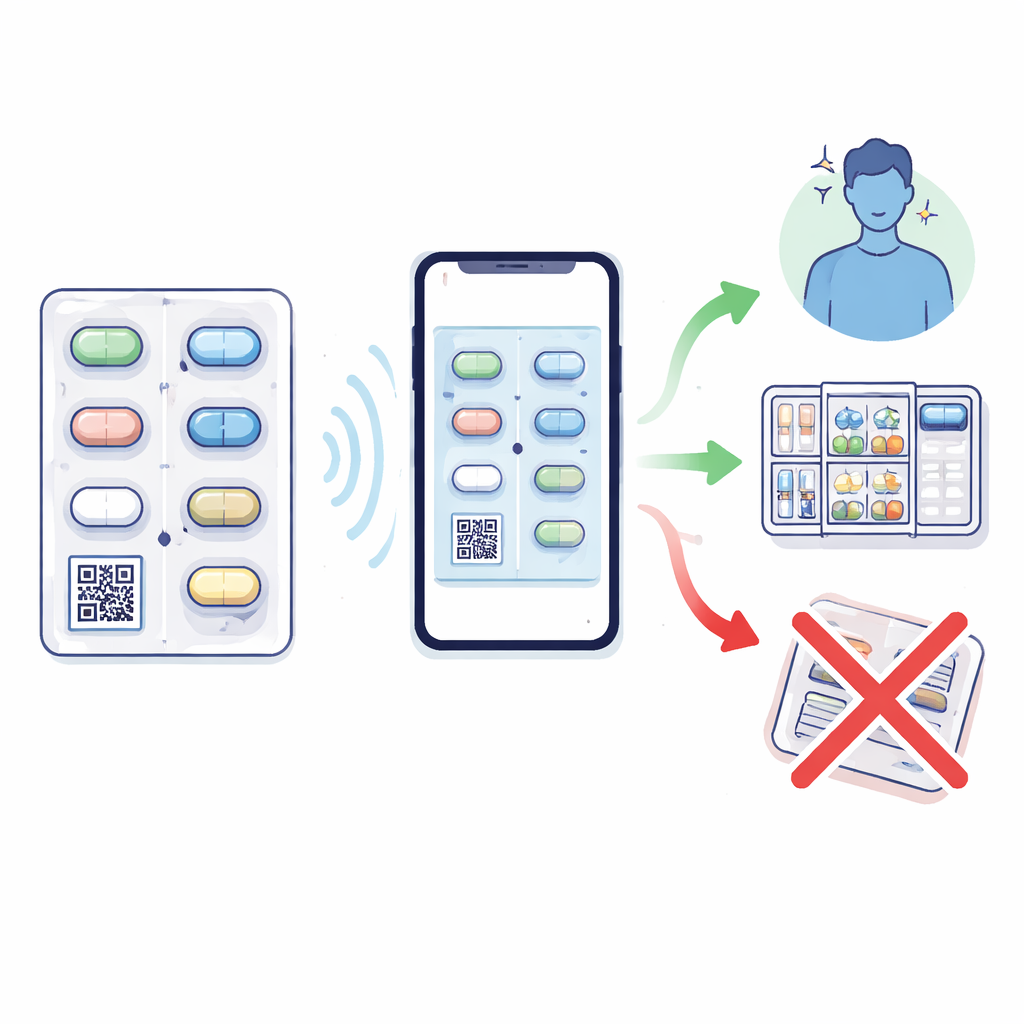
A major everyday challenge in countries like India is the common habit of cutting strips so people can buy only a few tablets at a time. This can slice through printed expiry dates or other markings, making later checks impossible. To solve this, the authors trained an image-recognition model—a form of artificial intelligence—to look at photos of pill strips and count how many tablets are present. Using a publicly available set of pill images, they adapted a fast vision algorithm so it could find each tablet in a picture and mark it with a digital box. In tests, the system detected most pills accurately, even when lighting, colors, or layouts varied. When the pharmacist scans a strip during a sale, a photo is sent to this model, which automatically records how many tablets remain. This information is tied to the strip’s unique identity, so the system can track what was sold without requiring the pharmacist to type anything in.
One app for patients, pharmacists, and makers
On the consumer side, a simple phone app acts as a personal medicine manager. As soon as a purchase is recorded, the app stores the drug name, dose, expiry date, and other basics in the cloud. The user can later see all medicines at home in one place, regardless of how the physical strips look. A color-coded dashboard highlights which tablets are safe, which are nearing expiry, and which are overdue, and the app can send timely reminders before pills go bad. For pharmacists, a companion app helps manage stock and verify every sale. Manufacturers can push safety alerts or recall notices that appear directly in users’ dashboards. The whole design emphasizes a clear, multilingual interface so people with different levels of technical comfort can still benefit.
What this means for everyday medicine safety
In simple terms, the study shows how combining smart packaging, phone cameras, and a shared online record can turn each strip of tablets into a traceable, verifiable item, rather than an anonymous piece of foil. By letting computers do the hard work of checking authenticity, counting tablets, and watching expiry dates, the system reduces the chance that fake or outdated drugs slip into people’s homes. While the prototype still needs larger real-world trials and a wider variety of pill images to learn from, it offers a realistic blueprint for countries facing fragmented supply chains and widespread strip cutting. If scaled up, this approach could help ordinary patients gain quiet but powerful protection every time they open their medicine drawer.
Citation: K, H., Parikh, V., K, P.S. et al. A framework for enhancing pharmaceutical integrity and patient safety: novel mobile health solution integrating smart packaging and computer vision. Sci Rep 16, 9777 (2026). https://doi.org/10.1038/s41598-026-38215-1
Keywords: counterfeit medicines, mobile health, smart packaging, computer vision, drug safety