Clear Sky Science · en
Musician presence and its effects on physiological and psychological well-being in live versus livestreamed concerts
Why Being There Still Matters
In a world where concerts can be streamed to your sofa in high definition, it is natural to ask whether being physically present with musicians really changes how we feel. This study set out to test that everyday question in a careful experiment, measuring not only what people said about their experience, but also how their hearts responded beat by beat.
Two Concerts, Two Ways to Listen
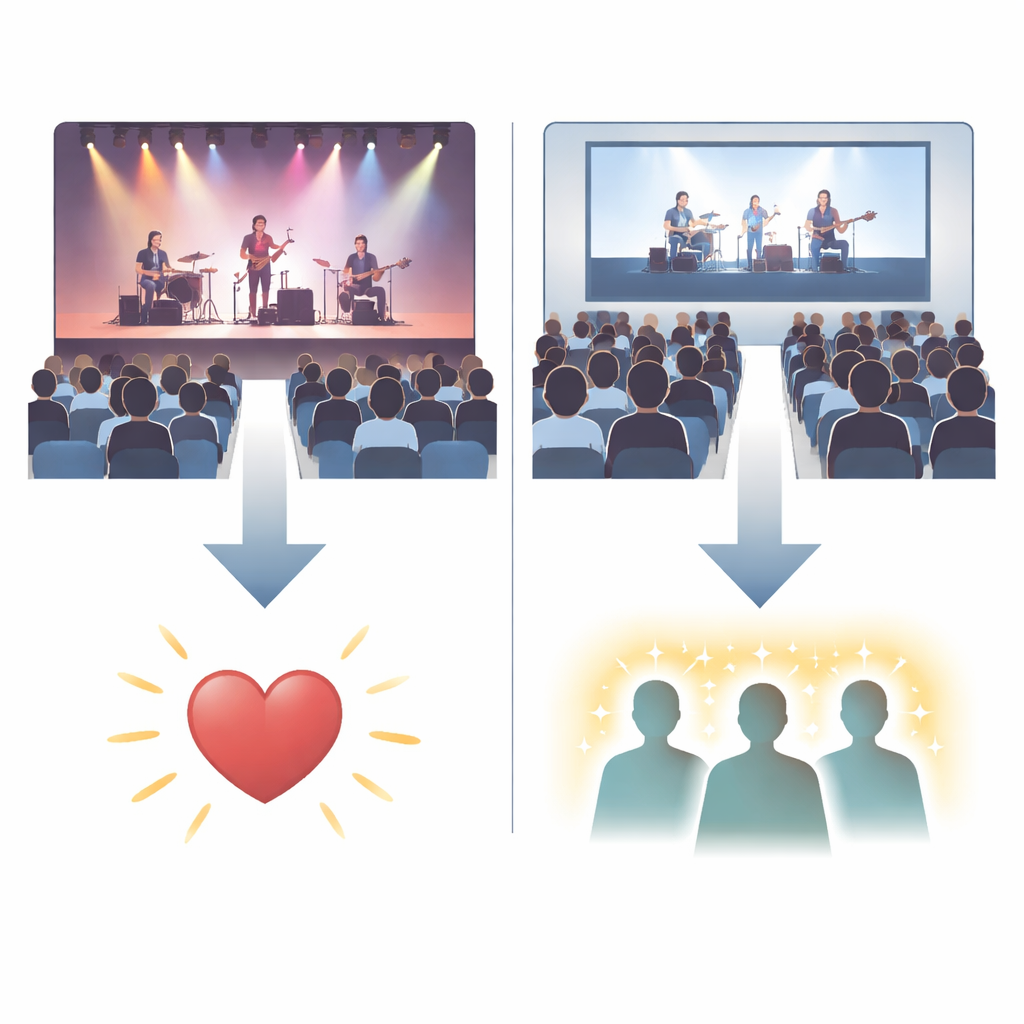
Researchers invited 130 university students to an evening of classical and pop music in a major concert hall. Everyone heard the same pieces at the same time, performed by professional musicians. The crucial twist lay in where they sat. One group watched the musicians perform live on stage. The other sat in a similar hall in the same building, seeing a simultaneous high-quality cinematic livestream on a large screen. Lighting, sound system, seating, and timing were kept as similar as possible so that the key difference was whether the musicians shared the room with the audience.
Tracking Feelings and Heartbeats
Throughout the concerts, participants filled out short paper questionnaires after each piece. They rated how much they liked the music, how emotionally stirred they felt, whether the experience was pleasant or unpleasant, and how energized or calm they were. The study also used a scale for the feeling of being deeply moved and socially connected—a warm rush many people recognize from powerful artistic or shared moments. At the same time, everyone wore a chest strap that continuously recorded heart activity. From these signals, the researchers calculated heart rate and more subtle patterns in the timing between beats, which can reveal how the body’s automatic stress and recovery systems are working.
Live Music Feels Richer and More Moving
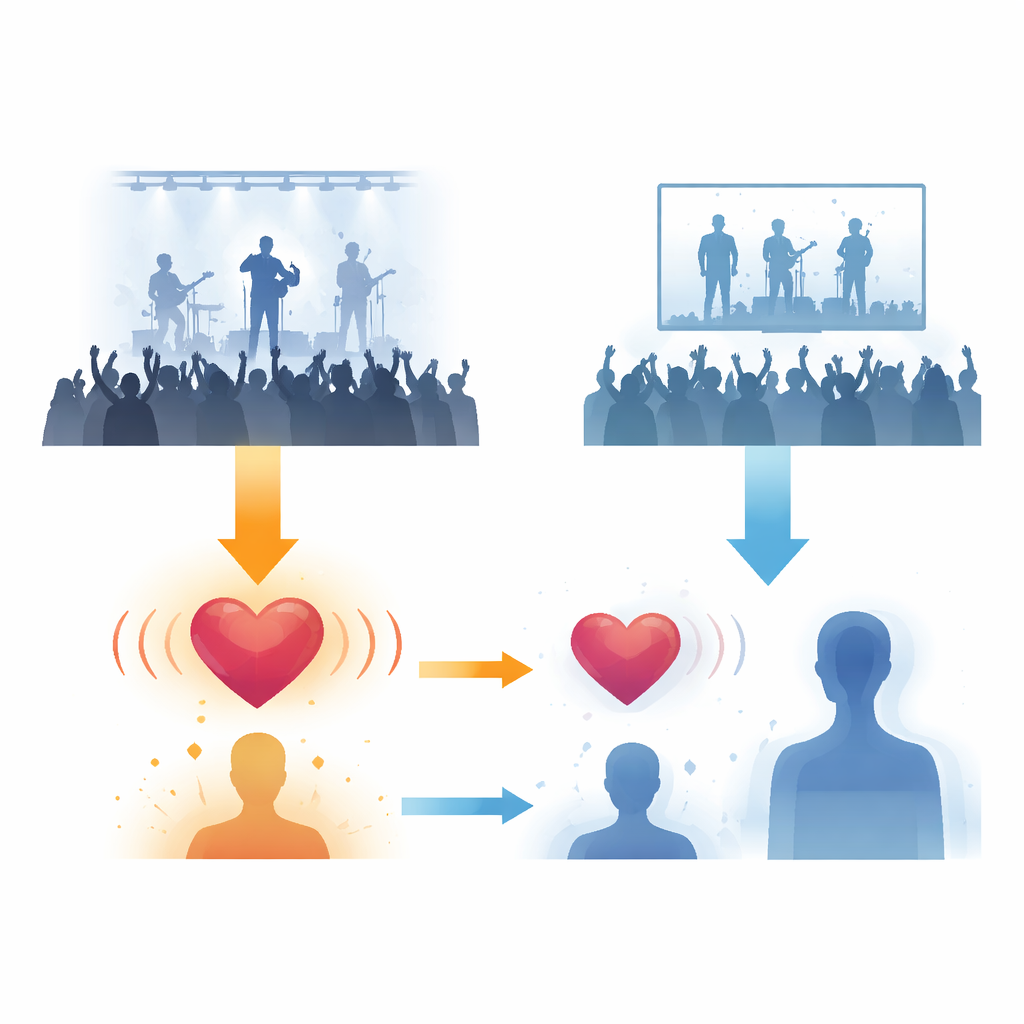
The differences between groups emerged clearly on the self-reported measures. Across all six performances, people in the live hall consistently enjoyed the music more and felt more strongly moved and connected than those watching the livestream. They also reported higher arousal (feeling more activated rather than sleepy) and more positive emotion. These patterns held regardless of whether the piece was classical or pop, and whether it was easy or more challenging to take in. Simply sharing the room with the musicians appeared to deepen the emotional and social impact of the concert, even though the songs themselves and the timing were identical.
What Hearts Revealed About the Experience
The heart data painted a more nuanced picture. Average heart rate rose more during the live performances than during the livestream, suggesting stronger bodily engagement when musicians were physically present. However, more detailed measures of beat-to-beat variation—often used as indicators of stress, resilience, and long-term health—did not differ reliably between the two groups. The researchers also tested whether the stronger emotions reported in the live setting explained the higher heart rate. In their statistical models, being in the live hall boosted both feelings and heart rate, but the emotional scores themselves did not account for the heart effect. This hints that other factors, such as subtle body movement or posture, may also play a role when we are in the same space as performers.
What This Means for Everyday Well-Being
The study suggests that “liveness” is more than a romantic idea: the simple fact of sharing space and time with musicians measurably shapes how we experience music and how our bodies respond. Live concerts, compared with otherwise similar livestreams, left listeners feeling more positive, more stirred, and more connected, and their hearts beat a little faster. The work does not claim that livestreams are empty experiences—they also raised emotions and lowered anxiety overall—but it shows that physical co-presence adds an extra layer. As concert habits continue to shift between halls, cinemas, and home screens, these findings argue that being there in person offers unique benefits for momentary well-being, and they point the way toward future research on how live arts might support health in the longer term.
Citation: Becker, A.S., Peters, J., van Schie, M.S. et al. Musician presence and its effects on physiological and psychological well-being in live versus livestreamed concerts. Sci Rep 16, 7889 (2026). https://doi.org/10.1038/s41598-026-38194-3
Keywords: live music, livestream concerts, emotional well-being, heart rate, social connection