Clear Sky Science · en
Antimicrobial resistance of Escherichia coli in Hungarian wild rats and characterization of a CTX-M-1 type ESBL plasmid
Why city rats matter for our medicines
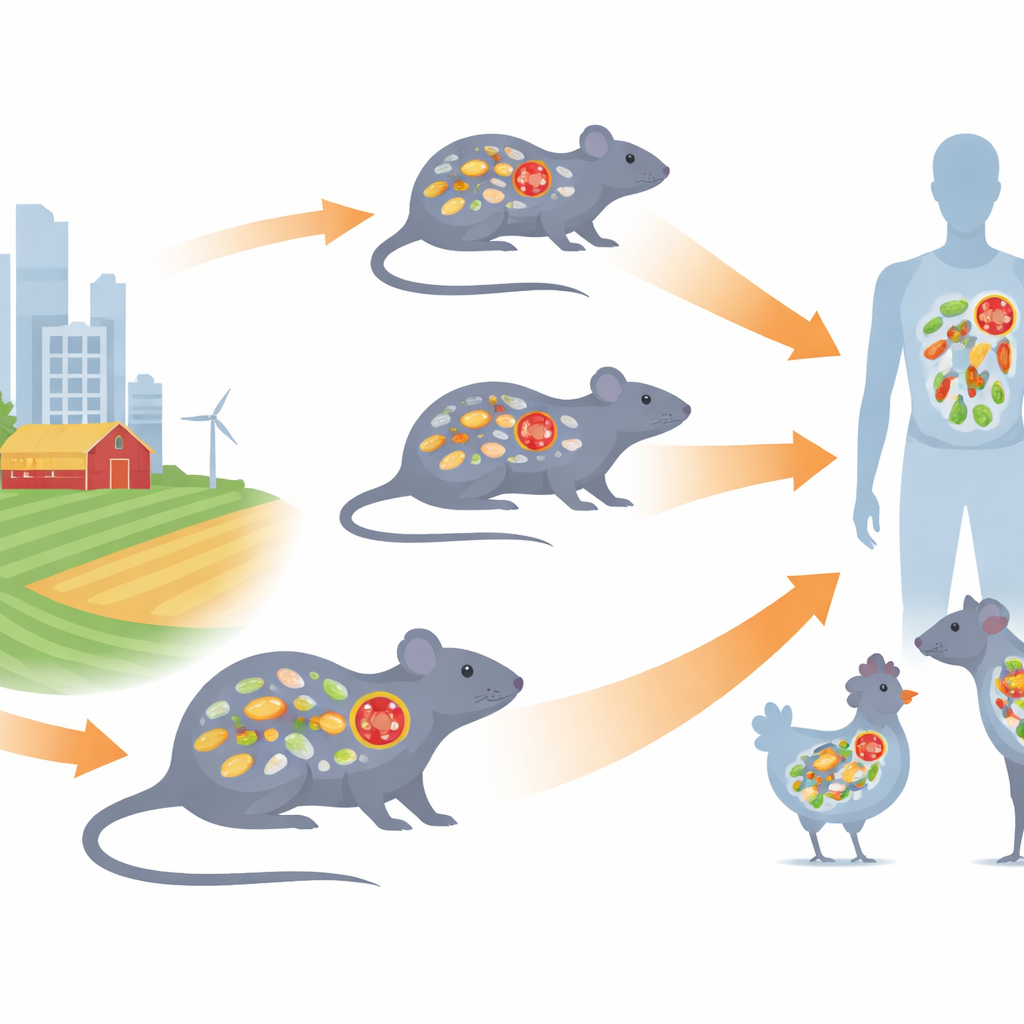
Antibiotic resistance is often framed as a problem of hospitals and farms, but the story does not end there. Brown rats living in our cities and around livestock quietly share our spaces, scurrying through sewers, parks, and barnyards. This study from Hungary asks a simple but important question: are these everyday rodents helping to spread bacteria that no longer respond to important drugs, and if so, how closely are those microbes related to the strains that trouble doctors and veterinarians?
Following unseen passengers in rat intestines
Researchers trapped brown and black rats at public, industrial, and farm locations across Hungary and examined the bacteria living in their large intestines. Instead of testing just a single bacterial strain per animal, they sampled multiple Escherichia coli colonies from each rat to capture the hidden diversity inside a single gut. They then exposed these bacteria to a panel of commonly used antibiotics to see which ones survived, focusing on drugs where resistance is often carried on small, mobile pieces of DNA that can hop between microbes.
Which drug-resistant bacteria the rats carried
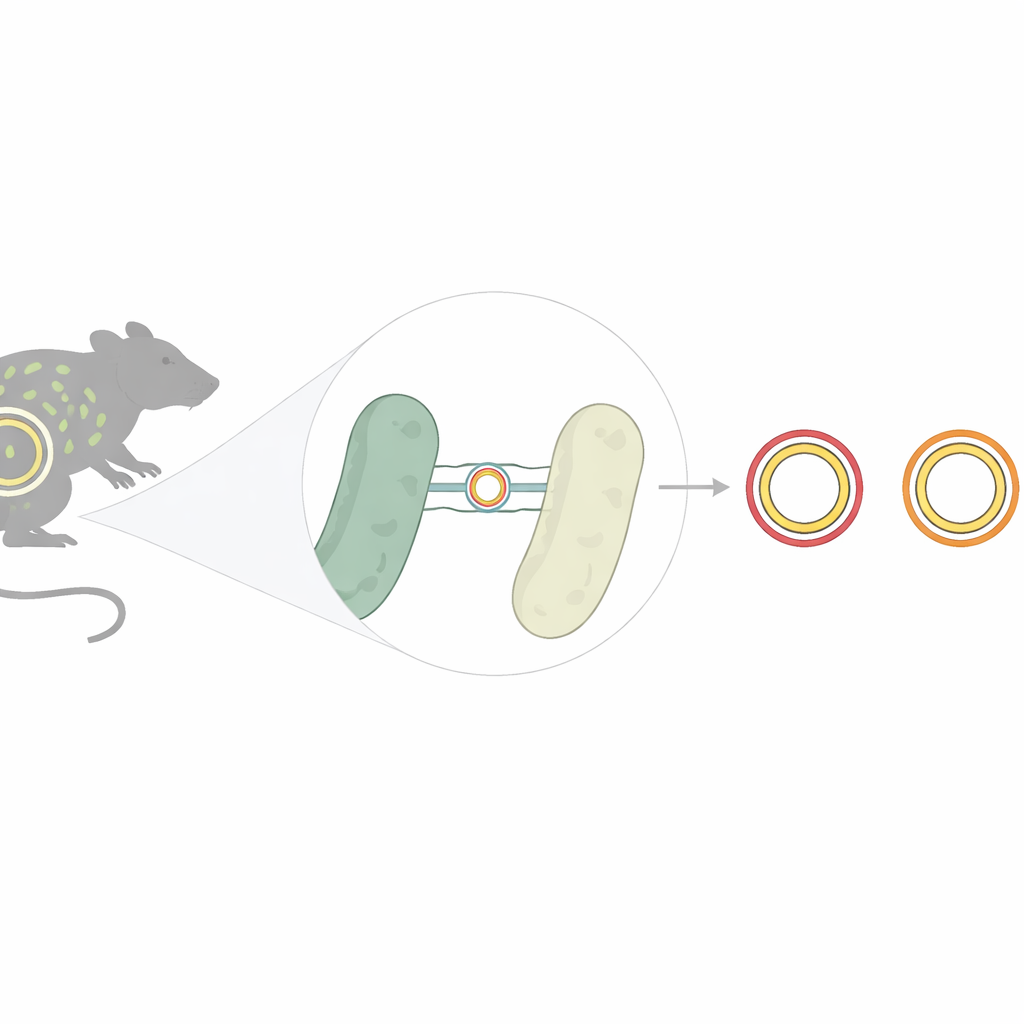
About one quarter of the 90 rats studied carried E. coli that could withstand at least one antibiotic, and nearly one in eleven hosted strains resistant to several drug families at once. All such resistant bacteria came from brown rats; none were found in the smaller sample of black rats. The most frequent pattern was combined resistance to ampicillin, a penicillin-like drug, and tetracycline, a long-standing workhorse in both human and veterinary medicine. Genetic tests showed that these resistances were usually linked to well-known genes riding on plasmids—circular DNA molecules that bacteria share with one another like tiny USB drives, allowing resistance to spread rapidly in the right conditions.
A rare but worrying high-level resistance
In one urban brown rat, the team found something more concerning: an E. coli strain able to break down powerful third-generation cephalosporins, drugs often reserved for serious infections. This ability came from a gene known as CTX-M-1, a member of a widespread family of enzymes that inactivate many modern antibiotics. By combining short- and long-read DNA sequencing, the scientists reconstructed the entire plasmid—about 92 thousand DNA letters long—that carried this gene. When they compared its sequence with plasmids from human disease-causing E. coli and Salmonella, they found it was almost an exact match, differing only in a few small details. This suggests that essentially the same resistance element circulates between animals, people, and the environment.
How rat bacteria relate to global human strains
To see where this rat-derived E. coli fits in the bigger family tree, the researchers compared its genome with hundreds of CTX-M-producing E. coli strains isolated from human patients in 50 countries. The rat strain represented a previously undescribed lineage, but it sat in the middle of several major human-associated branches that are well known for causing hard-to-treat infections around the world. Though this particular strain did not carry the extra virulence genes linked to severe disease, its close kinship with human epidemic lineages shows that boundary lines between wildlife, farm animals, and people are porous when it comes to bacterial evolution.
What this means for health and the environment
This work paints a nuanced picture. On the one hand, most Hungarian rats did not carry the most alarming forms of resistance, and their overall threat appears similar to that reported in other countries. On the other hand, the discovery of a rat E. coli strain with a human-like CTX-M-1 plasmid and a new genetic background underscores how urban wildlife can act as reservoirs and stepping stones for resistance genes. For non-specialists, the take-home message is that antibiotic resistance is a shared, “One Health” issue: what happens in hospitals, farms, and city sewers is intertwined. Keeping rats and other urban animals in view through ongoing surveillance will help scientists spot emerging resistant strains early and better understand how to slow the spread of these troublesome genes across species and ecosystems.
Citation: Szmolka, A., Locsmándi, G., Makó, A. et al. Antimicrobial resistance of Escherichia coli in Hungarian wild rats and characterization of a CTX-M-1 type ESBL plasmid. Sci Rep 16, 8583 (2026). https://doi.org/10.1038/s41598-026-38191-6
Keywords: antibiotic resistance, Escherichia coli, urban rats, plasmids, one health