Clear Sky Science · en
Impact of household air pollution on under 5 mortalities and ARI in sub saharan africa: evidence from demographic and health survey 2010–2020
Why Smoke Inside the Home Matters for Children
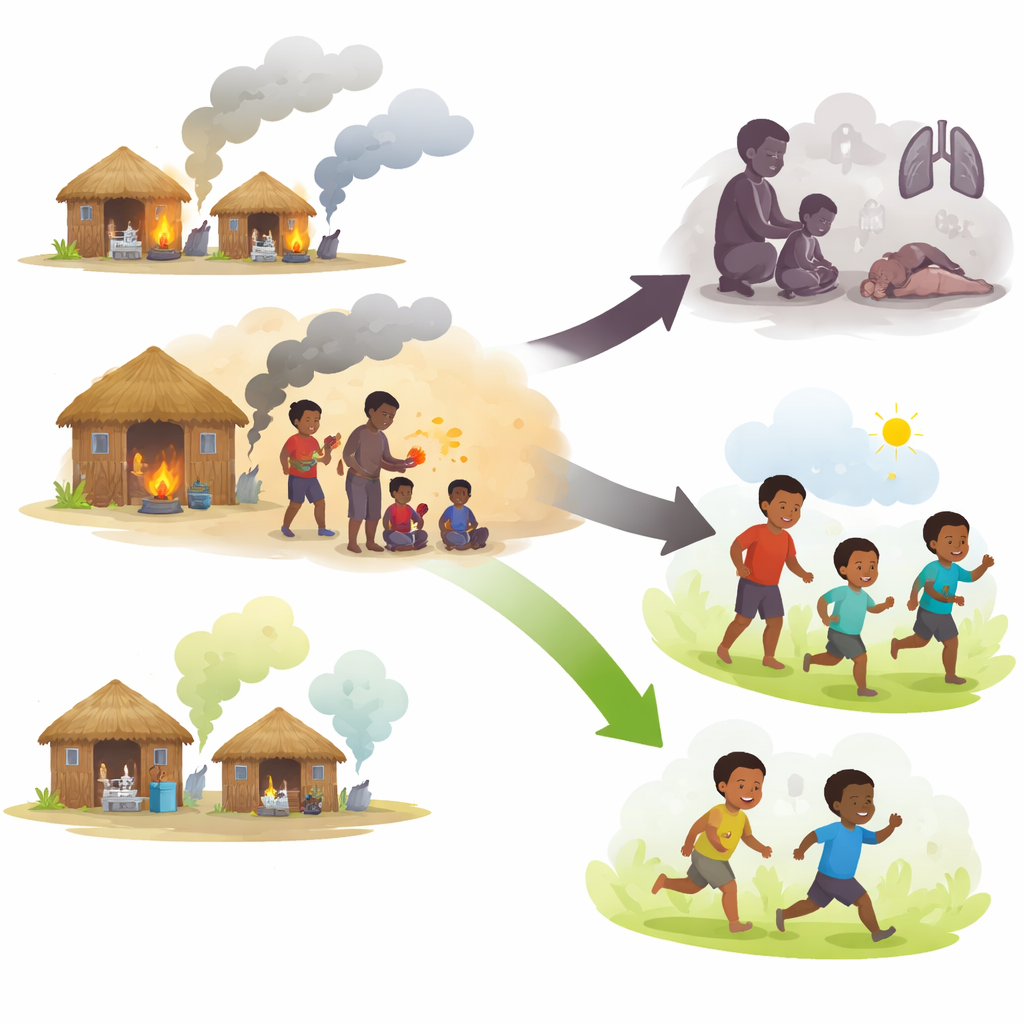
Across much of Sub-Saharan Africa, cooking a family meal can quietly endanger a child’s life. Many households burn wood, charcoal, or crop waste in small, poorly ventilated spaces, while also coping with unsafe water, basic toilets, and fragile housing. This study asks a pressing question: how much are these everyday home conditions contributing to deaths and serious breathing illnesses among young children—and what could be gained if homes were cleaner and safer?
Taking a Closer Look at Everyday Homes
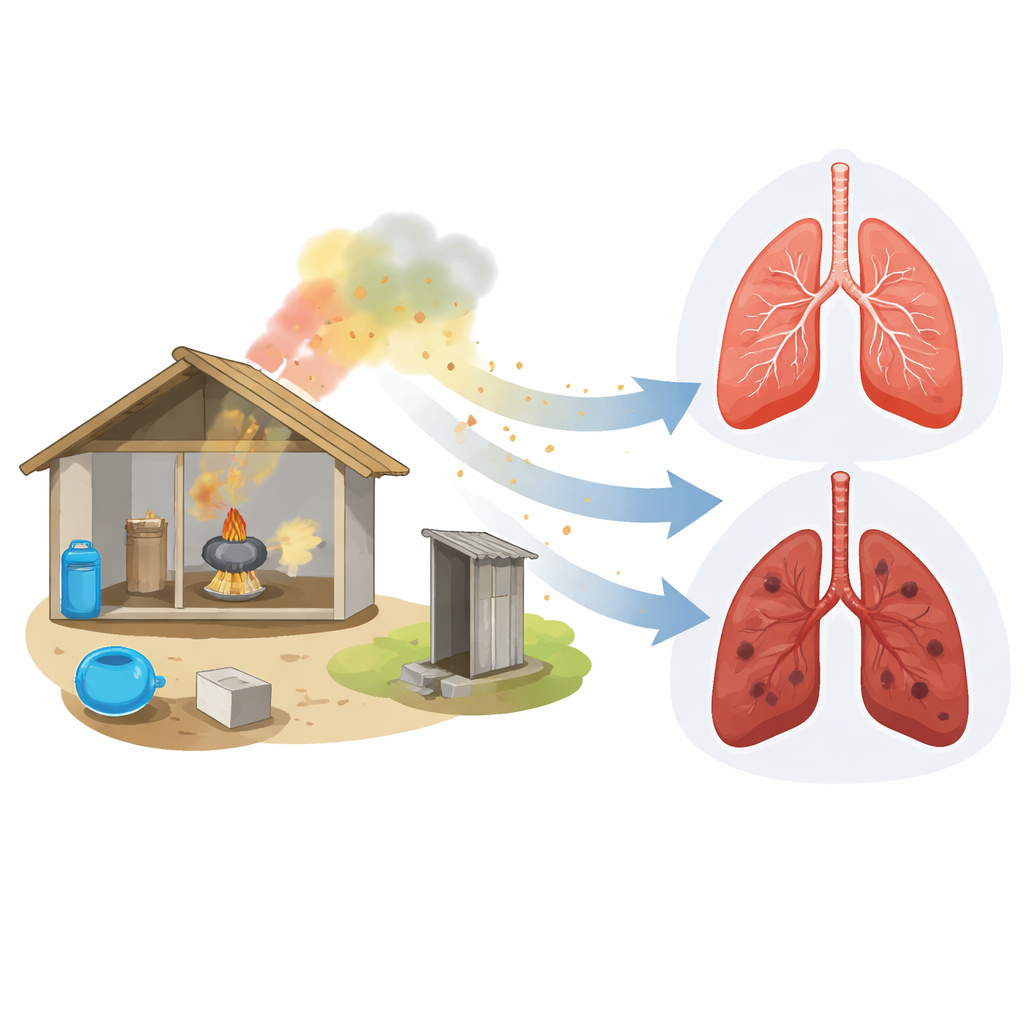
The researchers analyzed data on 362,072 children under five years old from national Demographic and Health Surveys carried out between 2010 and 2020 in 32 Sub-Saharan African countries. Instead of looking only at the type of cooking fuel, they built a broader picture of the household environment. They combined information on roof, wall, and floor materials; the main cooking fuel; water source; and toilet type into a single index of household air pollution and environmental quality. Homes were then grouped as having low, moderate, or high exposure to harmful indoor air and related risks.
How Many Children Are Exposed—and What Happens to Them
The results show that exposure is widespread: about two-thirds of children under five lived in homes with moderate or high levels of household air pollution, with the heaviest burden in Central and West Africa. Over the study decade, child deaths remained high, averaging 28 neonatal deaths, 52 infant deaths, and 93 under-five deaths per 1,000 live births across the region. When the researchers compared children from cleaner households to those in more polluted ones, they found that exposure to household air pollution was linked to substantially higher risks of dying before the fifth birthday, especially during infancy.
Linking Smoke and Poor Housing to Child Deaths and Illness
After accounting for differences in child age and sex, breastfeeding, mother’s education, household wealth, place of residence, and season, children in exposed homes were about 30 to 40 percent more likely to die as newborns, infants, or before age five than children in relatively unexposed homes. The strongest links were seen for infant and under-five deaths. Patterns for breathing illnesses were more complex: overall, a simple exposed-versus-unexposed comparison did not show a clear signal. But when homes were divided by degree of exposure, children in moderately and highly exposed households were more likely to have had a recent bout of acute respiratory infection, suggesting that even intermediate levels of smoke and poor conditions can strain young lungs.
Unequal Risks Across the Region
The study also highlights stark regional differences. Countries in Central and West Africa, where solid fuels and basic building materials are common, tended to have both higher household air pollution and higher child death rates. Eastern and Southern African countries that have made more progress in electrification, education, and basic health services generally showed lower mortality. Within countries, children from poorer households and those with less educated mothers were at greater risk, pointing to the combined effects of poverty, limited infrastructure, and environmental hazards.
What These Findings Mean for Families and Policymakers
For a layperson, the conclusion is clear: smoke-filled kitchens, leaky roofs, dirt floors, unsafe water, and rudimentary toilets are not just signs of poverty—they are active threats to children’s survival. This study provides strong evidence that cleaner cooking options, safer building materials, better water and sanitation, and broader social improvements could prevent many deaths in early childhood across Sub-Saharan Africa. Reducing reliance on solid fuels, improving the design and ventilation of homes, and embedding air-quality concerns into maternal and child health programs are practical steps that could save young lives and move countries closer to global development goals.
Citation: Joseph, D.K., Dwomoh, D., Aheto, J.M.K. et al. Impact of household air pollution on under 5 mortalities and ARI in sub saharan africa: evidence from demographic and health survey 2010–2020. Sci Rep 16, 9020 (2026). https://doi.org/10.1038/s41598-026-38186-3
Keywords: household air pollution, child mortality, Sub-Saharan Africa, solid cooking fuels, acute respiratory infection