Clear Sky Science · en
Integrated effects of vermicompost and town refuse on growth and nutritional status of onion cultivated in calcareous soil
Healthier Onions from Everyday Waste
Onions are a staple in kitchens worldwide, yet many farmers struggle to grow them in dry, chalky soils where nutrients are easily locked away. This study explores a simple idea with big implications: can recycling organic waste—through earthworm compost and treated household refuse—turn poor, calcareous soil into a fertile bed that produces bigger, more nutritious onions while cutting back on chemical fertilizers?
Turning Waste into Plant Food
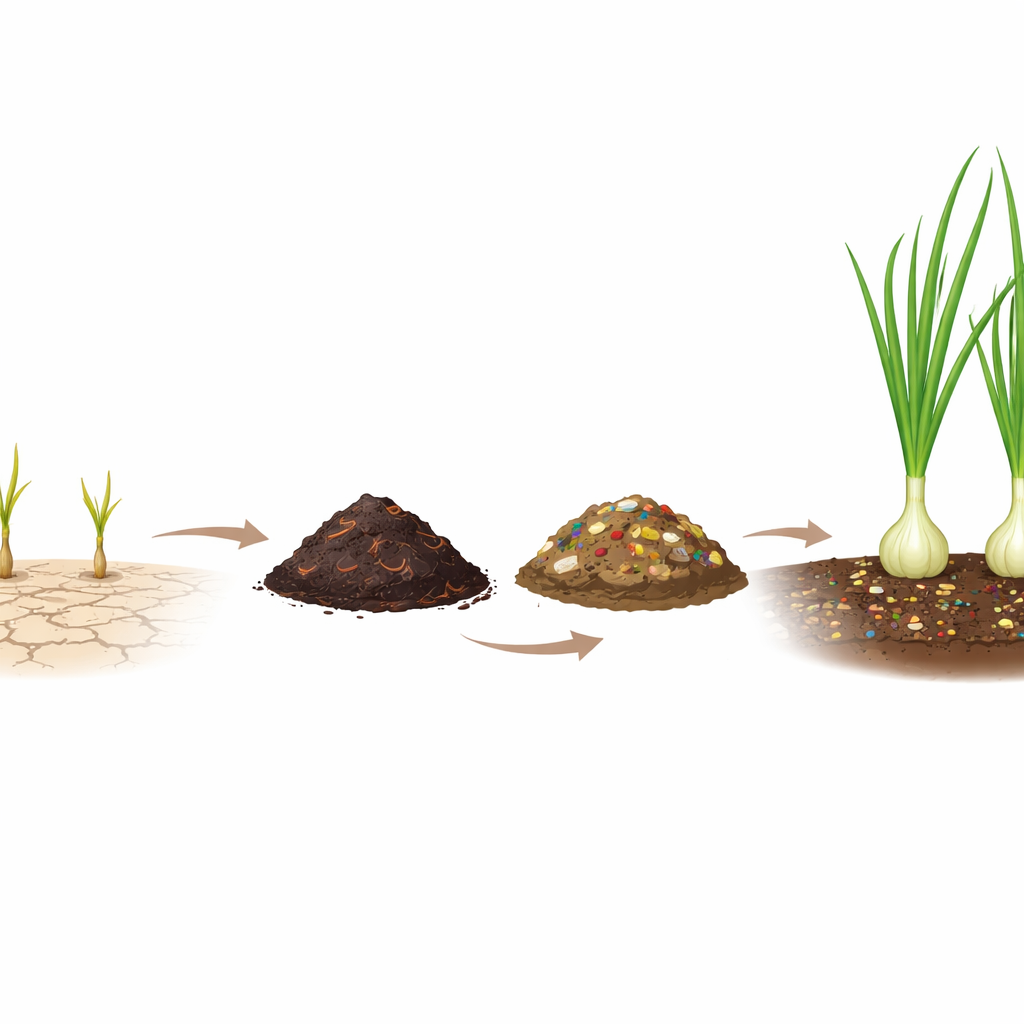
The researchers focused on two types of organic additions. The first, vermicompost, is made when earthworms digest plant scraps and manures, leaving behind a fine, nutrient-rich material. The second, composted town refuse, comes from sorted and decomposed organic waste from markets and households. Both promise to recycle waste that might otherwise go to landfills, but the team wanted to know how well they actually support onion growth in harsh, lime-rich soils typical of many dry regions.
Testing Onions in Tough Soil
To find out, the scientists ran a pot experiment in Burg El-Arab City in Egypt, using a sandy, calcareous soil low in organic matter. Onion seedlings were planted in pots that either had no organic addition or received vermicompost or town refuse at three different rates, roughly equivalent to 10, 15, or 20 tons per field unit. All pots received the same basic doses of conventional nitrogen, phosphorus, and potassium fertilizers, so any extra benefit could be traced to the organic materials. Over the growing season, the team measured plant height, bulb size, leaf area, root length, and fresh and dry weights, along with leaf pigments, mineral nutrients, oil content, sugar levels, and protein in the bulbs.
Bigger Plants with Deeper Roots
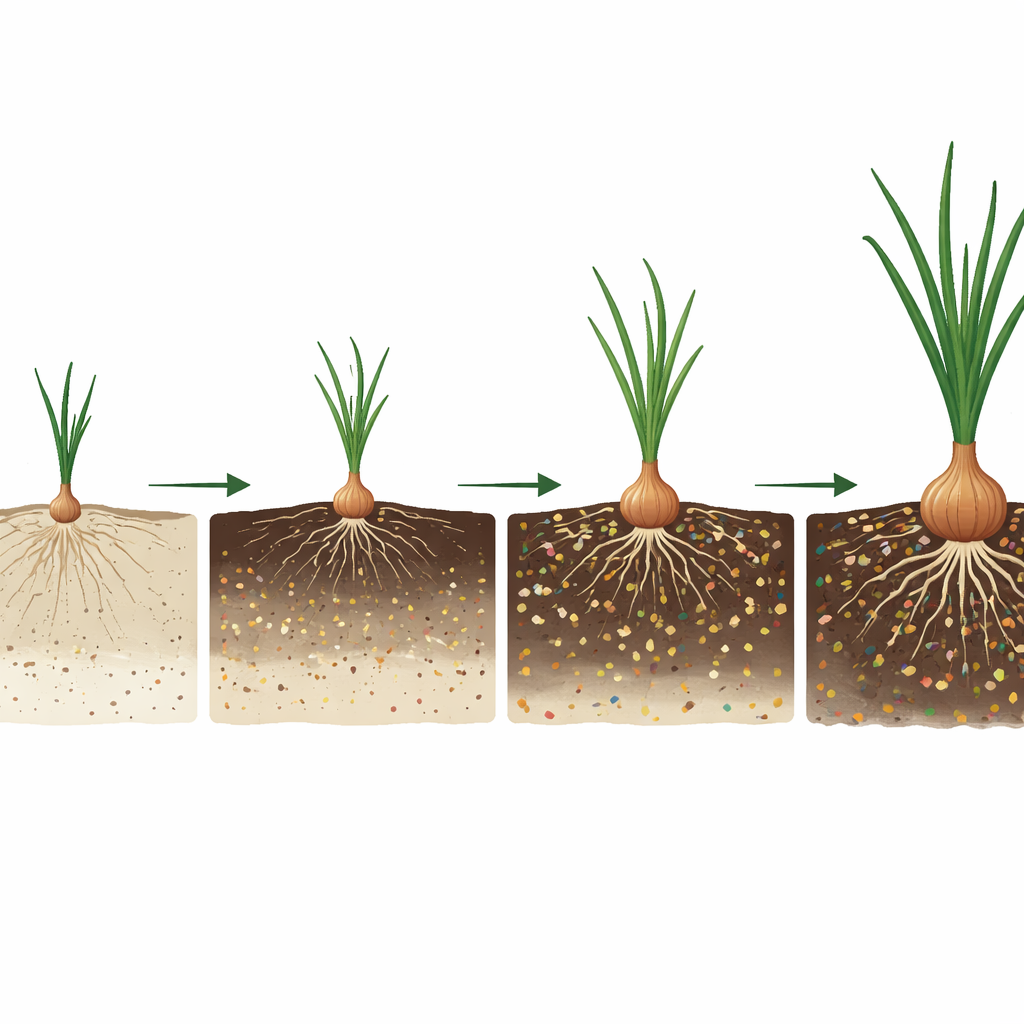
The results were clear: adding organic matter gave the onions a strong boost, and vermicompost worked best. Plants grown with the highest vermicompost rate were taller, had thicker bulbs, and produced far more leaf area than the untreated control. Their roots also penetrated deeper into the soil, creating a larger underground network to explore for water and nutrients. Even town refuse improved growth over the control, but its effects were generally a little weaker, likely because it breaks down more slowly and is less uniform than worm compost. The greener color of leaves in treated plants was backed up by measurements of chlorophyll and carotenoids, the pigments that drive photosynthesis, which rose sharply with increasing vermicompost, especially at the top dose.
More Nutrients, Oil, Sugar, and Protein
Beyond size and color, the onions’ internal chemistry also changed for the better. Bulbs and leaves from vermicompost-treated plants contained higher amounts of key nutrients such as nitrogen, phosphorus, and potassium, as well as important trace metals like iron, zinc, and copper. The total amount of each nutrient taken up by the plants rose dramatically with higher vermicompost rates, showing that the added organic matter made nutrients more available in the stubborn calcareous soil. Quality traits improved as well: bulbs from treated plants had more essential oil, more natural sugars, and higher protein levels than those from untreated soil. Statistical analysis revealed strong positive links across these traits—plants that grew larger and had higher nutrient levels also tended to produce oilier, sweeter, more protein-rich bulbs.
A Simple Path to Greener Onion Fields
For farmers working with lime-rich, nutrient-poor soils, this study delivers a practical message. Recycling organic waste—especially in the form of worm-produced vermicompost—can significantly improve onion yield and nutritional quality while easing dependence on synthetic fertilizers. By enriching the soil, stimulating roots, and unlocking both major and trace nutrients, vermicompost offers a sustainable way to turn everyday waste into a resource, helping growers produce healthier onions and supporting more resilient, environmentally friendly agriculture.
Citation: Badr, E.A., Sayed, S.E. & Mohamed, M.H. Integrated effects of vermicompost and town refuse on growth and nutritional status of onion cultivated in calcareous soil. Sci Rep 16, 8620 (2026). https://doi.org/10.1038/s41598-026-38173-8
Keywords: vermicompost, onion cultivation, organic fertilizers, calcareous soil, soil health