Clear Sky Science · en
Assessing the link among laterality, sex and competitiveness to verify the evolutionarily stable strategy of handedness
Why Your Dominant Hand Might Matter More Than You Think
Most of us barely notice which hand we use to write, throw, or grab a coffee mug. Yet this everyday preference hints at deep patterns in how human brains and societies evolved. In this study, researchers asked whether being left- or right-handed is linked to how competitive we are, and whether this connection could help explain why a small minority of people remain left-handed in a mostly right-handed world. Their findings suggest that hand preference is tied to attitudes toward competition, especially in men, and that this pattern may reflect a long-standing evolutionary balance between cooperation and rivalry. 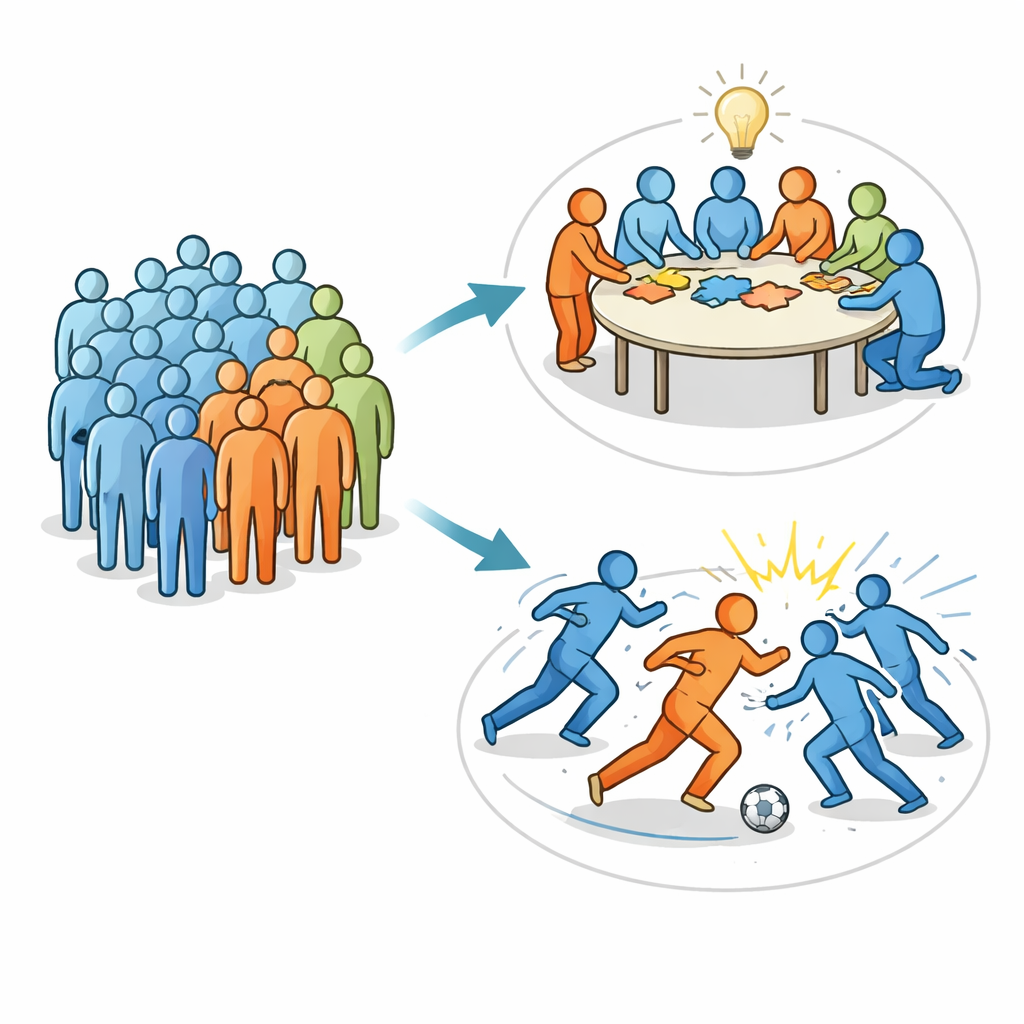
A World Built for Right-Handers
About 90% of people prefer their right hand. Some scientists think this strong bias gave our species an advantage: when most individuals are aligned the same way, it is easier to share tools, coordinate movements, and communicate. But if right-handedness is so useful, why have left-handers not disappeared? One influential idea, called an evolutionarily stable strategy, proposes that a small minority with the opposite bias can thrive in competitive situations. Because their movements are less familiar, left-handers may be harder to predict in fights or sports, gaining a surprise advantage over right-handed opponents. The new study set out to test one key part of this story: are left-handers actually more competitively oriented than right-handers?
Asking Thousands About Hands, Mood, and Drive
To explore this question, the researchers first ran a large online survey with more than 1,100 volunteers, most of them university students. Participants completed a standard handedness questionnaire that produces a laterality quotient, reflecting how strongly someone favors one hand. They also answered detailed questions about their attitudes toward competition, including whether they enjoy striving to improve themselves, feel driven to win at all costs, or tend to avoid competitive situations out of anxiety or lack of interest. In addition, the survey measured personality traits such as openness and extraversion, as well as levels of depression and anxiety. This allowed the team to see whether any links between handedness and competitiveness might simply reflect broader differences in mood or personality.
Left-Handers Lean Into Competition
The results revealed a clear pattern. People with stronger left-hand preference scored higher on measures of self-focused competitiveness, using competition as a way to develop and prove themselves. They also showed lower levels of anxiety-driven avoidance of competition; in other words, they were less likely to shy away from contests because of fear or discomfort. When the researchers compared strongly left- and strongly right-handed subgroups, left-handers showed higher levels of what the authors call hypercompetitive orientation, a hard-edged drive to win that can come at others’ expense. These differences were not explained by personality traits like agreeableness or extraversion, nor by depression or anxiety levels, which did not systematically vary with hand preference. Men, regardless of handedness, tended to be more competitive and less avoidant of competition than women, who on average reported higher depression, anxiety, and emotional sensitivity. 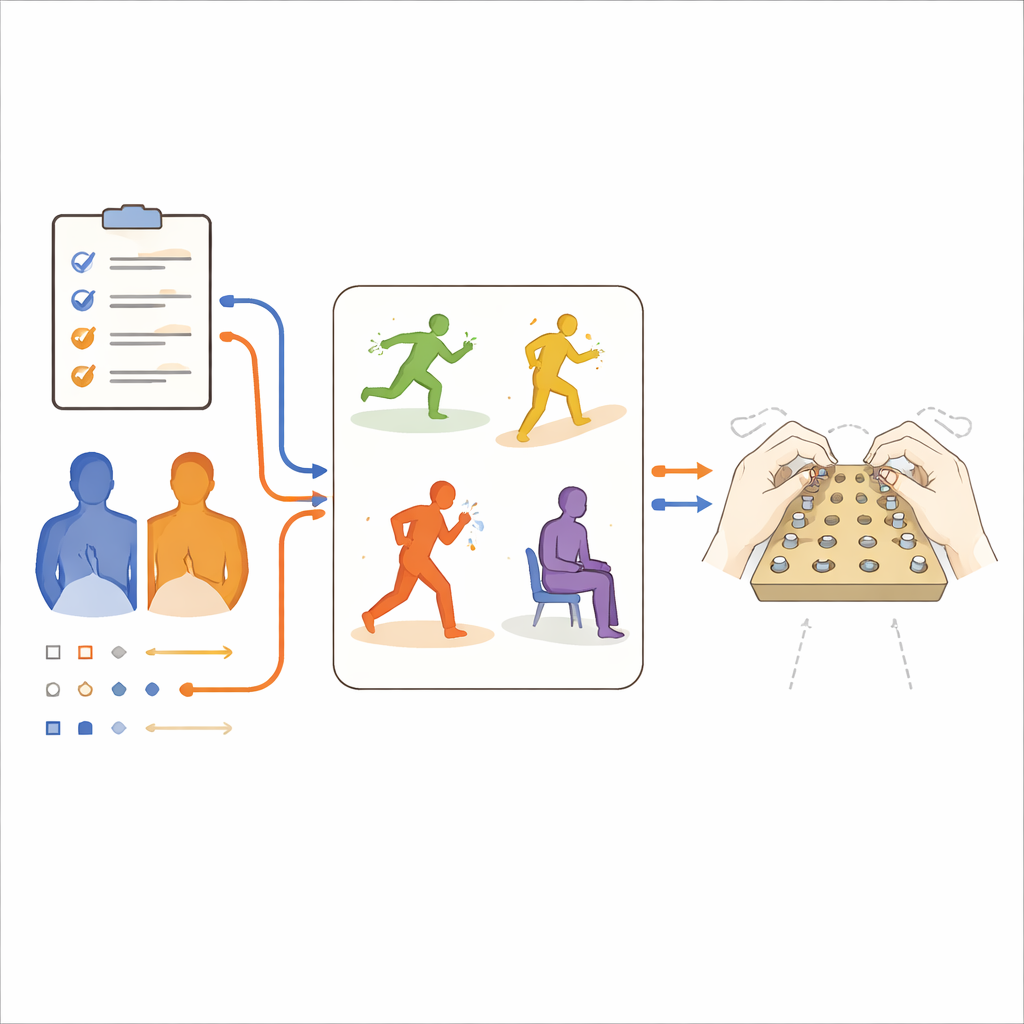
When Skill and Preference Do Not Line Up
A second, smaller experiment zoomed in on the physical side of handedness. Forty-eight participants, half left-handed and half right-handed, came into the lab to perform a classic pegboard test of finger dexterity with each hand. From this, the researchers calculated a dexterity index, indicating which hand actually performed faster. Surprisingly, this performance measure did not line up neatly with people’s self-reported hand preference: many right-handers were quicker with their left hand, and many left-handers were faster with their right. Even more important, dexterity showed no meaningful link to competitiveness, personality traits, or mood. This suggests that the psychological side of handedness—how people identify and organize their actions—may be more relevant to social behavior than raw motor skill.
What This Means for How We Compete
Taken together, the findings support the idea that left-handers are, on average, more ready to engage in and push hard within competitive situations, while right-handers are somewhat more inclined to avoid competition driven by anxiety. At the same time, left- and right-handers do not differ much in general personality or emotional health, at least in a healthy population. The authors argue that this pattern fits with an evolutionary balance: a mostly right-handed majority that is well suited to cooperation, alongside a smaller group of left-handers who may hold an edge in conflict and rivalry. Rather than a quirk, being left- or right-handed may be one visible trace of how our species has long managed the tension between working together and competing with one another.
Citation: Prete, G., Marascia, E., Di Crosta, A. et al. Assessing the link among laterality, sex and competitiveness to verify the evolutionarily stable strategy of handedness. Sci Rep 16, 9454 (2026). https://doi.org/10.1038/s41598-026-38170-x
Keywords: handedness, left-handedness, competitiveness, sex differences, evolutionary psychology