Clear Sky Science · en
New perspectives on the ozonated high-oleic sunflower oil physico-chemical behaviour
Why supercharged sunflower oil matters
Sunflower oil is best known as a cooking staple, but certain types rich in a fatty acid called oleic acid may also act as gentle, plant-based protectors for our skin and cells. This study explores what happens when such high-oleic sunflower oil is treated with ozone—a powerful, reactive form of oxygen—to see whether the resulting “supercharged” oil remains stable over time and whether it could be useful in future medical or skincare applications.
Turning a familiar oil into a medical helper
The researchers began with high-oleic sunflower seeds grown under organic conditions, then cold-pressed them into oil without chemical refining. This oil already has natural antioxidant properties and is nutritionally comparable to olive oil. The team exposed two versions of the oil to a controlled flow of ozone for up to 12 hours: pure oil, and an oil mixed with a small amount of water to form an emulsion. They then stored these ozonated samples for months at different temperatures and repeatedly measured key features such as acidity, how much active oxygen was bound into the oil, how thick or runny it was, and how well it could protect against harmful reactive molecules. 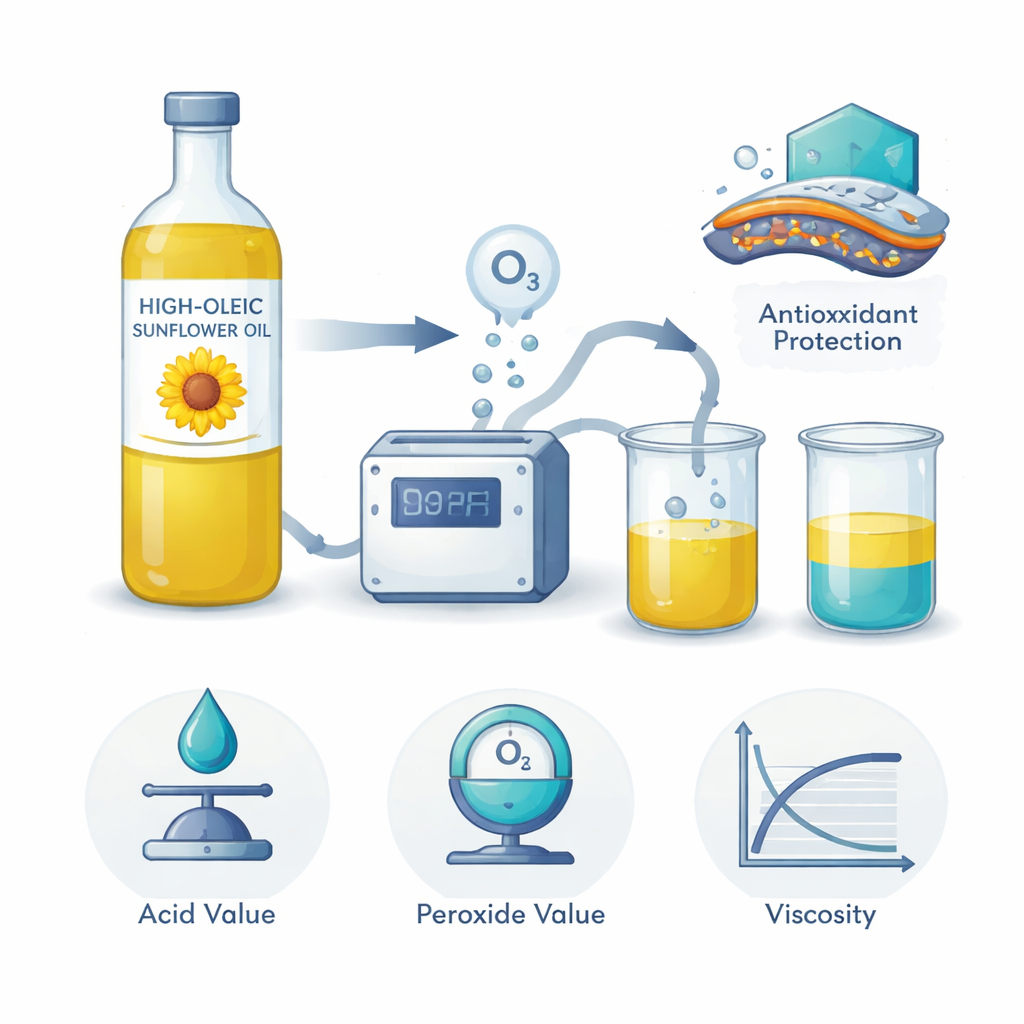
How the oil changes and stays stable
Ozone readily attacks the double bonds in the oil’s fatty acids, creating oxygen-rich products. To track these changes, the team monitored the acid value (a measure of small, potentially irritating breakdown products) and the peroxide value (an indicator of how much ozone-derived material is stored in the oil). They found that, even after six months, acidity rose only moderately, especially when the ozonated oil was kept cool. In contrast, the peroxide values were very high—well above levels considered useful for antimicrobial action—yet remained remarkably stable over time. This means the oil can “hold onto” ozone-derived species in a controlled way, a key requirement if it is to be used safely for wound care or other therapies.
From liquid kitchen oil to thick protective gel
Ozonation made the oil much thicker and more gel-like, particularly at lower temperatures. By measuring how the oil flowed at different temperatures and shear rates, the researchers showed that viscosity increased with ozonation time and stayed high even after a year. Detailed molecular tools—nuclear magnetic resonance (NMR) and infrared (FTIR) spectroscopy—confirmed that ozone was converting the oil’s double bonds into ring-shaped structures called trioxolanes (a type of ozonide), along with small amounts of aldehydes and related oxygen-rich fragments. Water in the emulsion sped up these reactions, pushing the oil further along the transformation path. Together, these changes help explain why the ozonated oil becomes thicker and more structured while still remaining stable.
How well the new oil defends our cells
To move beyond chemistry, the team tested how the treated oils interacted with different types of aggressive molecules that damage cells, such as free radicals and metal ions. They used a broad panel of seven laboratory assays to probe radical scavenging, metal binding, and protection of delicate lipid membranes. While the ozonated oils were not strong “moppers” of some common test radicals at the low concentrations used, they excelled at other tasks. With increasing ozonation time, both pure oil and especially the oil–water emulsion bound iron ions more effectively, showed solid reducing power, and strongly neutralized highly reactive radicals that attack membranes. In several tests, the ozonated samples performed as well as or better than standard antioxidant molecules such as vitamin C and Trolox, and they significantly limited lipid damage over time. 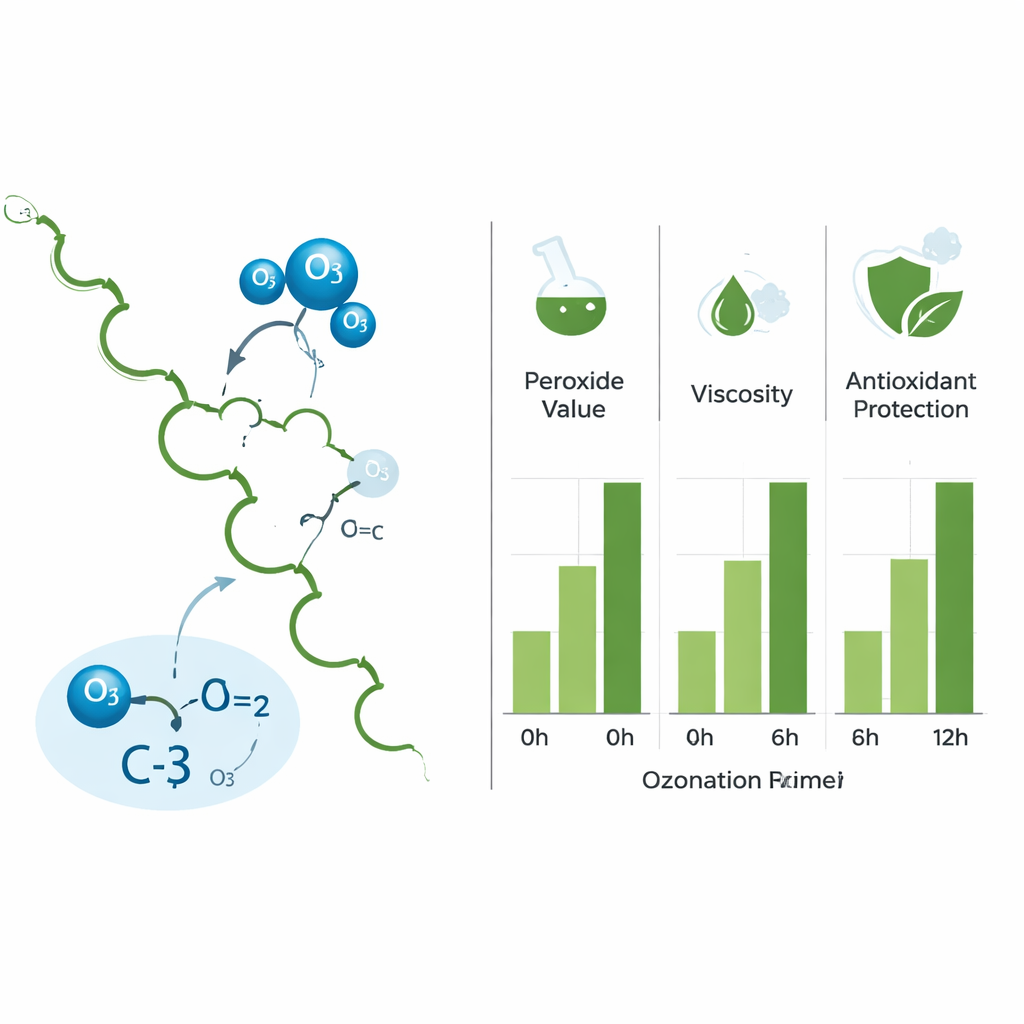
From lab bench to future skin and health uses
Put in simple terms, this work shows that carefully ozonated high-oleic sunflower oil can store ozone in a stable, controlled chemical form while becoming thicker, more active, and still well behaved over many months. The resulting oil and oil–water emulsion can bind harmful metals, curb damaging radicals, and protect fatty components similar to those in our own cell membranes. These qualities, combined with the use of organic crops and gentle processing, make ozonated high-oleic sunflower oil a promising candidate for future tests in living systems—particularly for wound care, skin protection, and other applications where a natural, oil-based antioxidant and antimicrobial agent could be valuable.
Citation: Petrovici, AR., Paraschiv, V., Nicolescu, A. et al. New perspectives on the ozonated high-oleic sunflower oil physico-chemical behaviour. Sci Rep 16, 6931 (2026). https://doi.org/10.1038/s41598-026-38169-4
Keywords: sunflower oil, ozonated oils, antioxidant activity, wound healing, skin care